



South Korea’s economy unexpectedly shrinks on broad demand pullback
The won has fallen more than 8% since late June 2025
[SEOUL] South Korea’s economy shrank in the final quarter of 2025 due to a broad pullback in domestic demand, underscoring the challenge for authorities whose policy options to stimulate growth are constrained by a wobbly won and mounting financial risks.
Gross domestic product contracted 0.3 per cent in the three months to December 2025 from the previous quarter, the Bank of Korea (BOK) said on Thursday (Jan 22). That marked a sharp slowdown from the revised 1.3 per cent growth in the prior quarter and missed the median estimate for a 0.2 per cent expansion in a Bloomberg survey.
For 2025 as a whole, the economy expanded 1 per cent, in line with estimates.
The data suggests that some of the forces that propelled growth earlier in the year – expansionary fiscal policy and recovering consumption – are beginning to fade as authorities seek to manage risks tied to a persistent housing market rally, rising household debt and a persistently weak won.
The BOK effectively shifted to a neutral stance when it held policy steady last week, removing a reference to potential rate cuts from its statement.
Housing remains a key fault line. Apartment prices in Seoul extended gains for a 50th straight week as at Jan 12, according to the Korea Real Estate Board, defying repeated government efforts to cool the market.
The rally has kept policymakers wary of easing policy settings out of concern doing so might spur household debt levels and raise the risk of financial instability.
Domestically, momentum has softened as fiscal stimulus wears off. Growth in private consumption slowed sharply in Q4, rising just 0.3 per cent from the previous three months after a 1.3 per cent gain in the prior quarter; government spending increased a modest 0.6 pre cent.
Construction and facilities investment dropped 3.9 per cent and 1.8 per cent, respectively, and real exports declined 2.1 per cent.

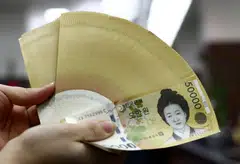

Those strains are being compounded by persistent currency weakness. The won has fallen more than 8 per cent since late June due to capital outflows, global interest-rate differentials and uncertainty over trade policy.
The currency weakness made it harder for the central bank to ease monetary settings, as a lower interest rate could accelerate the trend.
Officials have warned that further depreciation could exacerbate financial instability and fuel inflation. BLOOMBERG
Decoding Asia newsletter: your guide to navigating Asia in a new global order. Sign up here to get Decoding Asia newsletter. Delivered to your inbox. Free.
Share with us your feedback on BT's products and services






