As financial hub rivals innovate, Hong Kong races ahead in digital finance
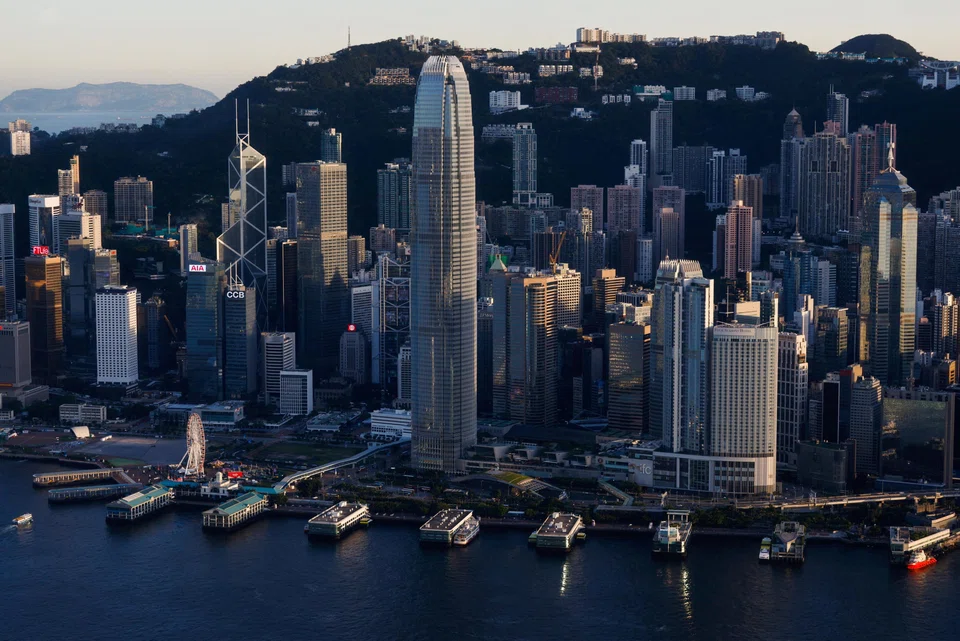
[HONG KONG] Determined to retain Hong Kong’s enduring status as a regional financial centre, the city’s officials are busy recreating and promoting its image and infrastructure – in the digital dimension.
Long seen as a technology laggard, Hong Kong has been rolling out fintech infrastructure at lightning speed, overlaying its traditional financial system in a big way.
In addition to generous investments and subsidies for innovation and technology, the sector has received a boost in top talent from mainland China of late, many of whom have arrived with experience at Chinese tech giants and startups.
Since June 2021, the Hong Kong Monetary Authority (HKMA) has aggressively pushed its “Fintech 2025” strategy, aiming for an “all-round adoption of fintech by banks” to “fully digitalise their operations, from front-end to back-end.”
Citing a 2023 startup survey by government agency InvestHK, a spokesperson for the central bank told The Business Times that Hong Kong is now home to more than 1,000 fintech companies, with more than 10 unicorns as they are valued at over US$1 billion.
The total number of tech startups as at last year reached a record 4,257, an increase of 34 per cent from 2019. Separately, there are eight virtual banks and four virtual insurers authorised to operate in the city.
Wealth management opportunities
“Many leading financial institutions are expanding their business operations in Hong Kong, showing confidence in Hong Kong’s opportunities including fintech, green and sustainable finance,” said the spokesperson.
“They are particularly attracted by the wealth management opportunities presented by the Greater Bay Area and the various connect schemes with the mainland.”
Specifically, HKMA is expediting adoption in five priority areas of fintech where finance and technology converge – wealthtech (tech for wealth management); insurtech (tech for insurance), greentech (tech for sustainability); artificial intelligence (AI); and distributed ledger technology.
SEE ALSO



When it comes to digital finance, many agree that the undisputed leader is New York. But as that US city pauses, if only temporarily, to ponder the thorny issues of regulating cryptocurrencies, several challengers elsewhere are jockeying to claim that title. These include Singapore and Qatar, in addition to Hong Kong.
Asia’s digital revolution in financial services is keeping pace with countries in Europe and the US. In the area of blockchain-based finance, for instance, Asia is already inching ahead, said Jame DiBiasio, founder and editor of Hong Kong-based Digital Finance Media.
In his view, Hong Kong’s competitive drive might be motivated, at least in part, by pressure to match the sophisticated tech advances across the border in mainland China, as Hong Kong is increasingly integrated into the Greater Bay Area.
“Otherwise, we will be irrelevant to mainland Chinese companies. You have to get the industry here to become as digitally savvy as it is in China, where fintech is very advanced,” said DiBiasio.
“If we are going to have a Greater Bay Area and more integration, we have to up our game. If we cannot connect to the mainland more tightly, then they don’t need us.”
Fintech Association of Hong Kong chairman Neil Tan said that Hong Kong, as a leading fintech centre, has a goal to provide more products, propositions and asset classes for institutional and retail investors to choose from.
He added that there are nearly US$5 trillion in assets under management in the city.
On the demand side, Tan sees Hong Kong consumers adopting fintech services in two areas: multiple digital payments – especially the HKMA-implemented Faster Payment System (FPS) – and online wealth management platforms such as Endowus and Syfe, both based in Singapore.
The six-year-old FPS handles 1.53 million retail transactions a day, a 31 per cent increase year on year, clearing HK$11.4 billion (S$1.97 billion), a 37 per cent rise year on year.
Progress is relatively slow in two other applications – lending and insurance – but Tan notes it’s not because of a lack of innovative products. For example, Hong Kong residents can purchase insurance packages for everything from hiking trips to their pets.
Tan also heads a fintech and Web3 consulting firm he founded, Tsunami Advisors. Last year he was appointed to a 15-member advisory body called Hong Kong Web3 Task Force, created and chaired by Financial Secretary Paul Chan, as the government engineered a U-turn to allow retail trading of cryptocurrency.
Tan explains that Web3 can mean many things, from Bitcoin to Ethereum and spot exchange-traded fund (ETF) products, but Hong Kong approaches it from the perspective of financial services, both at institutional and retail levels.
“Web3 can be implemented in any industry, but we want to implement Web3 in financial services first,” he said.
He added that it will include such things as a virtual asset trading platform, stablecoins, over-the-counter trading, spot Bitcoin and Ethereum ETF products, all of which are widely accessible.
Potential fraud and regulatory hazards are the downside of a proliferation of digital financial services and new infrastructure, as evidenced by a recent spate of online scams hitting Hong Kong and the rest of Asia.
To counter this, the HKMA spokesperson said the agency is adopting so-called “suptech” – supervision technology – to enforce regulations. This includes novel approaches such as using AI and machine learning to assess everything from loan quality to gauging public sentiment.
Last year, the authority launched an end-to-end digital supervisory platform and a robotic process automation solution, streamlining more than 20 repetitive manual processes and automating case management.
Next in the pipeline are an online information collection tool and a suite of advanced analytics solutions.
Hong Kong is also involved in central bank digital currencies on the supranational level. The city is currently in collaboration with central bankers in Beijing, Thailand and the United Arab Emirates.
The HKMA spokesperson described this effort as “future-proofing Hong Kong for central bank digital currencies”, adding: “The idea is to use central bank digital currencies to cut the cost and time of cross-border settlement”. HKMA will soon launch a technological experiment known as a “minimum viable product”, the spokesperson added.
China’s trial use of a digital version of its currency, the yuan, has met with a tepid response from retail consumers on the mainland since it was introduced two years ago.
However, Hong Kong’s case could be different. For a start, it has decades of experience in managing its local currency, said DiBiasio.
The Hong Kong dollar is only issued by three commercial banks: Bank of China, HSBC and Standard Chartered. It’s also pegged to the US dollar, evoking the set-up of a crypto exchange.
“Hong Kong already has a lot of experience with this. The notes are issued directly by a private company, and it’s more like a stablecoin,” he said.
“Essentially, we are just introducing a digital version of what already exists here. Hong Kong is a good place to experiment with what this would do. It’s a different format but the same business model, whereas other countries have to reinvent a whole new business model if they want to do such an experiment.”
Decoding Asia newsletter: your guide to navigating Asia in a new global order. Sign up here to get Decoding Asia newsletter. Delivered to your inbox. Free.
Share with us your feedback on BT's products and services