


Supply chain, manpower challenges hinder travel industry’s recovery: Aptra president

Tessa Oh

WHILE the business travel is seeing encouraging signs of recovery, ongoing manpower challenges are slowing this momentum down and a full recovery will likely only be seen in about 2 years, said Sunil Tuli, president of the Asia Pacific Travel Retail Association (Aptra).
“Don’t forget that almost every country is facing challenges all along the travel chain, from lack of check-in staff to border officials and in-store,” Tuli told The Business Times in a recent interview.
He noted that many key locations across the Asia-Pacific region have not been able to resume operating fully due to severe resourcing issues.
“We also see continuing supply chain problems and stock shortages, plus operational delays in screening product supply lines into the airside areas,” said Tuli.
Aptra is a Singapore-based non-profit membership organisation representing more than 100 airport landlords, international and regional retailers, food and beverage operators, and global consumer brands across more than 45 countries in the Asia-Pacific.
Right now, it is focused on supporting the industry in recovering from the Covid-19 pandemic through research on market trends, networking opportunities and advocating for the industry when it faces regulatory challenges.

Another factor that has to be considered when assessing the industry’s recovery is the added emphasis on sustainability for both consumers and businesses, said Tuli.
While there is still a strong urge for businesses to connect in-person, he noted that companies are placing more focus on assessing if a business trip is really necessary before making one.
“With the added scrutiny of each trip, there is much greater focus on maximising the effectiveness of the journey, arranging multiple meetings in one trip rather than travelling for one meeting, so this is creating a trend for longer business journey trips,” said Tuli, who is also the group chief executive officer of King Power Group (Hong Kong).
SEE ALSO



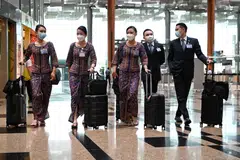
Despite the near-term headwinds, Tuli is still optimistic about the long-term prospects of the travel and tourism industry.
He cited a report by the World Travel and Tourism Council that projects the travel and tourism sector in the Asia-Pacific will create almost 77 million new jobs in the next decade.
He is similarly sanguine about the travel retail industry: “Travel retail is inevitably reliant on the level of passenger traffic, and it’s clear that airlines face huge problems in returning to profit, especially in the current dynamic of reduced capacity directly linked to operational and staffing challenges to meet travel demand.
“However, these should be relatively short-term issues and my view is that, despite inflationary pressures, the current phase of raised fares will be reversed as capacity and recovery picks up pace later this year.”
As for Singapore, Tuli said the “signs are promising” for the meetings, incentives, conferences and events (Mice) industry here with a recovery in demand for in-person conferences and exhibitions.
“Travel retail recently held its first in-person large scale event at Marina Bay Sands and delegates were genuinely excited to be back, networking with colleagues and sharing ideas, proving just how important the human connection is,” he added.
Changi Airport, a central point to the region’s current phase of recovery, is also “accelerating back strongly”, noted Sunil. Passenger traffic has rebounded to nearly 50 per cent of pre-pandemic levels, according to the latest figures released by Transport Minister S Iswaran last month.
Asked what trends he expects to see in the travel retail and tourism industry with a recovery on the horizon, Tuli said the “key determinant of success” is how the industry responds to customers’ evolving needs.
“The global crisis accelerated digital adoption by a decade in a matter of a few months,” he noted.
“In everything from online shopping to working from home, our lives have become increasingly digital, and travel retail and tourism must respond to these shifts in behaviour to become more consumer-centric.”
Decoding Asia newsletter: your guide to navigating Asia in a new global order. Sign up here to get Decoding Asia newsletter. Delivered to your inbox. Free.
Copyright SPH Media. All rights reserved.
TRENDING NOW
From AI financing to Indonesia outlook: 4 takeaways from Singapore banks’ Q3 results
VinFast, Mitsubishi weigh Philippine EV production as state incentives near

Analysts cut DBS target price on lower 2027 earnings, but see buying opportunity after share price slide

Could Japan trigger the next global financial crisis?

