


The return of offices post-pandemic
 Add BT as a preferred source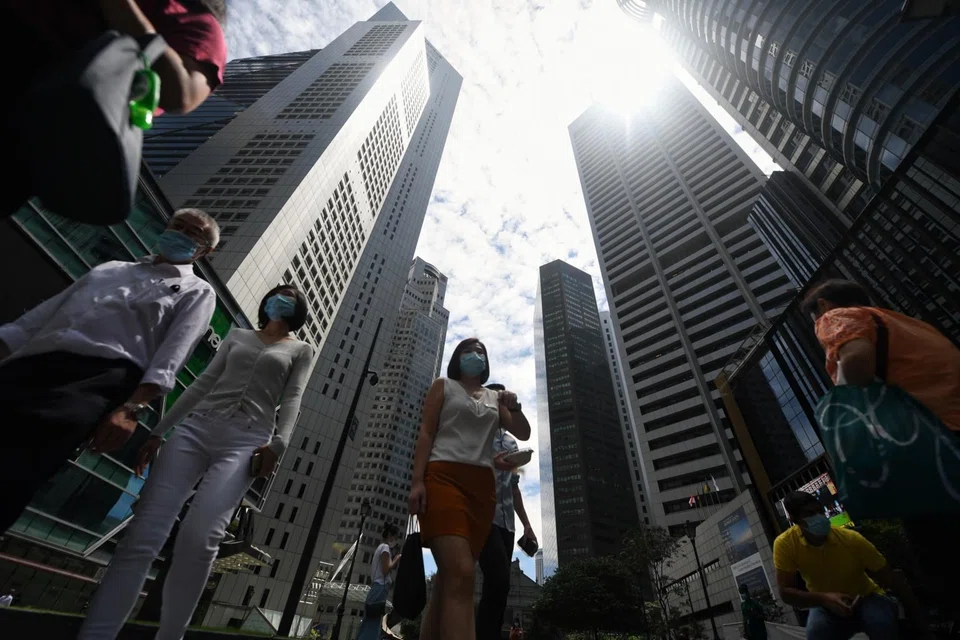
As the world emerges from the pandemic, the shifts in office space occupational patterns in major gateway cities play a significant role in attracting employees back to offices.
Progressively, the importance of space utilisation and occupational density metrics has been evident for businesses to adjust to new circumstances. According to JLL’s Benchmarking Cities and Real Estate report, employees’ expectations of the office have evolved – they are now demanding less dense workspaces that reflect a high standard of health and wellness.
Although social distancing protocols and measures are likely to end, companies continue to re-think their office spaces. The pandemic has forced de-densification in the interests of adhering to restriction measures. As the office evolves from somewhere to complete tasks and deadlines to a place for collaboration and corporate culture development, there will be no one-size fits all solution.
Our research suggests that both employees and employers expect longer term de-densification and changes to workplace allocation. Solutions would be implemented by occupiers in relation to sector specialism, cultural norms, occupational costs and other factors.
In Asia Pacific, cities that had tight occupation densities pre-pandemic face more pressure to de-densify. Global business hubs like Hong Kong and Singapore see densities of 10 square meters per person or less, while in Manila and Bengaluru, business imperatives and intense usage of space have driven densities to as low as 7 square meters per person.
Elsewhere, emerging mega-hubs such as Jakarta and Mumbai, which provide business services for large and growing national markets, see densities from 9 to 11 square meters per person.
Navigate Asia in
a new global order
Get the insights delivered to your inbox.
The desire for a greater share of collaboration space, amenities and areas of socialising and learning is apparent in today’s workforce.
A challenge for occupiers in catering to a more hybrid workforce is in finding the right mix of corporate offices, flex space and employees working from anywhere. New workplace investments are essential in new technologies, amenities, and services.
Another challenge for occupiers is unease with face-to-face interactions amongst returning employees. By redesigning workplaces and de-densifying the office, employees would be more likely to embrace the transition while adhering to social distancing even when interacting face-to-face.
With occupiers increasingly prioritising the health and well-belling of their employees, landlords may be required to refurbish and retrofit older assets.
The coming years would be pivotal as corporates and cities work towards sustainability goals.
High-specification buildings will be best placed to meet the demands of corporates and employees with health and wellness amenities, new technology and sustainability credentials.
Managing energy consumption is key to many companies’ corporate sustainability agendas.
It is essential to recognise the influence of space utilisation and occupational density metrics on waste, water and energy consumption. However, with de-densification, energy costs and consumption per person may increase.
To counter this challenge and to keep in line with broader sustainability agendas, it is likely that occupiers become more proactive in adopting energy efficiency and sustainability solutions.
With appropriate benchmarking measures and reports, organisations would also be able to have a consistent performance baseline that can be compared against local benchmarks across global locations. These metrics help businesses to make data-driven decisions about space planning.
Combined efforts by city governments and corporates are crucial in achieving net zero and sustainability objectives.
Data is critical to identify where improvements need to be made and to track targets. Governments are also likely to be more aggressive in taking action to decarbonise their economies. Thus, opportunities arise for the refinement of real estate to develop a productive, healthy, and sustainable built environment.
The writer is head of work dynamics research, JLL Asia Pacific.
Decoding Asia newsletter: your guide to navigating Asia in a new global order. Sign up here to get Decoding Asia newsletter. Delivered to your inbox. Free.
Share with us your feedback on BT's products and services

