


Trump tariffs on six EU nations could create US customs headache
Due to extensive cross-border supply chains, it will be tough to establish the origins of the goods
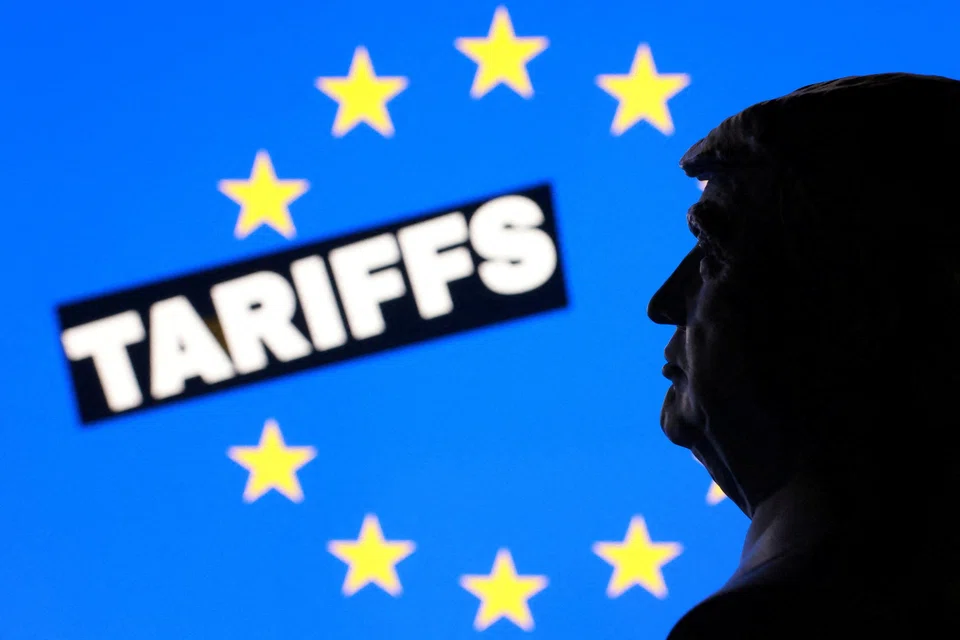
[BRUSSELS] The US customs authorities will face a real challenge if US President Donald Trump goes through with his threat to place tariffs on six European Union countries rather than the whole EU, given the ease of movement of goods between EU members.
Trump has vowed to impose increasing tariffs on goods from EU members Denmark, Finland, France, Germany, the Netherlands and Sweden, as well as non-EU states Norway and Britain, until the US is allowed to buy Greenland.
Technically possible, bureaucratically complex
Under the EU’s rules, goods manufactured in the bloc are only marked as being of EU origin, but a third country can require that the information be provided by the individual EU members.
It can be difficult to determine that a good is made in a single EU member, however, because of extensive cross-border supply chains, and the ability to transport goods from one EU member to another without customs controls.
It would be a complex task for the US customs authorities to establish the origin of goods.
Niclas Poitiers, research fellow at Brussels-based economic think tank Bruegel, said that it would probably not be difficult for smaller companies to obscure the production location of their products.
Larger firms with more transparent supply chains might decide to move their production to EU countries not targeted by the measures.
Can the US target brands?
Brand names are generally associated with specific countries, but production can take place elsewhere.
Carmaker Volkswagen, for example, manufactures cars in Germany, but also in Slovakia, while Sweden’s Volvo Cars has a factory in Ghent, Belgium with a similar capacity to the plant at its Gothenburg headquarters, which makes Volvo’s top-selling XC60.

Volvo will move its production of the XC60 to the US by the end of the year in response to the tariffs. It increased its production of electric vehicles (EVs) in Belgium, after the EU placed tariffs on China-built EVs, but the timeframe for such switches has typically been at least a year.
What about French wines and cheeses?
Well-known EU foods and drinks, such as French champagne or Camembert, may be more easily targeted, because they are marketed and sold in ways that highlight their heritage and origins.
Reinforcing this, the EU has a system of geographical indications (GIs), granting intellectual property rights to some 4,000 products linked to particular areas of production, from Italy’s Parma ham to Spain’s Manchego cheese and Greece’s Kalamata olives.
As a result, the term champagne, for example, can only be used for a sparkling wine made in the Champagne region in the north-east of France, or feta for a specific cheese from Greece.
The US has repeatedly denounced the system as protectionist, particularly when it is included in the EU’s trade agreements, to ensure that foreign partners also agree to respect the protected status of a range of products.
Of the six targeted countries, France has the most GIs. REUTERS
Decoding Asia newsletter: your guide to navigating Asia in a new global order. Sign up here to get Decoding Asia newsletter. Delivered to your inbox. Free.
Share with us your feedback on BT's products and services






