



Houthis say they attacked Saudi tankers, threatening new chokepoint in Iran war
Houthi attacks on tankers could effectively close the Bab el-Mandeb strait which controls access from the Red Sea to the Indian Ocean
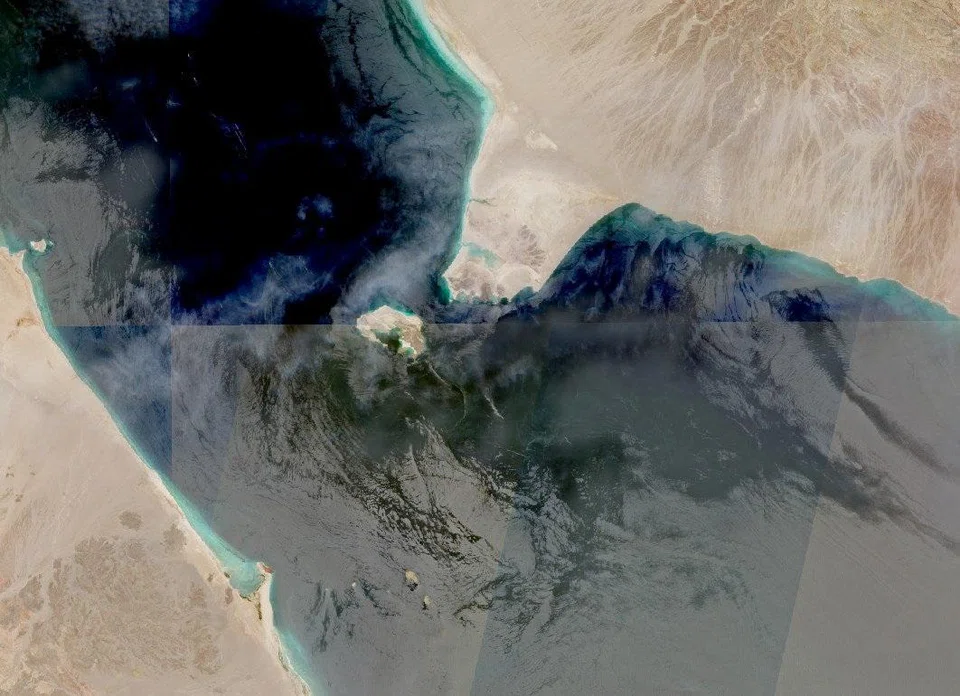
[CAIRO] Iran’s Houthi allies in Yemen said on Thursday (Jul 23) they struck two Saudi oil tankers as part of a naval blockade on Saudi Arabia, threatening to create a second chokepoint on global oil supplies alongside the near closure of the Strait of Hormuz.
Two weeks since the effective collapse of an interim truce meant to end the war, the US military launched another nightly round of air strikes on Iran, prompting Iran to fire at neighbouring Arab countries that house US bases.
US Secretary of State Marco Rubio told a diplomatic gathering in South-east Asia the price Iran pays “will get higher every night” until Teheran is ready for a peace deal it would live by.
“Iran is begging (for a deal) every day. The problem with Iran is every time they make a deal ... they either break it or they want to change it,” he said. “So now they’re paying the price for it. And maybe they’ll change their mind here over the next few days as they continue to suffer great losses.”
The Houthis, fighters allied to Iran who control Yemen’s Red Sea coast, have said this week they were imposing a blockade on Saudi Arabia, which has diverted millions of barrels of oil per day by pipeline to the Red Sea to get around Iran’s blockade of the Gulf.
In their first such strikes since announcing the move, the Houthis said their forces had carried out missile and drone strikes on two Saudi oil tankers, identifying them as the Encelia and the Layla.
A maritime security source said the Encelia had transmitted a distress call reporting it had been struck by a missile near the Saudi port of Jizan in the Red Sea just north of Yemen late on Wednesday. Saudi state news agency SPA said the strike had caused a fire at the bow.
Reuters could not immediately confirm the other attack, on the Layla.
Houthi attacks on tankers could effectively close the Bab el-Mandeb strait – the “Gate of Tears” – which controls access from the Red Sea to the Indian Ocean, the second most important waterway for energy markets after the Strait of Hormuz at the mouth of the Gulf.
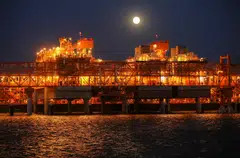

Global oil prices surged on Thursday to their highest levels since last month’s abortive truce, with Brent crude futures up 4.80% at US$98.59 a barrel by 0935 GMT on Thursday.
Meanwhile, Iran said it attacked US missile systems, weapons and fuel storage sites in Jordan, as well as US military posts in Kuwait. It has also hit water desalination and energy plants in Kuwait this week.
Jordan’s army said it engaged four Iranian missiles and six drones in the past 24 hours, intercepting all but one missile, which fell in an uninhabited area.
Iranian military spokesperson Brigadier General Mohammad Akraminia said Iran would keep retaliating as long as the US continued to attack its infrastructure and coastal areas, Iranian state TV reported.
Since the United States and Israel began the war in February, Iran has demonstrated that it can hit US targets in the region, despite Washington having claimed early on that it had wiped out Iranian military capabilities.
Four people familiar with US intelligence said Iranian strikes on CIA targets earlier in the war had prompted US intelligence to investigate whether Russia was assisting Iran with targeting information or drone technology.
High oil prices are stoking inflation globally, and have put President Donald Trump’s Republican allies under pressure ahead of congressional elections in November.
In the days since the Houthis announced their blockade in the Red Sea, several tankers have already changed course to avoid the Bab el-Mandeb, heading north instead through the Suez Canal, potentially using a much longer and more expensive route to reach Asian customers by sailing around Africa.
Two Chinese supertankers carrying a combined 4 million barrels of oil were attempting to exit the Red Sea via the Bab el-Mandeb Strait on Thursday, shipping data showed.
The Houthi threat to impose a naval blockade against Saudi Arabia could significantly widen the war and strain the US military, current and former US officials said.
Rubio said the Houthis got “snookered into this” by Iran, expressing hope the situation would de-escalate soon.
Last month’s interim deal to halt fighting has collapsed over the Strait of Hormuz, where Iran aims to assert control by requiring ships to sail close to its coastline and eventually charge transit fees. It has fired on ships using an alternative channel further from its coast, promoted by Washington.
Trump vowed on Wednesday to destroy an Iranian bridge or power plant every time Iran shoots at a ship in the Strait of Hormuz.
Iran’s joint military command in turn warned it would target regional oil, gas, electricity and economic infrastructure and prevent the export of “even a single drop of oil,” Iranian state media reported.
Hours later, Iran’s Revolutionary Guards reported an explosion in what it called a mined route in the south of the Strait of Hormuz, saying one of three oil tankers had caught fire while the other two turned back. The Guards said the strait was under their control and no tanker would be allowed to enter or leave without Iran’s consent.
Since the June ceasefire fell apart, American strikes have widened from the south to western and central Iran.
Iranian media reported the US twice on Thursday attacked a military target in Bushehr, near Iran’s only operating commercial nuclear power reactor.
State TV reported two people were killed and 11 wounded in what a Khuzestan provincial official described as a US missile attack on the Shalamcheh border crossing with Iraq, which remained open. REUTERS
Decoding Asia newsletter: your guide to navigating Asia in a new global order. Sign up here to get Decoding Asia newsletter. Delivered to your inbox. Free.
Share with us your feedback on BT's products and services
TRENDING NOW

Once staunchly pro-China, Malaysian Chinese businesses are now distancing themselves from Beijing

Looking beyond looming CEO succession, should UOB potentially pursue a transformative merger?

Could stablecoins be the future of money?

Grab CEO’s wife Chloe Tong on life with Anthony Tan and finding her purpose

