



Trump trade mayhem will steepen yield curve and weaken the US dollar
Larger damage to greenback will be seen in the long run, as tariffs force countries to diversify their trade away from America to other economies
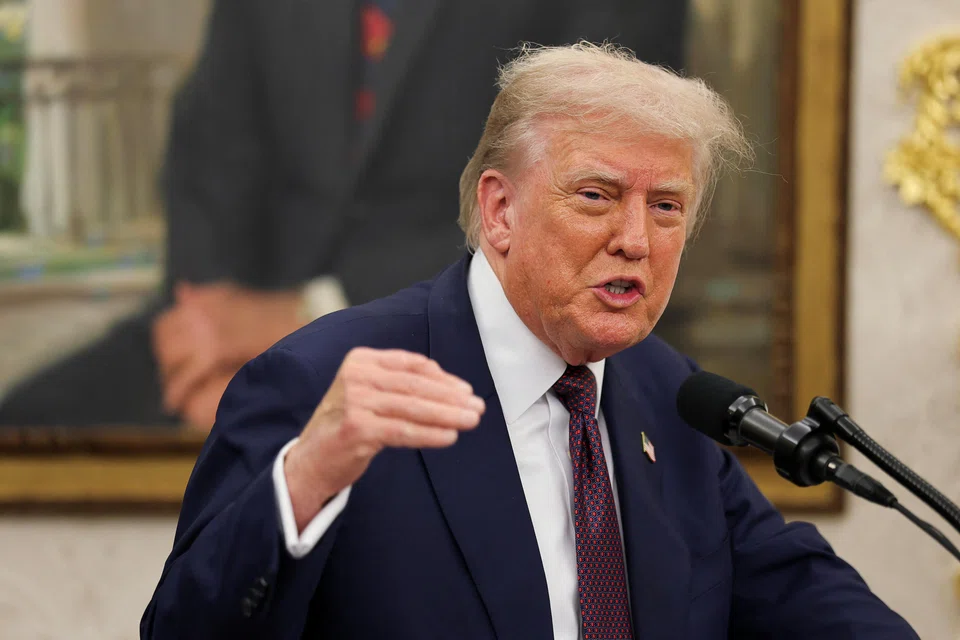
ON AUG 1, US President Donald Trump finalised reciprocal tariffs announced in April, bringing a measure of relief to Asian economies that secured rates at or below 20 per cent.
However, uncertainty over these deals, coupled with a potential slowdown in the global and US economies in the second half of the year, explains why the US yield curve may steepen further and in turn drive the greenback lower.
The larger damage to the US dollar, however, will be seen in the long run as tariffs force countries to diversify their trade away from the US to other economies. This will reduce the use of, and reliance on, the US dollar in global trade, which will erode its value.
Much uncertainty over what comes next for global trade
Notably, the world’s most significant trade deal is yet to be agreed. After the third round of trade talks between US and China, both parties were said to have agreed on a further extension of the trade truce.
US-China trade talks are complicated by many sensitive issues ranging from artificial intelligence (AI) and semiconductor technology access for China, to the export of rare earth and critical minerals to the US. The negotiations will have important implications to China’s economic health and the outlook for the rest of Asia.
For now, if tariffs imposed on China by the first Trump administration and the Biden administration are included, the Peterson Institute for International Economics has calculated that the average US tariffs on Chinese imports stand at 54.9 per cent, while the average China tariffs on US imports are at 32.6 per cent. Numbers in such a high range cannot be good for economic growth.
Meanwhile, trade deals with other key economies like India, Canada and Brazil have stalled, due to non-trade related foreign policy and geopolitical issues.
For the deals that have been inked, many come with additional investment commitments to the US – US$350 billion from South Korea, US$550 billion from Japan and US$600 billion from the European Union, for instance.
In each case, the news has been met with disapproval and scepticism domestically. How will these investments be funded and implemented? Countries may need to find workarounds or reductions in these commitments, throwing their trade deals into jeopardy.

There are also many questions as to how the tariffs on specific classes of goods will be implemented and stacked on. These include the Section 232 sectoral tariffs on industries including cars, semiconductors and pharmaceuticals, and the “transhipment tariffs” for goods considered to have been transhipped to avoid duties.
Increasing worries of a global economic slowdown in H2
Adding to this web of tariff-related uncertainties, the health of the US and global economy has reached a critical juncture. Interestingly, the global economy, including both US and Asian economies, did remarkably well for H1.
Due to the surge in exports, Singapore surprised the market with a strong above-trend 4.2 per cent gross domestic product growth for H1. Taiwan’s second-quarter GDP jumped by almost 8 per cent as well.
As a result of China’s economic resilience, the International Monetary Fund (IMF) upgraded its 2025 GDP forecast for emerging market and developing economies to 4.1 per cent from 3.7 per cent previously.
However, GDP numbers are backward-looking, and various authorities have warned that “payback” time comes next for the global economy as higher tariff rates hit.
In particular, the rush to front-load exports is likely over. Against expectations of a further recovery towards 50, China’s latest official manufacturing purchasing managers’ index disappointed with a pullback to 49.3 in July, suggesting that the manufacturing slowdown may have already begun.
The US economy also registered a stronger-than-expected 3 per cent year-on-year growth for Q2, but an intense debate is brewing on whether the negative impact of rising trade tariffs on the US economy will now be more keenly felt in H2.
US Federal Reserve chair Jerome Powell has said that US importers have so far been able to absorb most of the tariffs. But this is increasingly difficult with the higher tariffs from Aug 1 – leading to higher consumer prices, reduced demand and a drag on the economy.
Fed cuts and de-dollarisation to drive greenback down
We believe the Fed will resume its rate cuts at September’s Federal Open Market Committee meeting, after July’s disappointingly weak non-farm payrolls report. Effectively, the average job gain over the past three months has now been revised to just 35,000 – dropping to almost “stall speed” and signalling weakness in the labour market.
While Fed rate cuts will drive down short-term interest rates, longer-term rates like US Treasury yields will stay sticky due to concerns over the unsustainable US debt load. As a result, the US yield curve will likely steepen further, which will add pressure to the dollar.
Beyond these pressures, longer-term structural trends will weigh on the US dollar.
Many economies are realising that higher trade tariffs from the US are here to stay. To mitigate the risks, they will now need to restructure their supply chains and exports by diversifying trade to other economies, and by intensifying intra-regional trade with their immediate neighbours.
This may well accelerate de-dollarisation and reduce the parking of trade proceeds in US Treasuries, both of which are clearly negative for the dollar over the long run.
Some Asian currencies have been advancing against the US dollar in recent months. For instance, the Singapore dollar has strengthened to just under 1.3 to the US dollar. It will likely stay in this range for now – the Monetary Authority of Singapore is likely to delay further easing of monetary policy until this October or even January next year, when there is clear evidence that the pre-tariff export front-loading rush is over.
The US dollar index, which measures the value of the US dollar against a basket of key global currencies, has now dropped below 100. We expect it to fall towards 97 by the end of the year, and towards 95 by the middle of next year.
Due to strong safe-haven demand, we stay long-term positive on gold, which is expected to rise further to US$3,700 per ounce by mid-2026.
Trump will be long remembered for his promise to Make America Great Again – however, it is unlikely that he will be making the American dollar great again any time soon. The writer is head of markets strategy at UOB
Decoding Asia newsletter: your guide to navigating Asia in a new global order. Sign up here to get Decoding Asia newsletter. Delivered to your inbox. Free.
Share with us your feedback on BT's products and services
TRENDING NOW

NEA identifies 7 firms responsible for haze fires, notices issued urging action: Grace Fu
DBS remains analysts’ pick ahead of Q3 earnings after Singapore banks’ share slump

High Court rules against Julius Baer’s Singapore trust arm in US$50 million family trust dispute

Could stablecoins be the future of money?

