



Trump warns ‘won’t be anything left’ of Iran unless it agrees to deal to end war
The US had set five main conditions for a peace deal, including the removal of uranium used by Iran’s nuclear programme to the US
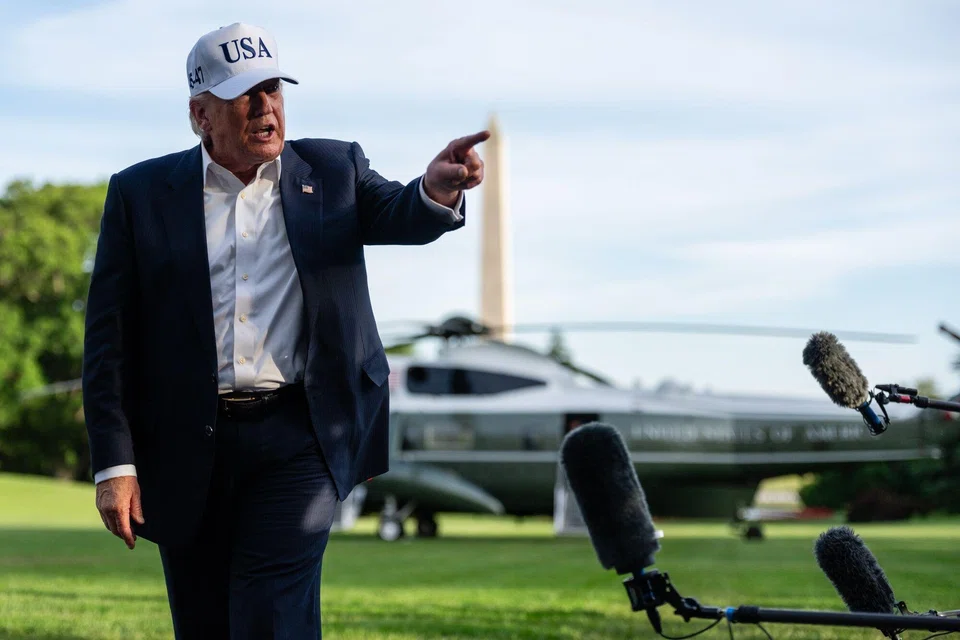
THE US and Iran remained far apart on Sunday (May 17) on a deal to end weeks of war and reopen the crucial Strait of Hormuz, as a drone attack sparked a fire at a United Arab Emirates nuclear plant, spotlighting the risks of a fragile ceasefire.
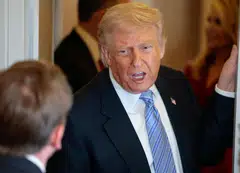
US President Donald Trump made clear his patience is wearing thin, posting on social media on Sunday that “For Iran, the Clock is Ticking, and they better get moving, FAST, or there will not be anything left of them. TIME IS OF THE ESSENCE!”
Iran’s semi-official Fars news agency said that the US had set five main conditions for a peace deal, including the removal of uranium used by Iran’s nuclear programme to the US; no US reparations to Teheran and the unfreezing of less than a quarter of Iran’s suspended assets. Fars did not give a source for the information, and the US has not publicly commented on such stipulations.
Meanwhile, the semi-official Mehr news agency said Washington offered “no tangible concessions” while seeking “to obtain concessions that it failed to obtain during the war, which will lead to an impasse in the negotiations”.
Trump met on Saturday with Vice-President JD Vance, White House envoy Steve Witkoff, Secretary of State Marco Rubio and CIA director John Ratcliffe to discuss the war, Axios reported on Sunday. He is expected to meet again with his national security team on Tuesday.
“We want to make a deal,” Trump told Axios, adding he’s waiting for an updated Iranian proposal. “They are not where we want them to be. They will have to get there or they will be hit badly, and they don’t want that.”
Since the ceasefire began on Apr 8, Trump has repeatedly threatened to resume the bombing campaign that bean on Feb 28.
Drone attack
Sunday’s drone attack in the UAE sparked a blaze in an electrical generator outside the inner perimeter of the Barakah power plant and had no impact on radiological safety, Abu Dhabi’s media office said in a statement. Authorities were working to extinguish the conflagration, which didn’t cause any injury, it said.
The drone that hit the power plant was one of three fired from west of the emirate, the UAE defence ministry said. The other two were intercepted. The UAE said that it was investigating the source of the attack. Saudi Arabia, which borders UAE to the west, condemned the attack.
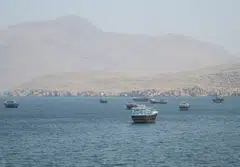
Iranian threats on shipping in the Persian Gulf have brought the region’s energy exports to a near-standstill, sending global prices soaring and giving Teheran significant leverage in talks with the US.
The US-Israeli war on Iran has claimed thousands of lives, mainly in the Islamic Republic. Retaliatory attacks by Teheran targeted US allies across the Gulf, including the UAE, which has carried out intermittent strikes on Iran in response, Bloomberg has reported.
In Jerusalem, Israeli Prime Minister Benjamin Netanyahu, briefing his Cabinet about the Iran crisis, said that he would speak to Trump later on Sunday for an update on the China visit. A member of Netanyahu’s security cabinet, Zev Elkin, said that the country was poised to resume strikes on Iran should Trump decide to do so.
“We have targets that we want to hit, of course,” Elkin told Kan radio. “The current situation, with the US blockade continuing, would also be good for Israel, because it’s wreaking major damage upon the Iranian economy on a daily basis.”
Iranian President Masoud Pezeshkian has said his country is committed to a diplomatic resolution to the conflict. Several energy shipments have managed to clear the Strait of Hormuz in recent weeks, and an Iranian official said this weekend authorities were working on a formal law and framework to allow passage for some vessels.
The US and China, the world’s two largest economies, sought to emphasise points of agreement on the Middle East conflict when Trump met last week with China’s Xi Jinping, an ally of Iran.
On his way back from Asia, Trump told reporters he had discussed with the Chinese leader potentially lifting sanctions on Chinese oil companies that buy Iranian crude. The Treasury Department has escalated the penalties in recent weeks as the US tries to pressure Teheran on talks, while Beijing has ordered its companies to ignore the sanctions.
“I’m going to make a decision over the next few days,” Trump said aboard Air Force One when asked if he’d consider lifting the sanctions. “We did talk about that.”
Trump said that three Chinese tankers that went through Hormuz loaded with Iranian oil this week did so because the US allowed it. Iranian state TV had previously said over 30 ships were allowed passage through the strait since Wednesday night, citing an official from the Islamic Revolutionary Guard Corps’ navy.
The White House faces a conundrum: How to reopen the strait, lower global energy prices and wind down an increasingly unpopular conflict that has caused the biggest oil supply disruption in history ahead of midterm elections in November.
Brent crude has jumped about 50 per cent since the start of the war, with traders fearing a fresh escalation in hostilities between the US and Iran after Trump’s visit to China failed to yield any concrete progress on a plan to restart the Strait of Hormuz.
Pakistan’s Interior Minister Mohsin Naqvi arrived in Teheran on Saturday, where he met his Iranian counterpart. The two discussed bilateral relations and the prospects for resuming US-Iran peace negotiations, for which Pakistan has been the main mediator, the semi-official Tasnim news agency reported.
Iran’s highly enriched uranium, which has been in an unknown location since a US and Israeli bombing campaign in June last year, remains one of many obstacles to a peace agreement.
Elkin said that the enriched uranium was not out of reach. “One could certainly get to it, if there’s a willingness,” he said. BLOOMBERG
Decoding Asia newsletter: your guide to navigating Asia in a new global order. Sign up here to get Decoding Asia newsletter. Delivered to your inbox. Free.
Share with us your feedback on BT's products and services
TRENDING NOW

DBS, OCBC, UOB rout lops billions off STI as inflation, rate concerns spook investors

Grab CEO’s wife Chloe Tong on life with Anthony Tan and finding her purpose

OCBC sheds S$8 billion in value as shares close nearly 6% down; analysts cautious on banks

Deal between tycoon friends sparks scrutiny of Philippine power sector

