



Trump welcomes Xi to Washington as leaders seek trade truce despite deep tensions
Two leaders will discuss ‘super intelligence’ - his name for AI - but Trump does not expect any substantive policy moves
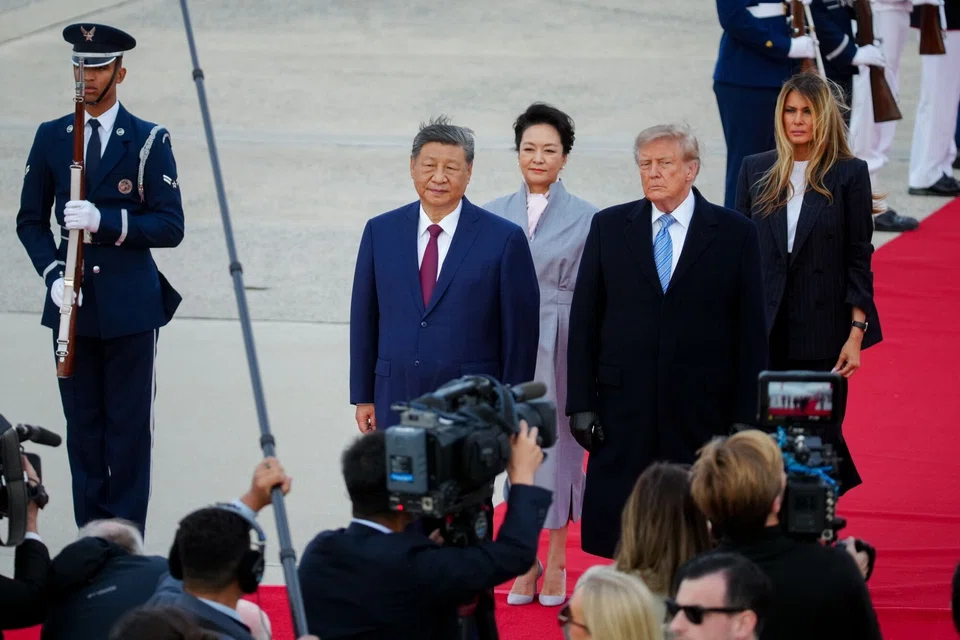
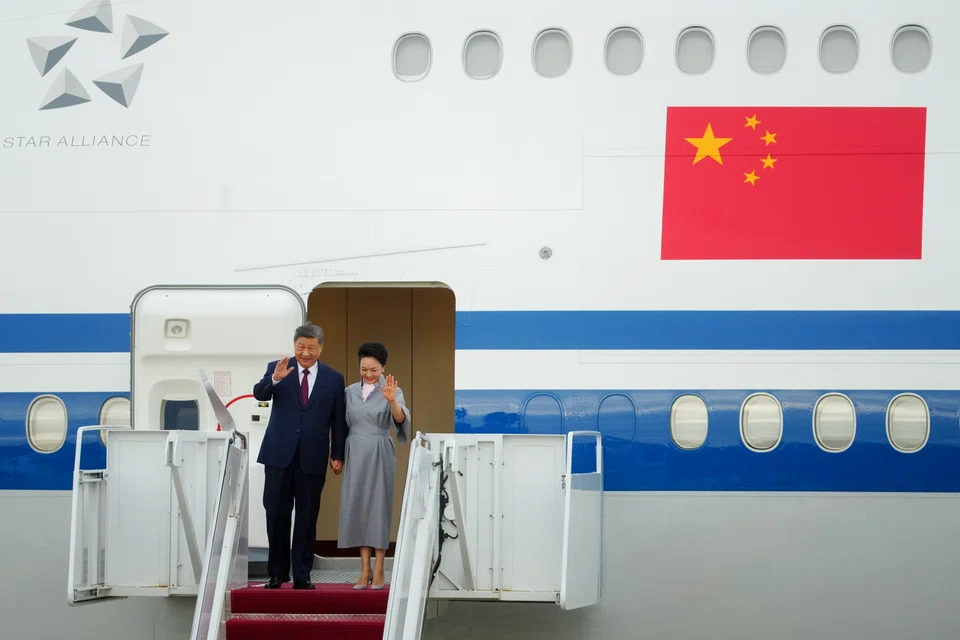
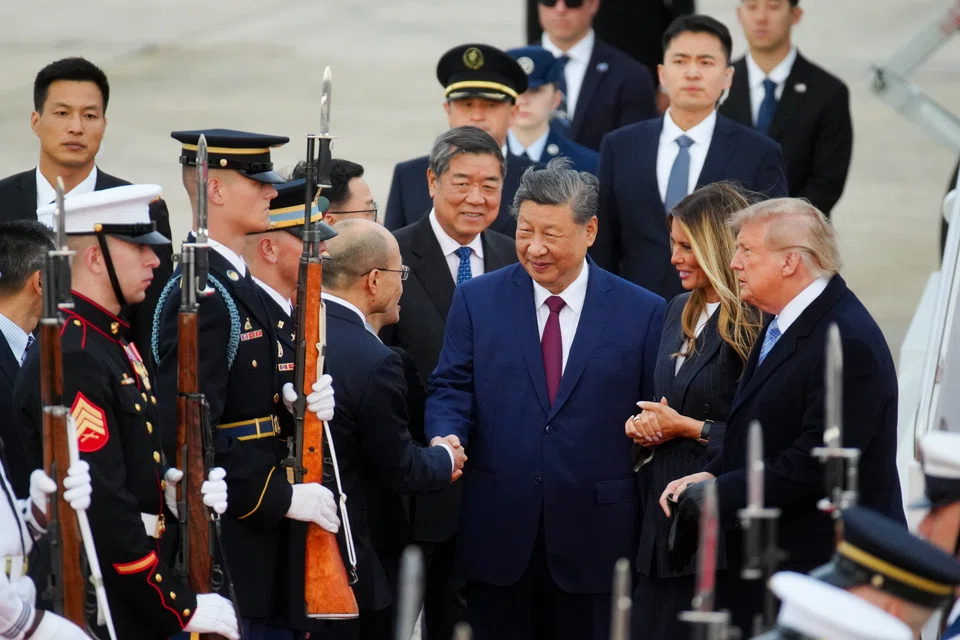
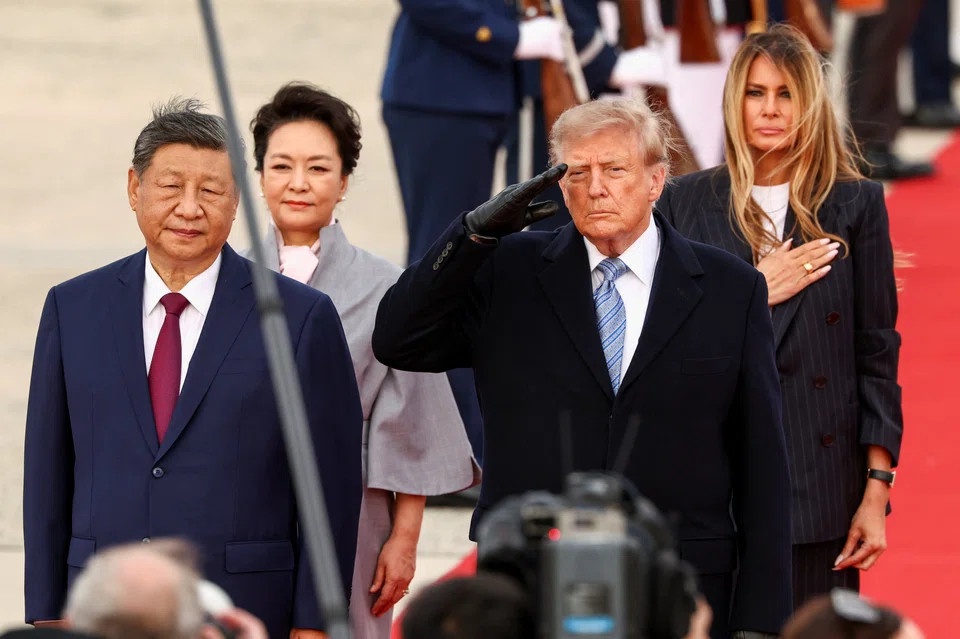
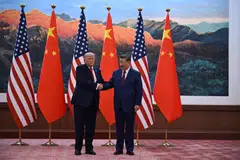
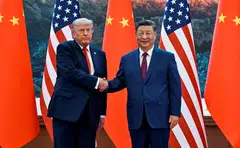
[WASHINGTON] US President Donald Trump welcomes Chinese President Xi Jinping to the White House on Thursday (Sep 24) for a lavish state summit expected to be heavy on symbolism but light on substance, with both leaders keen to showcase stable ties despite a deep underlying rivalry.
It will be the year’s second meeting of the leaders of the two biggest economies, but Xi’s first visit to Washington in more than a decade.
Trump greeted Xi on arrival on Wednesday evening, the first time a US president has welcomed a foreign leader at Joint Base Andrews in 11 years, when President Barack Obama welcomed Pope Francis in 2015, according to C-SPAN, which tracks presidential events.
In a statement on arrival carried by China’s Xinhua news agency, Xi voiced hope for a more stable relationship with the US, saying Beijing and Washington should be “partners, not rivals” and that the “historical logic of peaceful coexistence” between the two countries had not changed.
For Trump, who relishes ceremony and prizes his ties with powerful leaders, the visit is as much a matter of national prestige as an opportunity for high-stakes diplomacy.
The US president aims to reciprocate the grand welcome he received in China in May and impress Xi with a ceremony spanning the White House South Lawn, State Floor and Rose Garden.
Major breakthroughs are not expected.
Analysts say tangible outcomes are likely to be limited to an extension of a trade truce expiring in November and an agreement to examine threats posed by artificial intelligence.
US Treasury Secretary Scott Bessent told Fox News on Wednesday after talks with Chinese Vice-Premier He Lifeng that they had agreed to extend until Jan 10, 2027, an agreement that paused a trade war that saw mutual tariffs top 100 per cent.
SEE ALSO
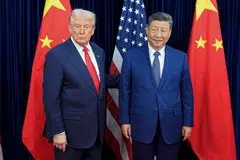
Trump wrote in a Truth Social post on Thursday morning that the two leaders would discuss “super intelligence” - his name for AI - but that he did not expect any substantive policy moves.
“Super Intelligence (SI) will be a big topic of discussion, but I want to leave it exactly where it is,” Trump wrote.
“That is China’s position also.”
People familiar with the plans say the talks could also yield deals to lower some tariffs, combat drug trafficking and expand military-to-military dialogue, while Trump is expected to seek the release of Americans and others detained in China.
Former Deputy Secretary of State Kurt Campbell said the summit was less about substantive negotiations than a chance for two forceful leaders to project strength.
“This is really the historical reincarnation of what we often referred to in antiquity as single combat - really powerful guys, each representing their civilizations, kind of measuring and going toe to toe,” said Campbell.
Keeping ties stable
Xi appears to be in a stronger position, having overseen a surge in China’s trade and controlling supplies of rare earth minerals that give him a powerful source of leverage.
Both leaders see advantages in keeping relations stable, with Trump mired in the unpopular Iran war and Xi grappling with domestic economic challenges.
But beneath the surface are challenges that could reignite tensions, including disputes over Taiwan, export controls and AI.
Taiwan, a democratically governed island claimed by China, is the most contentious of these.
US allies in Asia are concerned Trump may be tempted to soften Washington’s support for Taipei to lock in economic wins with China.
Xi is expected to press Trump to halt Taiwan arms sales and could do this during a planned visit by the two to the US National Archives on Friday, sources briefed told Reuters. In return, China is offering help to put pressure on Iran, the sources added.
After the May summit, Trump said he was holding in abeyance an arms package worth some US$14 billion and called it a “very good negotiating chip.”
The leaders will likely discuss the Iran war, but there has been little sign Beijing is willing to exert pressure on its ally to yield to US demands, despite the disruption the conflict has caused to energy supplies and trade.
Trade deals possible
Trade is more promising.
Trump is seeking trade wins ahead of the midterms and US Trade Representative Jamieson Greer said in September the countries will make “some announcements on agriculture and non-tariff barriers.”
Greer said on Monday China is making progress on a commitment to buy 200 Boeing aircraft, but gave no indication that any additional orders are near.
Analysts say AI could be an area for cooperation, given its implications for national security, economic competitiveness and military capabilities, and shared US and Chinese concerns about misuse.
Bessent discussed AI with He Lifeng at the weekend, and US Secretary of State Marco Rubio said there was nascent thinking about “the equivalent of a hotline that we had during the Cold War” to avoid dangerous incidents that “could impact economies or societies and even lead to a conflict between nation-states.”
However, analysts say intense competition in AI is likely to limit the scope for anything beyond symbolic agreements.
The guest list for Thursday’s state dinner includes CEOs like Apple’s Tim Cook, Amazon’s Jeff Bezos, Alphabet’s Sundar Pichai, Open AI’s Sam Altman, Tesla’s Elon Musk and Nvidia’s Jensen Huang, but despite such an array, people familiar with US plans say Trump is likely to maintain firm export controls on US tech Xi wants loosened. REUTERS
Decoding Asia newsletter: your guide to navigating Asia in a new global order. Sign up here to get Decoding Asia newsletter. Delivered to your inbox. Free.
Share with us your feedback on BT's products and services
TRENDING NOW

Once staunchly pro-China, Malaysian Chinese businesses are now distancing themselves from Beijing

Looking beyond looming CEO succession, should UOB potentially pursue a transformative merger?

Could stablecoins be the future of money?

Grab CEO’s wife Chloe Tong on life with Anthony Tan and finding her purpose

