



Trump’s latest global tariffs are being challenged in a US court. Here’s how
The complaint by two small US businesses challenges the tariffs on three grounds
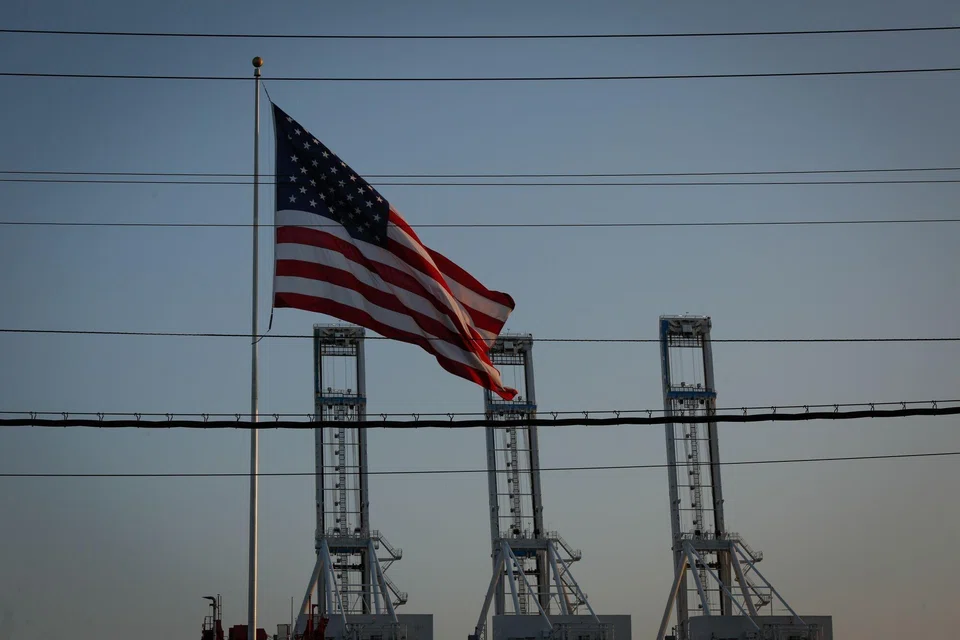
THIS time, it was only hours after US President Donald Trump’s latest global tariffs took effect before they became the subject of a legal challenge. His administration is once again accused of abusing US trade law to the detriment of American businesses and consumers.
The duties were imposed on Jul 24 under Section 301 of the Trade Act of 1974. They are set at a rate between 10 per cent and 12.5 per cent and apply to imports from around 60 economies that the US accuses of failing “to impose and effectively enforce a prohibition on the importation of goods produced with forced labor.” The impacted trading partners supply almost all US imports.
Section 301 allows the Office of the US Trade Representative (USTR), under the direction of the US president, to impose tariffs in response to other nations’ trade measures it deems discriminatory to American businesses or in violation of US rights under international trade agreements. Previous administrations have largely used Section 301 to target specific countries or trading blocs.
Two small businesses, New York-based spices importer Burlap & Barrel and California-based watch importer Collective Horology, filed the lawsuit in the US Court of International Trade in Manhattan, New York. They accuse Trump and US officials of unlawfully using Section 301 to replace earlier tariffs that were struck down or expired.
Trump’s first global tariffs were invalidated by the US Supreme Court, which ruled that the emergency law he invoked to impose them did not give him tariff powers. A subsequent set of global tariffs, issued under Section 122 of the Trade Act, are also the subject of litigation, but they have expired.
The complaint against the Section 301 tariffs blasts what the businesses describe as Trump’s latest “assertions of unilateral executive branch tariff authority.” The businesses are represented by Liberty Justice Center, an American non-profit law firm, which also challenged both sets of Trump’s earlier global tariffs. The centre said in a statement that “forced labor is morally indefensible, but an important objective does not give the government permission to ignore the law.”
The complaint challenges the tariffs on three grounds:
- That they exceed Section 301 authority
Under Section 301, the USTR can only take action after it determines that an “act, policy, or practice of a foreign country is unreasonable or discriminatory and burdens or restricts” US commerce.
The businesses allege in their complaint that the Trump administration exceeded its authority under the law because it failed to establish valid findings along those lines for each affected country.
SEE ALSO
Section 301 is “a targeted trade-remedy statute, not an unrestricted delegation of authority to establish general tariffs,” the businesses said.
- That they’re ‘arbitrary and capricious’
The second claim in the lawsuit accuses the US government of violating provisions of the federal Administrative Procedure Act (APA), which bars government policies that are “arbitrary, capricious, and contrary to law.”
The small businesses allege that Trump’s Section 301 duties violate the APA because the USTA “failed to provide a reasoned explanation” for the tariff rate on each affected country.
“A generalized conclusion that forced labor distorts global commerce does not rationally support the imposition of broad tariffs on a particular economy’s products without an explanation of that economy’s particular role in causing a burden or restriction on United States commerce,” the suit says.
On Jun 2, the USTR released a report on its forced-labour investigation under Section 301. The report does not attempt to say whether specific nations are actually importing goods made with forced labour, nor does it look at whether products are being made in those countries using forced labour.
Rather, the USTR assessed whether a country has a formal ban in place on goods imported using forced labor and if it is enforcing a prohibition or otherwise attempting to block such imports.
- That Section 301 may be unconstitutional
The businesses argue in their third claim that if the Trump administration is correct about its broad interpretation of Section 301, then the provision itself may violate the US constitution by ceding too much congressional authority.
The US constitution gives Congress the power to levy taxes and duties and to “regulate commerce with Foreign Nations,” though lawmakers have for decades delegated parts of their power over trade via various pieces of legislation, most of which allow US presidents to deploy tariffs only for limited reasons.
The small businesses cite the so-called non-delegation doctrine, which, they say, “requires Congress to supply an intelligible principle that meaningfully guides and constrains the exercise of delegated authority.”
The suit argues that Congress imposed limits on Section 301 to target a specific foreign policy and seek to correct it – not to cede its tariff authority.
“Those limits define Section 301 as a targeted trade-remedy statute,” the businesses said. “They do not authorize a general delegation to impose countrywide tariffs as a means of advancing any policy objectives the Executive Branch considers desirable.” BLOOMBERG
Decoding Asia newsletter: your guide to navigating Asia in a new global order. Sign up here to get Decoding Asia newsletter. Delivered to your inbox. Free.
Share with us your feedback on BT's products and services
TRENDING NOW

Good Class Bungalow market activity picks up pace on ‘realistic’ pricing
Indonesia imposes US$116 million in fines over manipulation of Sinar Mas, Prajogo-linked stocks

Singapore identifies 7 firms responsible for haze fires, notices issued urging action: Grace Fu

Once staunchly pro-China, Malaysian Chinese businesses are now distancing themselves from Beijing

