Trump’s tariff refunds may total up to US$182 billion, estimates find
After the Supreme Court ruling, the Trump administration imposed a temporary 10 per cent global tariff
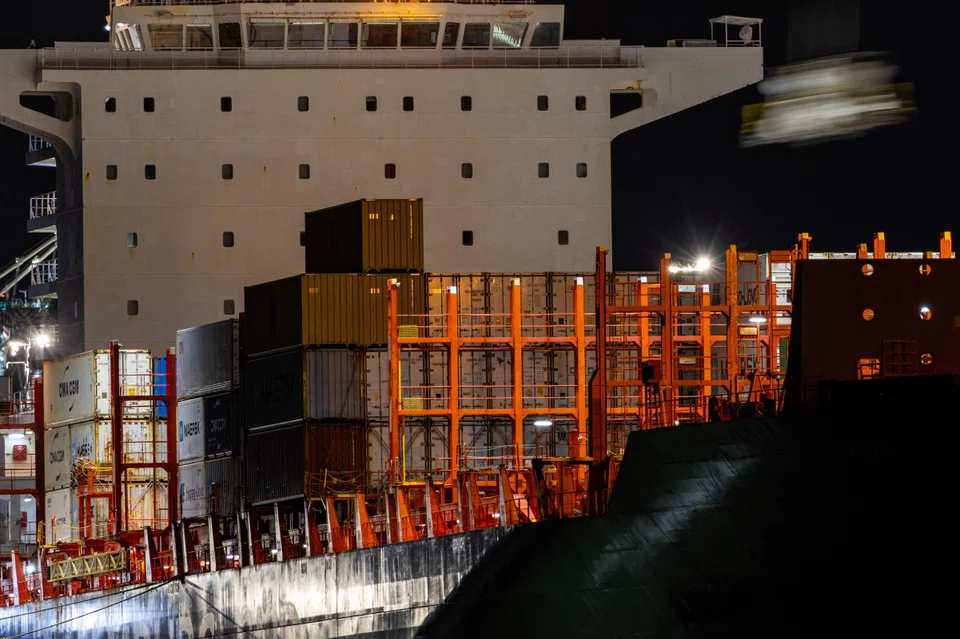
[WASHINGTON] A federal judge on Wednesday (Mar 4) ordered the US government to begin paying refunds of President Donald Trump’s emergency tariffs that the US Supreme Court deemed illegal in late February. This could ultimately return US$168 billion to US$182 billion to importers, budget analysts estimate.
The mechanism for doing that is far from clear, but Court of International Trade Senior Judge Richard Eaton ordered the Customs and Border Protection (CBP) agency to report on Friday its initial ideas for a refund plan that would avoid thousands of individual lawsuits.
“I want to make it clear to the customs service that they have to refund any money that was unlawfully collected,” Eaton told a hearing on Wednesday.
Here is a look at estimates and official data on tariff collections:
Penn Wharton budget model
Economists at this University of Pennsylvania fiscal research group estimate that CBP has collected up to US$182 billion in gross revenue from tariffs imposed under the International Emergency Economic Powers Act (IEEPA) between Feb 4, 2025 and Feb 23, 2026.
The estimate, produced at Reuters’ request, is derived from a ground-up forecasting model that cross-references tariffs on about 11,000 product categories across 233 countries.
Penn-Wharton used an alternative method to reach a second estimate of about US$177 billion in IEEPA tariff revenues. Economists arrived at that figure by calculating the percentage of total US Treasury customs receipts that were IEEPA tariffs through Dec 14, then applying that same share to later customs receipts.
CBP last reported US$133.5 billion in IEEPA tariff assessments on Dec 14.
SEE ALSO





Budget laboratory at Yale University
IEEPA tariff revenue through Feb 19 totalled US$168 billion, based on forward projections of the CBP assessments data through Dec 14, putting the Yale group slightly lower than the PWBM estimates.
The Yale group estimated that as of January 2026, all tariffs imposed by Trump in 2025 raised the average inflation-adjusted customs revenue by US$194.8 billion above the 2022-2024 average. This includes an increase of US$174.7 billion over the course of 2025 and US$20.1 billion in January 2026.
The Yale laboratory said that it had calculated a 9.9 per cent effective US tariff rate prior to the Supreme Court ruling against the IEEPA tariffs.
Estimates of temporary tariff revenue
After the Supreme Court ruling, the Trump administration imposed a temporary 10 per cent global tariff under Section 122 of the Trade Act of 1974 and announced it would rise to 15 per cent.
The Committee for a Responsible Federal Budget (CRFB) estimated that the 10 per cent tariff would generate about US$35 billion of net new revenue over the 150 days it is allowed to be in effect under the law, rising to about US$50 billion at a 15 per cent rate.
Congress would have to approve any extension, but if it did so, or the revenue was replicated through other tariff authorities, CRFB estimates the revenue over the next decade would exceed US$900 billion at 10 per cent or US$1.3 trillion at 15 per cent.
While in effect, the Section 122 tariffs would replace over half the revenue lost due to the Supreme Court ruling at 10 per cent and over three-quarters at 15 per cent, CRFB said.
Penn Wharton estimates the 10-year total revenue from Section 122 duties somewhat higher, at US$1.51 trillion assuming a 15 per cent rate. It estimates that 2026 revenue from these duties could total US$136 billion if left in place for a year. REUTERS
Decoding Asia newsletter: your guide to navigating Asia in a new global order. Sign up here to get Decoding Asia newsletter. Delivered to your inbox. Free.
Share with us your feedback on BT's products and services