Trump’s US$100,000 H-1B visa fee upheld by judge
Judge rejects the US Chamber of Commerce’s argument that the president does not have the power to impose the fee
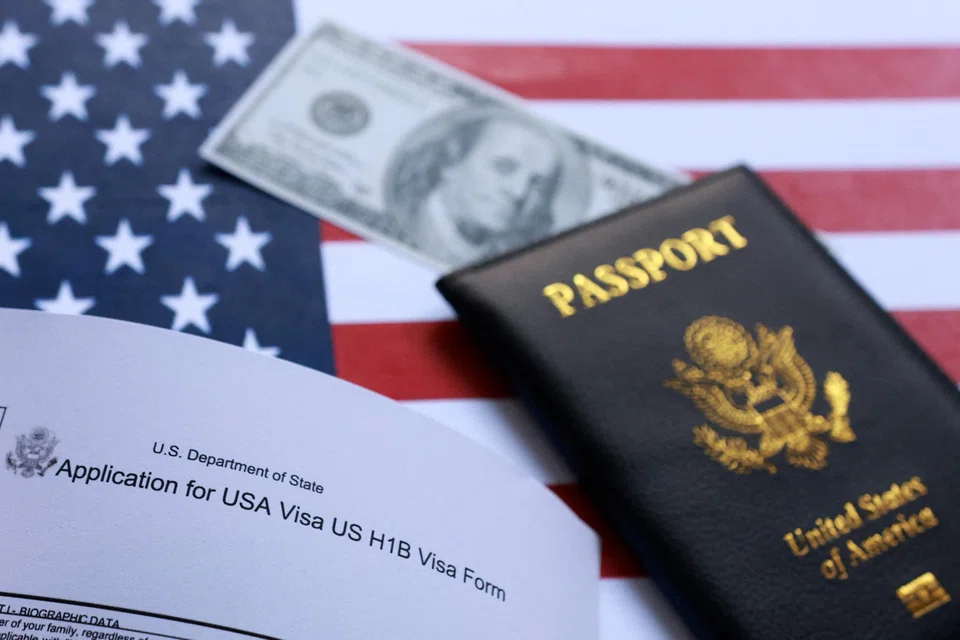
[WASHINGTON] A federal judge in the United States said the Trump administration can move ahead with a US$100,000 fee on new H-1B visa applications, providing a setback for US technology companies that rely on hiring skilled foreign workers.
US district judge Beryl Howell said in a ruling on Tuesday (Dec 23) that President Donald Trump’s move to radically increase the cost of the popular visa is lawful.
The decision provides a boost to the administration’s campaign to restrict immigration and push demand for US workers. The Chamber of Commerce, which sued to block the proposal, can appeal.
Howell rejected the chamber’s argument that the president does not have the power to impose the fee, finding that his proclamation was issued under “an express statutory grant of authority to the president”.
“Here, Congress has granted the president broad statutory authority, which he has used to issue the proclamation addressing, in the manner he sees fit, a problem he perceives to be a matter of economic and national security,” she wrote.
The chamber’s press office did not immediately respond outside regular business hours to a request for comment.
The system
The H-1B visa programme is a cornerstone of employment-based immigration, allowing companies in the US to hire college-educated foreign workers for specialised occupations.
Introduced in 1990, the programme is one of a series of immigration initiatives created during the 20th century to address specific labour shortages.
Others facilitated the employment of temporary farmworkers from Mexico during World War II, sheep-herders mainly from Spain in the 1950s, and nurses, many of whom entered the US from the Philippines, in the 1990s.
H-1B visas are awarded based on a lottery system, but are used primarily in the tech industry, where leaders say there is a dearth of professionals with science, maths and computer skills in the US.
“Computer-related” occupations accounted for about 65 per cent of H-1B approvals in fiscal year 2023. Amazon, Tata Consultancy Services, Microsoft, Meta Platforms and Apple are among the companies with the greatest number of H-1B visas, according to the US government.
The overwhelming majority of H-1B visas go to Indian-born workers, who made up 71 per cent of H-1B visa recipients approved in fiscal year 2024. Chinese-born workers made up 12 per cent of recipients.
For international graduate students in the US, the visa is a key pathway to remaining in the country after finishing their education.
Applicants must have at least a bachelor’s degree. The visas are temporary, lasting as long as six years, but can be extended indefinitely if a company has sponsored a worker’s employment-based green card application for permanent residency in the US.
The new fee
In September, Trump signed a proclamation to increase the application fee to discourage companies from abusing a programme that he claimed displaces US workers.
New H-1B visa applications – including petitions for the 2026 lottery – are subject to a US$100,000 fee.
Previously, fees were far more modest; those directly tied to the H-1B application process included a US$215 lottery registration payment along with other filing fees meant to cover such things as fraud investigations and the training of American workers.
The new fee does not apply to previously issued H-1B visas or petitions submitted before Sep 21.
Trump has described the measure as an initial, incremental step toward reforming the visa programme in order to “curb abuses and protect American workers”.
Also on the cards
The president also plans to order the Department of Labor to undertake a rulemaking process to raise current wage levels for H-1B workers – a move intended to limit the use of visas to undercut wages that would otherwise be paid to American workers.
A similar effort to raise the lowest required wages for H-1B workers during the first Trump administration was blocked by federal courts over procedural violations.
The Department of Homeland Security, meanwhile, has already signalled plans to issue proposed regulations doing away with the randomised lottery to allocate H-1B visas, and to instead prioritise high-skilled, high-paid foreign workers.
Business groups warned that a proposal to end the lottery and steer visas to higher-paying jobs during Trump’s first term would cut off hiring of recent foreign graduates at US colleges.
The chamber, the nation’s largest business lobbying group, argued in its October lawsuit that raising the fee is unlawful because it overrides federal immigration law and exceeds the fee-setting authority afforded by Congress.
Also challenging Trump’s proclamation is a group of 19 state attorneys-general. Their lawsuit focuses on the projected impact to the public sector, particularly in the fields of healthcare and education, that also rely on the H-1B visa programme.
A separate suit was filed by a global nurse-staffing agency. BLOOMBERG
Decoding Asia newsletter: your guide to navigating Asia in a new global order. Sign up here to get Decoding Asia newsletter. Delivered to your inbox. Free.
Share with us your feedback on BT's products and services