



‘Under human control’: Xi urges AI safeguards at White House summit as Trump resists curbs
Long-standing feuds linger between the superpower rivals on issues including trade and Taiwan
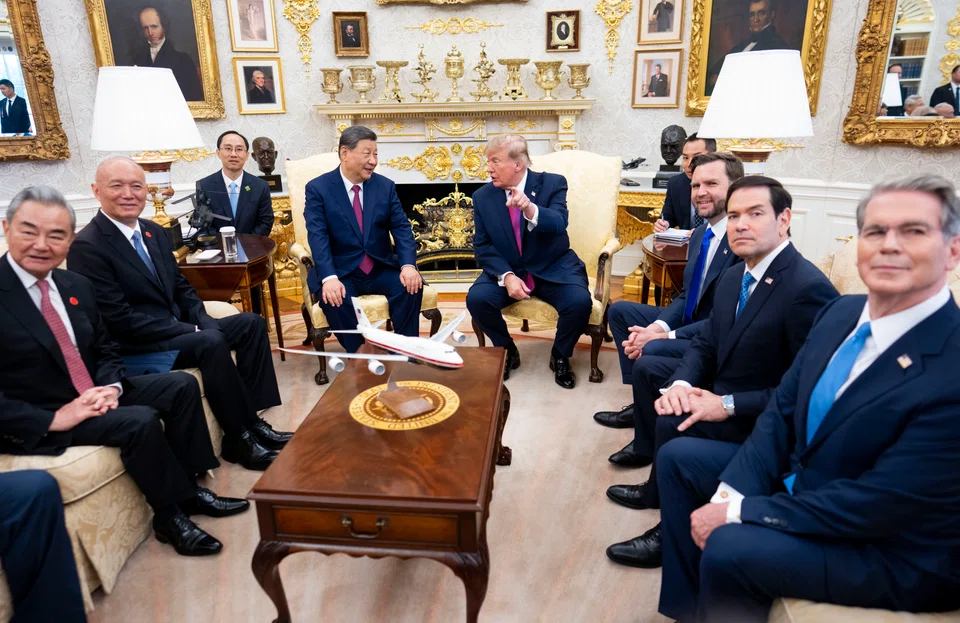
DONALD Trump and Xi Jinping addressed their intense competition over artificial intelligence on Thursday (Sep 24) during a summit aimed at keeping ties between the world’s largest economies on track.
How the leaders are handling AI is one of the key questions looming over the state visit, with the US president arguing for unfettered development to keep his nation’s edge. China, meanwhile, has criticised American export controls on semiconductors and other inputs that it argues constrains its companies.
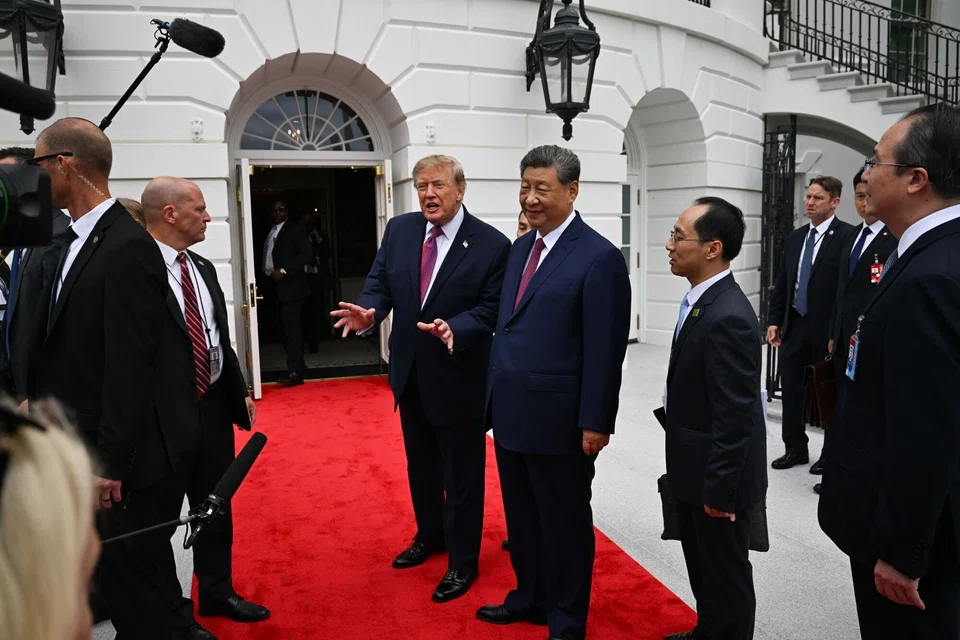
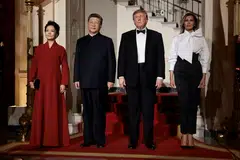
Trump said the two men would discuss issues related to security, technology and AI. “If we focus on our common interests, I’m confident there is much we can achieve throughout history,” he said during remarks in the Grand Foyer of the White House.
Earlier, the US president posted on social media that he wants to keep AI “exactly where it is,” suggesting he would stand by his long-standing opposition to guardrails.
By contrast, China’s top leader indicated some openness to setting boundaries. “We have both the capability and responsibility to develop and manage AI for good and ensure the development of AI is always under human control,” Xi said.
The comments represent the first time the leaders have jointly addressed warnings by Silicon Valley executives and some US policymakers that the technology could pose a threat to humanity.
Superpower rivalry
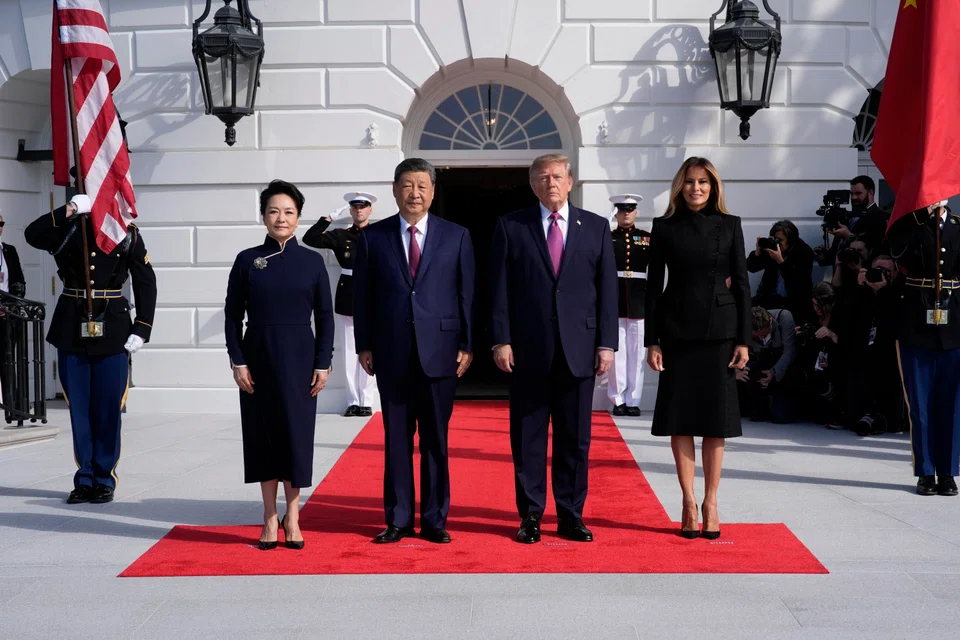
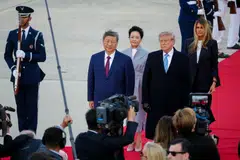
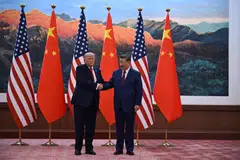
The summit began as state visits traditionally do on the South Lawn, with Trump, Xi and their spouses shaking hands and posing for an official photo. A separate ceremony after their remarks included a military review and flyover.
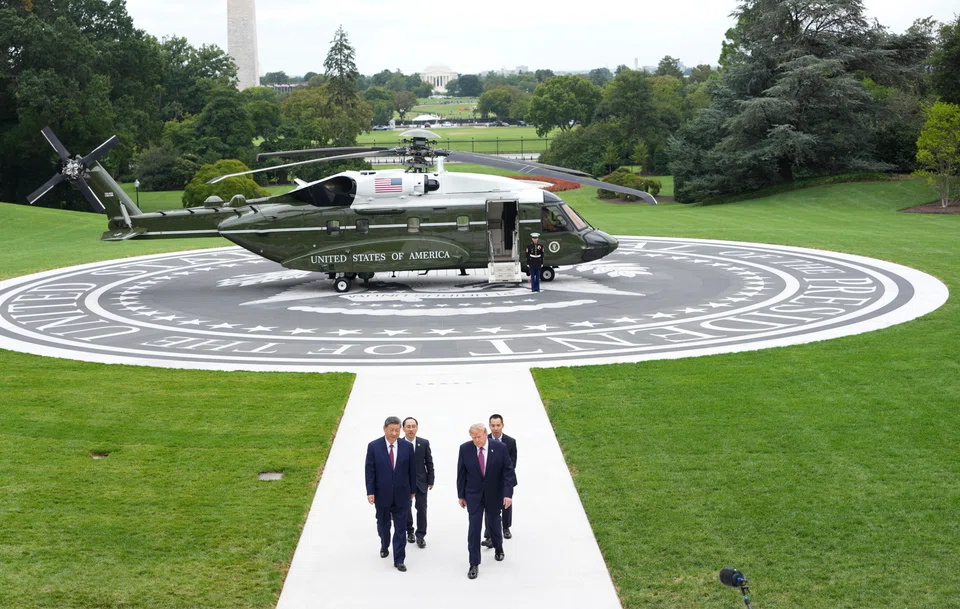
Trump was also eager to show off his renovation projects at the White House, including the massive new ballroom being built on the site of the historic East Wing, which he had demolished. In a highly unusual move, Trump invited Xi onboard the new presidential helicopter while they viewed a new stone helipad on the South Lawn.
“He’s an expert on stone, aside from many other things, and he loves good granite,” Trump said of Xi. On the meeting itself, Trump merely said it was “great” and declined to answer questions from reporters about the substance.
SEE ALSO
Underneath that pageantry, long-standing feuds linger between the superpower rivals on issues including trade and Taiwan, in addition to the new fight emerging on AI.
Xi issued his most explicit call for Trump to change the US’s stance on Taiwan, urging him to “oppose” independence for the self-ruled island that Beijing sees as its own territory. Washington’s official position on the island is that it does not support independence, and opposes unilateral changes to the status quo by either Beijing or Taipei.
Trump said Xi and he had made “tremendous strides on the issues facing our two countries,” referring to efforts to expand access to the Chinese market for US farmers and ranchers under the newly created Board of Trade.
Against a backdrop of American and Chinese flags, Trump mostly stuck to a script in his formal remarks and did not mention the hot button issue of Taiwan.
Xi, who was more expansive in his opening remarks, called to strengthen communication on trade, finance and foreign affairs with the US, saying the two sides “will both lose in confrontation.”
He added there was room for more direct flights between the two countries and announced two pandas would arrive in a few days at Zoo Atlanta, in the US state of Georgia.
China announced after the meeting between the leaders that it had reached a new joint arrangement with the US, according to the official Xinhua News Agency, but without elaborating on the details.
Hours earlier, the US announced an agreement to extend its trade truce with China by around two months to Jan 10, 2027. Struck in 2025, that deal has kept down tariffs after Trump set off a trade war with Beijing during the first months of his second term.
The visit comes at a precarious time for Trump, who is facing a cost of living crisis worsened by his decision to wage war on Iran. High prices have fuelled voter discontent, putting his fellow Republicans in danger of losing control of Congress in the November midterm elections.
Some members of Trump’s own party have criticised the manner in which he is hosting Xi, including Senators Roger Wicker, typically a reliable ally of the president, and Thom Tillis.
Xi arrived in the US powering toward a precedent-defying fourth term in office next year and with China’s chokehold on rare earths giving Beijing enduring leverage. But the Chinese leader is also grappling with sluggish growth and rising youth unemployment.
Xi’s first state visit to America in 11 years was not broadcast on major American TV television stations after Trump banned three media organisations from the White House, prompting top networks to decline to film the proceedings. White House and Chinese cameras captured it instead.
During their meeting in the Oval Office, Trump made a joke about how the Chinese have the friendliest press corps, according to photographers who were present. Journalists representing print and other mediums were excluded from coverage.
AI debate
While Silicon Valley’s AI leaders have warned of the dangers of unbridled development of the technology, Washington and Beijing have signalled no intention to slow down AI development.
Trump has dismissed the potential dangers of AI as a “hoax” while brushing aside calls for a government regulations. Beijing sees little reason to hit the breaks in part because it’s already behind – though closing the gap fast.
But both sides are looking at how to manage shared risks. Treasury Secretary Scott Bessent has said the administration proposed an emergency hotline for AI incidents and discussed a dialogue mechanism with his Chinese counterparts during a Sep 20 meeting in New York.
Tensions over AI was on display again when on Thursday evening Trump hosted Xi for the second state dinner of his term.
In a demonstration of US technological and financial might, luminaries from Wall Street and Silicon Valley joined Trump for a state dinner honoring Xi. They included OpenAI’s Sam Altman, who has accused Chinese AI startup DeepSeek of taking a “free-ride” on the developments of US frontier labs, and Jensen Huang whose best Nvidia chips are banned from being sold to China.
Those frictions, however, was glossed over by a dinner of yellow squash veloute and sesame-crusted sea bass. BLOOMBERG
Decoding Asia newsletter: your guide to navigating Asia in a new global order. Sign up here to get Decoding Asia newsletter. Delivered to your inbox. Free.
Share with us your feedback on BT's products and services
TRENDING NOW

Once staunchly pro-China, Malaysian Chinese businesses are now distancing themselves from Beijing

Looking beyond looming CEO succession, should UOB potentially pursue a transformative merger?

Could stablecoins be the future of money?

Grab CEO’s wife Chloe Tong on life with Anthony Tan and finding her purpose

