



US renews strikes on Iran after two military personnel killed
The attacks are ‘designed to further degrade’ Teheran’s ability to threaten shipping in the Strait of Hormuz
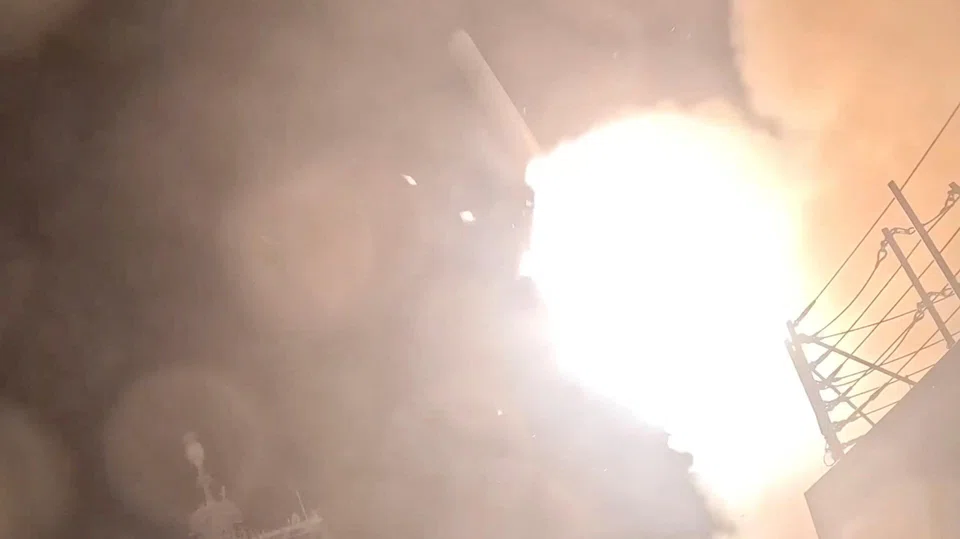
[DUBAI] The US said it had completed an eighth straight night of attacks against Iran after earlier announcing that at least two US military personnel were killed in Jordan, while US allies in the region reported more Iranian attacks on Sunday (Jul 19).
The US military also confirmed a third death in recent days, saying a service member was killed on Saturday in northern Iraq, where the US has military bases, during a controlled detonation of what Central Command called unexploded ordnance on a downed Iranian attack drone.
The US and Iran have intensified attacks as an interim ceasefire agreement signed a month ago has unravelled and a struggle for control of the Strait of Hormuz, a vital shipping channel, has deepened, raising the risk of a return to all-out hostilities.
Israeli officials said Israel was preparing to receive more US refuelling aircraft after the recent escalation, and ahead of a possible expansion of US military operations against Iran.
US Central Command said the latest airstrikes, beginning at 6 pm EDT (2200 GMT) on Saturday, were designed “to further degrade Iran’s ability to threaten commercial shipping in the Strait of Hormuz and swiftly punish Islamic Revolutionary Guard Corps forces who launched attacks against American service members in Jordan.”
Even prior to Saturday’s attacks from Iran, the US had started moving additional assets to the Middle East, including aircraft such as fighter jets, a US official told Reuters.
Central Command later said it had completed its wave of attacks, hitting Iranian military coastal surveillance and air defence facilities.
The conflict, which began when the US and Israel attacked Iran on Feb 28 hoping to disable its nuclear and missile programs and degrade its regional proxies, has killed thousands of people, mostly in Iran and Lebanon, and led to major disruption to energy supplies and fears over global inflation.
Gulf states say they come under fresh Irainian attack
SEE ALSO
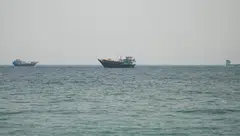

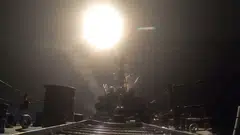
Iranian media said the US carried out an attack near Sirik in southern Iran, and near Shadegan, close to the border with Iraq. An explosion was later reported in Abadan, in Iran’s southwest.
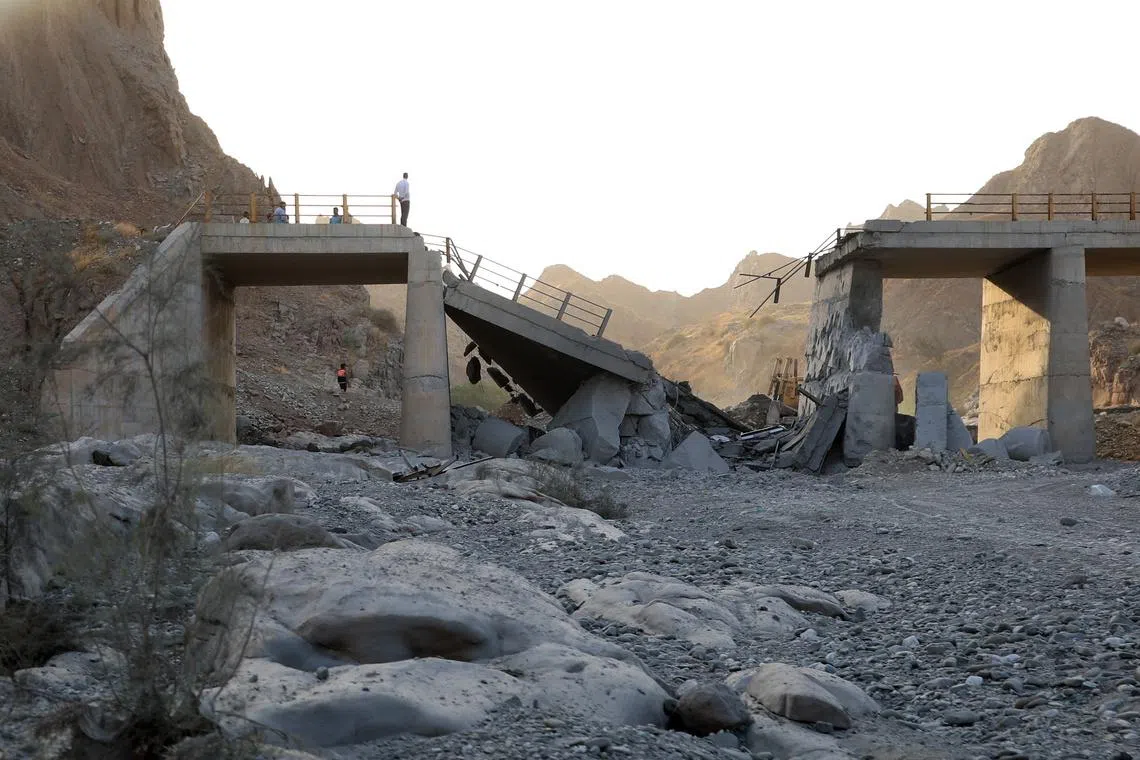
Iran’s Atomic Energy Organization condemned a US attack on the site of a nuclear power plant under construction in Darkhovin, Iran’s Mehr news agency reported.
The International Atomic Energy Agency said it was investigating reports of an overnight attack, noting that the plant was in the very early stages of construction.
In response to the latest strikes, Iran carried out a drone attack on US military assets and equipment at Kuwait’s Al-Adiri camp and Ali Al Salem Air Base, Iranian state TV reported early on Sunday.
Iran has hit both bases as part of its attacks against US assets and allies in the Gulf over the past week.
Kuwait’s government said a desalination plant had been attacked for the second day running, causing a fire, in what it called a direct strike on vital civilian infrastructure. Kuwait’s armed forces said earlier they had again intercepted Iranian missiles, after a sustained Iranian attack on Saturday.
Bahrain’s air defences also intercepted an Iranian attack on Sunday, its state TV reported.
Sirens sounded in Jordan, where the military said it had shot down three Iranian missiles. The Israeli military said it had detected the launch of missiles from Iran toward the Jordanian city of Aqaba, on Israel’s border. Jordan summoned Iran’s charge d’affaires in protest against recent attacks.
In recent days both sides have taken aim at shipping traffic, with the US saying it is enforcing a naval blockade on Iranian ports, and Iran saying it targets vessels violating its rules on navigating the Strait of Hormuz, which usually handles one-fifth of global oil trade.
Iran’s Islamic Revolutionary Guard Corps said on Sunday four vessels had attempted to transit the strait via an “unsafe route” with US backing after ignoring IRGC warnings. It said two had abandoned the attempt while the other two were involved in an “accident”. It did not elaborate.
Death of US service members
US Central Command said the deaths of two of its service personnel had occurred on Friday in Jordan and that a third US service member was missing in action. On Sunday, Central Command said in a statement that “unidentified remains” had been found at the site of Friday’s attack and that “an examination process to verify the remains is ongoing.”
The announcements, including Saturday’s death in northern Iraq, bring the number of US service members killed since the war began to 17, while more than 420 have been wounded.
US Defence Secretary Pete Hegseth posted on social media: “Their sacrifice only stiffens our resolve.”
Iran’s Health Ministry said on Saturday that 50 people had been killed and more than 500 wounded in US strikes on the country over the past three weeks alone.
Overall, thousands have been killed in the conflict, mainly in Iran and in Lebanon, where a war between Israel and Iran-allied militant group Hezbollah was reignited.
US Secretary of State Marco Rubio met Lebanese President Joseph Aoun on Sunday to discuss a US-backed framework agreement signed in June. Aoun will meet US President Donald Trump on Tuesday to present a plan for disarming Hezbollah and securing Israel’s withdrawal from southern Lebanon. REUTERS
Decoding Asia newsletter: your guide to navigating Asia in a new global order. Sign up here to get Decoding Asia newsletter. Delivered to your inbox. Free.
Share with us your feedback on BT's products and services
TRENDING NOW

LTA proposes combining car COE categories, adding rebate-surcharge system

StarHub to acquire MyRepublic’s mobile business amid ongoing telco consolidation

DBS, OCBC, UOB rout lops billions off STI as inflation, rate concerns spook investors

Grab CEO’s wife Chloe Tong on life with Anthony Tan and finding her purpose

