

Visiting the most important company in the world
Replicating the chipmaking power of TSMC in the US will be much harder than Americans realise
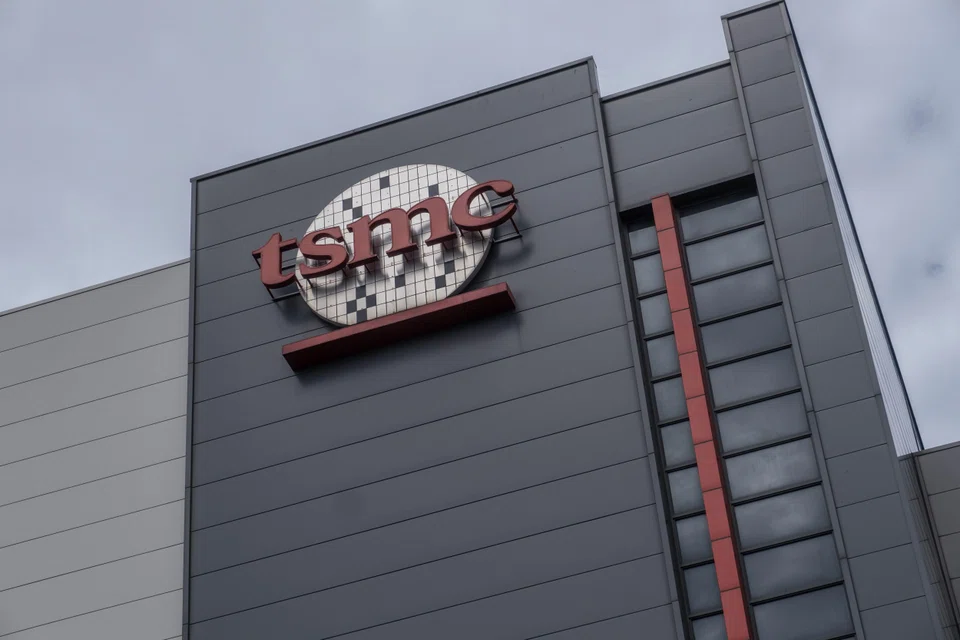
“IF CHINA takes Taiwan, they will turn the world off, potentially,” Donald Trump told Fox News recently, apparently referring to a potential seizure of one company that is central to, well, pretty much everything. Indeed, it’s arguably the most important company in the world.
The company Trump alluded to – Taiwan Semiconductor Manufacturing Company, or TSMC – is the only corporation I can think of in history that could cause a global depression if it were forced to halt production.
These days it seems impossible to have a conversation about geopolitics or economics without coming back to TSMC, which makes about 90 per cent of the world’s most advanced chips. If the lights went out in Hsinchu, Taiwan, in the company’s ultra-clean and ultra-secure buildings, you might not be able to buy a new phone, car or watch. Armies could run out of precision-guided missiles and hospitals could struggle to replace advanced X-ray and MRI machines. It might be like the Covid-19 supply-chain chip disruption – times 10 – and TSMC, unfortunately, is situated in a region where war is possible and could threaten production.
“Taiwan Semiconductor is one of the best-managed companies and important companies in the world,” Warren Buffett said last year. But, he sold his US$4 billion stake in TSMC because, as he said, “I don’t like its location”.
Some believe – it appears this may be Trump’s view – that TSMC is so valuable that it might tempt China to try to grab Taiwan, and then bring the world to its knees.
“The more you talk about silicon, the less rational people become,” Mark Liu, the chair of TSMC, told me.
So, let’s try to have a nuanced conversation about TSMC, its significance and its vulnerabilities.
For starters, TSMC’s factories, or fabs, would probably be useless to China after an invasion, even if engineers remained on the job and even if the fabs weren’t bombed by American or Taiwanese defenders to keep them out of China’s hands. That’s because the chips are designed in other countries and require international networks to keep production going. To China, TSMC would be about as useful as a dead phone.
What happens in these fabs – 24 hours a day, seven days a week, for the work is done by non-union, unprotesting machines – is astonishing. TSMC has transformed an industry that now measures its work in nanometres (billionths of a metre). A human red blood cell is around 7,000 nanometres wide, and TSMC is now developing 1.4-nanometre chips.
“There’s nothing like the TSMC plants,” said Matt Pottinger, a long-time Asia hand who was deputy national security adviser under Trump. “It’s really black magic.”
But black magic requires enormous amounts of energy – TSMC single-handedly consumes perhaps 7 per cent of Taiwan’s electricity – and that creates a risk. Even if China couldn’t take over TSMC fabs, it could disrupt production as a way of putting pressure on Taiwan and the West simply with cyberattacks on the grid.
“It’d be pretty easy for China to bring down the power networks,” Pottinger noted. Alternatively, China could impose a partial blockade with the same effect. Either could quickly ripple through the global economy.
Which means, it would also ripple through China’s economy. TSMC chips are crucial inputs for Chinese manufacturing; so Taiwan’s President Tsai Ing-wen and others have described the chip industry as Taiwan’s “silicon shield” – meaning that China wouldn’t dare attack because that would destroy its own economy.
I’m as sceptical of this argument as I am of the notion that China will invade Taiwan to grab TSMC. The silicon shield reminds me of the 1909 bestselling book The Great Illusion, which was translated into 25 languages and predicted that Europe was so economically interdependent that warfare was obsolete. World War I and World War II killed its sales.
It’s definitely not optimal that the global economy depends on chips from an area vulnerable to earthquakes and war. That’s one reason America is investing some US$39 billion through the Chips Act to manufacture chips domestically. But, bringing a big chunk of advanced chipmaking back to America is already proving more difficult than passing the legislation.
It’s immensely challenging for America to replicate the ecosystem in Taiwan that supports chip manufacturing, from the expertise in constructing fabs to the companies that clean the gowns worn inside them. And America is a plodding bureaucracy, where it’s harder and more expensive to get environmental approvals and building permits than it is in other countries.
A sign of trouble: Both TSMC and Samsung have already had to delay plans for new plants in the United States. There’s some uncertainty about how advanced those American-made chips will be, and 18 months after President Joe Biden signed the Chips Act into law, the American subsidies are slow going out the door.
And a cautionary tale: TSMC built a fab in Washington state in the late 1990s, and for many years it was an expensive headache.
“It was just a series of ugly surprises,” Morris Chang, the founder of TSMC, said on a podcast in 2022. Despite enormous effort and 25 years of experience, the costs of production at that plant are still 50 per cent higher than in Taiwan, Chang added.
Perhaps because he’s 92 years old and retired, Chang is candid about the challenges of the American strategy.
“I think it will be a very expensive exercise in futility,” he said of the US efforts. “The US will increase onshore manufacturing of semiconductors somewhat. But all of that will be very high cost increase, high unit cost. It will be non-competitive in the world markets.”
Perhaps it makes sense for the US to manufacture non-competitive chips to safeguard access to them, but let’s recognise that there are trade-offs: The tens of billions of dollars spent on fabs subsidies would also boost American competitiveness if they were spent to reduce child poverty and improve American education. If Americans were as good at math as the Taiwanese, our fabs might work better, too.
Given how difficult it is to move production, the best way to safeguard the manufacturing of chips may be to work harder than ever to deter and avoid war in the Taiwan Strait.
Decoding Asia newsletter: your guide to navigating Asia in a new global order. Sign up here to get Decoding Asia newsletter. Delivered to your inbox. Free.
Share with us your feedback on BT's products and services
TRENDING NOW
US dollar falters after Iran’s offer to reopen Hormuz sends oil lower
He built the Vingroup empire. Now South-east Asia’s richest man is handing some key roles to his sons
Floods compound Philippine growth woes from public-works scandal
Tokyo reverses baby bust with AI matchmaking and generous subsidies