



What does Kevin Warsh’s nomination mean for the Fed?
Warsh is a loyalist who has declared his alignment with Trump’s views on monetary policy
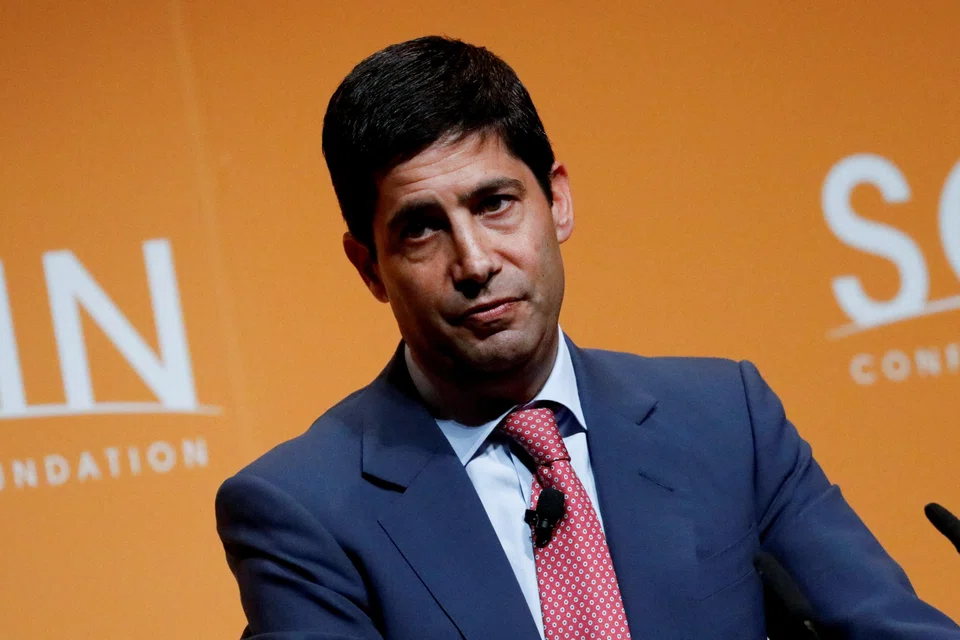
[WASHINGTON] US President Donald Trump has badgered Federal Reserve chair Jerome Powell ceaselessly – and unsuccessfully – for aggressive interest rate cuts despite the fact that US inflation is still overshooting the central bank’s target.
With Powell soon to step aside, Trump has picked Kevin Warsh to replace him. Warsh is a loyalist who has declared his alignment with Trump’s views on monetary policy. That doesn’t mean the Fed is about to fall in line with the president’s economic agenda.
Who is Kevin Warsh?
Warsh, 55, is a veteran of both Wall Street and public service whom Trump nearly picked as Fed chair in 2017 before selecting Powell instead, a choice the president has said he regrets.
After graduating from Harvard Law School, Warsh worked at Morgan Stanley for seven years before joining George W Bush’s White House as an economic adviser in 2002. Four years later, under Bush, he became, at age 35, the youngest person named to the Fed’s Board of governors. During the 2008 financial crisis, he used his Wall Street connections to help broker the sale of failing banks.
Warsh resigned from the Fed in 2011 because he opposed an unconventional measure it was undertaking – a second round of asset purchases – in an attempt to bolster a weak economic recovery.
Since then, he’s served as an adviser to the Duquesne Family Office and on various corporate boards, and has been a fellow at the conservative Hoover Institution think tank and a lecturer at Stanford Business School. Warsh has also advised Trump on economic matters for years.
Warsh is married to Jane Lauder, the daughter of prominent Republican donor Ronald Lauder, who was a classmate of Trump’s at the Wharton School. Lauder donated US$5 million in March to MAGA, Trump’s super political action committee.
What are Warsh’s views on the Fed and monetary policy?
Warsh has been a frequent critic of the Fed since leaving it, particularly the expansion of its balance sheet. He has recently proposed sweeping changes at the institution, which would deliver on some of the objectives Trump has sought. Chief among those are lower interest rates.
As a Fed governor, Warsh was at times reluctant to cut rates for fear of stoking inflation. He now argues that the Fed should aggressively reduce the size of its balance sheet, thereby removing liquidity from the financial system and clearing the path for more rate cuts.
SEE ALSO

Some have criticised that plan, arguing that the effect of a shrunken balance sheet is likely to be small.
Without providing specifics, Warsh has advocated changing how the Fed thinks about inflation, forecasts the economy and uses models to guide policy decisions. He’s proposed reducing staff, which would align with Trump’s focus on slashing the federal workforce.
Can Warsh deliver on these aims as chair?
Warsh will be quite limited in his ability to change the course of monetary policy to his or the president’s liking. Interest rates are set by the Federal Open Market Committee (FOMC).
The chair has just one vote on the FOMC and must seek agreement from six other voting policymakers to gain the majority required for taking any monetary policy action. Depending on how the economy evolves, this could prove difficult.
FOMC members historically have given significant deference to the chair, especially those who seek to build consensus as opposed to simply imposing their views. But their leadership has sometimes been challenged. Paul Volcker at times faced fierce opposition during his battle with inflation in the early 1980s. And very recently, Powell saw meaningful pushback in December over the last of three straight rate cuts he engineered.
Should other Fed officials doubt the economic justification for additional rate reductions, Warsh may find it more difficult than past chairs to convince other officials to follow his leadership.
Outside of monetary policy, Warsh will have freer rein to make changes, for example to oust senior staff or significantly reduce headcount. Should he secure the support of a majority on the seven-member Board of governors, which would require new departures, he might be able to force the removal of uncooperative regional Fed presidents.
What would Warsh’s appointment mean for Fed independence?
By itself, the appointment of a chair loyal to the president doesn’t mean the end of independence, for the reasons described above. What happens next matters greatly. How much will other policymakers resist when the pressure for cuts comes from within the Fed? Who might emerge as a rival centre of influence on the FOMC?
Another key question revolves around the court case stemming from Trump’s attempt to fire Fed governor Lisa Cook over unproved allegations of mortgage fraud. The US Supreme Court heard arguments on Jan 21 about whether Cook could remain in her post while the case moves forward in lower courts, and sounded skeptical of the administration’s arguments.
If Trump wins the case, or simply is allowed to push her out of office while the case is adjudicated, that would essentially clear the path for additional ousters at the president’s discretion, thereby demolishing any notion of robust independence for the central bank. Yet the Supreme Court, in a preliminary ruling of a related case, has signalled its appetite to carve out special protections for the Fed even as it allows for expanded presidential authority over an array of other federal agencies.
What other questions remain?
Powell will cede the chair in May, but if he wishes he could stay on as a Fed governor until 2028. So far, he hasn’t said what he will do. A decision to stay would make Powell an obvious threat to Warsh’s ability to direct monetary policy and represent a stunning rebuke to the president. Most Fed watchers believe his public indecision was aimed at dissuading Trump from choosing an even more unorthodox chair and that Powell would exit if Warsh is confirmed. BLOOMBERG
Decoding Asia newsletter: your guide to navigating Asia in a new global order. Sign up here to get Decoding Asia newsletter. Delivered to your inbox. Free.
Share with us your feedback on BT's products and services






