



Why 2026 is poised to be another rocky year for global trade
The US, Canada and Mexico are about to start reviewing the North American free-trade deal that took effect in 2020
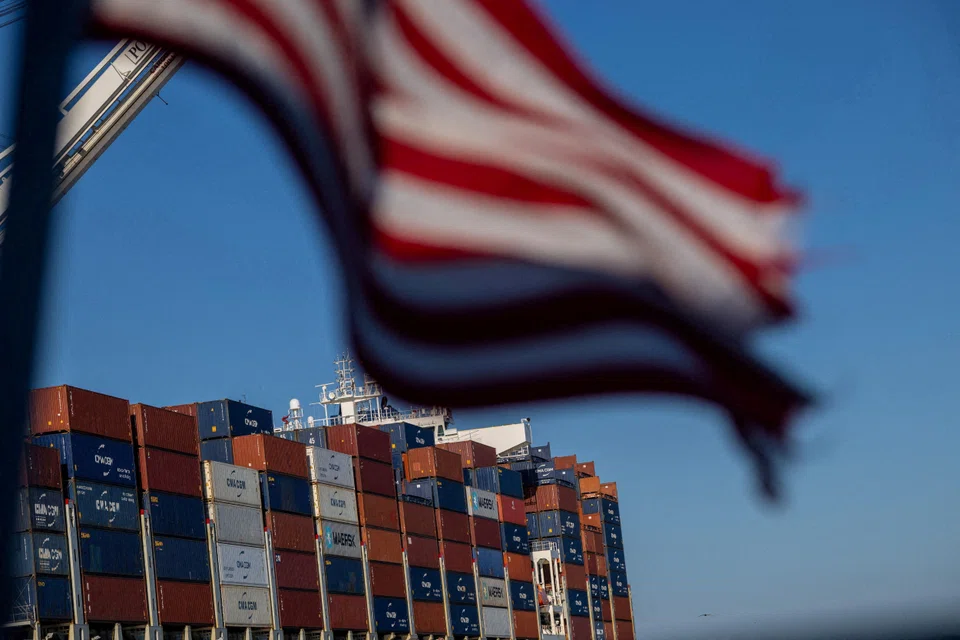
[LONDON] The global trading system, which is finishing up one of its most transformational years of the past century, heads into another facing more challenges to stability and growth.
Merchandise trade across the world held up relatively well to 2025, even as US President Donald Trump started erecting a tariff wall around the world’s largest economy. Data cited this week by shipping industry veteran John McCown shows global container volumes grew 2.1 per cent in October from a year earlier.
Yet beneath the overall resilience are shifting undercurrents: The US saw an 8 per cent contraction in inbound volumes, while imports into Africa, the Middle East, Latin America and India all showed robust growth.
“World container supply chains have already begun to adapt and reconfigure trading patterns,” McCown wrote in a research note on Monday (Dec 22). After the US in 2024 saw a 15.2 per cent gain in container imports for the full year, “to say that the annual total for 2025 will be in diametric contrast is an understatement”.
Trump’s trade threats were among the chief reasons for the rewiring of shipments, according to McCown. If 2025 was the year of the tariff, he wrote in a LinkedIn post, then 2026 will be the year of tariff consequences.
Other experts in recent weeks have said they anticipate more trade turmoil in the year ahead, with these four issues among the most widely discussed:
Revisiting USMCA
The US, Canada and Mexico are about to start reviewing the North American free-trade deal that took effect in 2020. The negotiations will take the three nations into “new territory” given the novelty of the provision allowing for an update after just six years, according to comments by US Trade Representative Jamieson Greer to lawmakers this month.
Greer said the government received more than 1,500 responses during the public comment period ahead of the coming review.
“Many stakeholders expressed support for the USMCA (United States-Mexico-Canada agreement) and many explicitly called for the agreement to be extended,” Greer said. “At the same time, virtually all stakeholders also called for some sort of improvement to the agreement.”


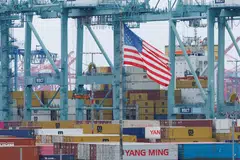
But any “improvement” for one of the three members of the trade bloc risks coming at the expense of another. And that sets the stage for a tough round of talks for the largest US trading partners, whose industries are struggling amid American import taxes.
Ties are already strained between the US and Canada, after Trump terminated trade talks with the northern neighbour in October, in response to anti-tariff ads featuring Ronald Reagan.
Rough sailing
For container ships and other workhorses of global trade, the year ahead may bring two shocks that sound like welcome developments but could actually snarl global supply chains in ways seen during the Covid-19 pandemic, according to experts, including Lars Jensen, the CEO of the consultancy Vespucci Maritime.
The first change would be a return of the world’s cargo fleet to using the Red Sea, rather than the longer route around southern Africa that vessels have had to resort to for the past two years.
Houthi attacks in the Red Sea have largely subsided since the Gaza peace plan took effect in October, making the old route more appealing. Carriers, including France’s CMA CGM and Denmark’s AP Moller-Maersk, are already sending a small number of ships through.
But a full return to the Red Sea and the Suez Canal shortcut between Asia and Europe will “flood the market with a lot more capacity” and create “massive port congestion issues in Europe”, Jensen said during a Flexport webinar in November.
The second blow could be more demand driven, according to Jensen. If the US economy accelerates as quickly in 2026 as Trump administration officials predict, fuelled by an investment boom and lower interest rates, the resulting inventory restocking could swamp the shipping industry’s ability to cope.
Shaky deals
High on the White House’s list of 2025 accomplishments are trade deals with several major economies, most of which bent to Trump’s demands, ranging from investment pledges to better market access for US exports. In exchange for their submissiveness, their goods were smacked with a tariff rate that was lower than the duty they would have gotten if they retaliated.
But these are not traditional, binding trade deals with enforcement provisions and fine print spelling out the rules, and there is only a one-year truce with China rather than a full agreement, leaving out the US’s most unbalanced trading relationship.
That’s left concern that pacts could yet come undone, especially given the potential for pressure from Beijing against any nation open to working with Washington at China’s expense.
Developments within the past month have showcased the risks. Since the White House announced its “landmark trade deal” in July, Indonesia has been resisting US trade demands that it feared would restrain its independence and now sees an agreement being signed in late January.
China complained to Malaysia and Cambodia about the trade deals those two nations signed with Washington, warning them against measures that undermine Beijing’s interest.
Even the UK has seen fresh difficulties crop up.
Last week, Greer singled out the European Union and India, saying that contentious talks aimed their respective trade deals are set to spill into the new year. Greer’s office, in a social media post last week, threatened retaliation against the EU for what Washington considers to be excessive regulation of American tech companies.
The Supreme Court
Among the biggest unknowns in trade circles heading into 2026 is a pending US Supreme Court ruling on the legality of Trump’s so-called reciprocal tariffs, the broad levies he imposed on most major trading partners.
If Trump does lose the case, one of the most consequential questions for the economy and the country’s fiscal outlook will be whether the government will have to refund the money that American importers paid in tariffs. It’s not clear cut that will happen in a timely or organised way.
Kevin Hassett, director of the National Economic Council, said that even if the high court does not rule in the administration’s favour, it would be “pretty unlikely that they are going to call for widespread refunds, because it would be an administrative problem” to distribute those.
Betting markets have put about a 75 per cent chance on a Trump loss, which means the administration will have to use other authorities at the president’s disposal to impose tariffs.
Asked at the Atlantic Council earlier this month if 2026 will be quieter on the tariff front than this year, Greer declined to offer a forecast. “That’s a question for President Trump,” he said. BLOOMBERG
Decoding Asia newsletter: your guide to navigating Asia in a new global order. Sign up here to get Decoding Asia newsletter. Delivered to your inbox. Free.
Share with us your feedback on BT's products and services
TRENDING NOW

Once staunchly pro-China, Malaysian Chinese businesses are now distancing themselves from Beijing

Looking beyond looming CEO succession, should UOB potentially pursue a transformative merger?

Could stablecoins be the future of money?

Grab CEO’s wife Chloe Tong on life with Anthony Tan and finding her purpose

