



Why Jensen Huang and Nvidia matter so much to markets
At its peak, Nvidia’s market capitalisation totalled around US$5.8 trillion, a figure larger than the national economic output of Germany
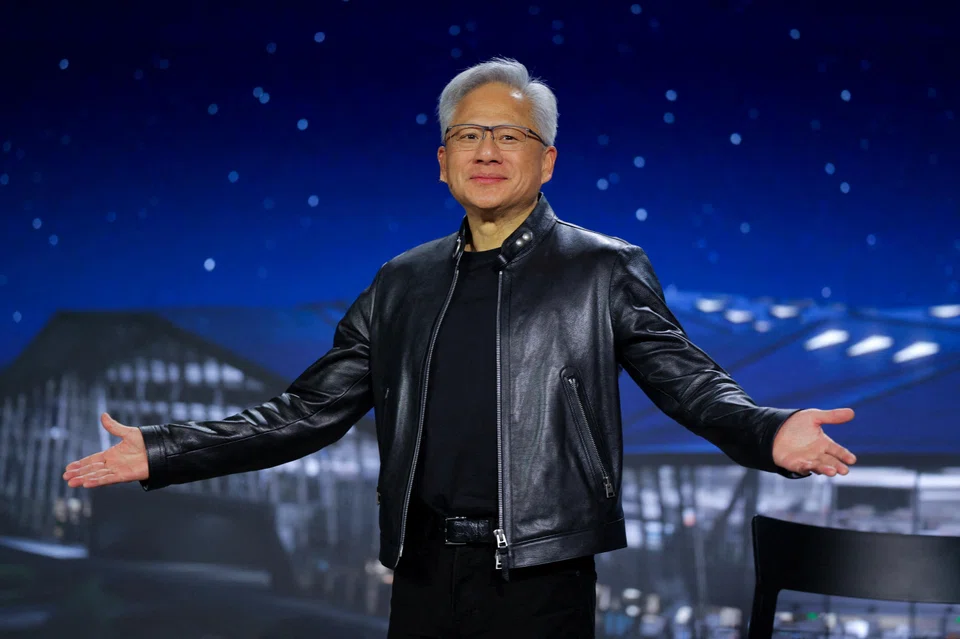
THE decision by Nvidia’s board of directors to restore Jensen Huang as chief executive officer on Nov 23 after President Donald Trump pressed for the move speaks to the enormous impact both of Huang on the company and of the company on the larger stock market.
The sharp decline in Nvidia’s stock price that began after news emerged that Huang had had an affair with a woman suspected of being an asset for Chinese intelligence erased more than two trillion dollars of value from the stock market, which Trump has long cited as a metric for his presidency.
It was Huang’s decision to pivot Nvidia’s focus from graphics chips for gaming to the artificial intelligence “accelerators” that made it one the world’s biggest companies by market value.
At its peak, in early October, Nvidia’s market capitalisation totalled around US$5.8 trillion, a figure larger than the national economic output of Germany.
Huang’s globe-trotting lobbying helped to maintain its dominant position. Hence the sharp sell-off of Nvidia’s shares that began when the espionage scandal first raised questions about his future at the company and continued after he resigned on Nov 12.
The trend began to reverse after the leather-jacketed, celebrity co-founder’s reinstatement as CEO.

Here’s why the stakes in this saga have been so high.
Market titan
On Nov 30, 2022, a then-little-known company called OpenAI released a chatbot called ChatGPT, triggering an explosion in demand for a type of computing chip that Nvidia was uniquely well-placed to provide. Over the next few years, Nvidia’s share price rose 14-fold before peaking in early October.
SEE ALSO


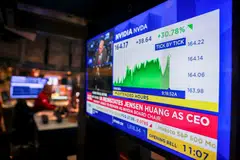




The company witnessed soaring demand from data-centre customers, including Alphabet, Amazon and Microsoft. In mid-2024, it overtook all three by market capitalization for the first time. In 2025, Nvidia became the first company to surpass both US$4 trillion and US$5 trillion in market value.
By early October, it was closing in on the US$6 trillion mark. However, investors were becoming increasingly skittish over frothy AI stock valuations and an industry borrowing spree, and Nvidia fell behind Apple as the world’s biggest company.
Following the revelations about Huang’s relationship with the alleged Chinese agent, reports of an affair with another woman who worked for him, and his resignation, Nvidia’s valuation fell to about US$3 trillion as of Nov 20, the Friday before Huang was reinstated. The news that he’d returned to the company sent the valuation shooting back upward.
Chip supremacy
Nvidia accounts for an overwhelming share of sales of the advanced chips that process AI tasks. Its dominance partly reflects a substantial head start: Years before AI really took off, the company was investing in ways to sell its graphics processing units for uses beyond gaming.
It maintained that lead by rolling out new designs every year. Its size and purchasing power kept it ahead of the game, making it harder for smaller rivals to keep up.
The leadership turmoil came at an especially bad time. Nvidia’s rivals, and even some of its customers, are working hard to develop competitive AI chips.
A raft of startups are raising billions of dollars from investors keen to back the next breakthrough.
Competition is also intensifying in China, where the company is prevented by US export controls from selling its most advanced products. Companies such as Huawei Technologies — blacklisted in the US — are making rapid strides in developing homegrown AI chips, Nvidia has said.
AI finance linchpin
Since 2024, Nvidia has become not just a supplier to the AI industry but also one of its key financial backers. It has invested heavily in leading AI platform developers including OpenAI, Elon Musk’s SpaceX and Mistral of France, as well as companies building AI data centres. It’s a symbiotic relationship: Nvidia helps to finance the expansion of AI infrastructure, stoking demand for Nvidia’s chips.
Portfolio dominance
Until mid-2020, Nvidia’s market capitalisation represented less than 1 per cent of the total value of all the companies tracked in the S&P 500 index, the standard benchmark for the US stock market.
For much of the past two years, Nvidia’s share hovered around 8 per cent, the largest slice of any company. In the wake of Huang’s troubles, Nvidia’s share of the total value fell to 5 per cent as of Nov 20.
Because of the company’s weight, its health can significantly affect the overall value of the S&P 500, to which enormous amounts of money are tied. Some US$20 trillion in assets is either indexed or benchmarked to it, according to S&P Global. These are held largely through retirement funds, mutual funds and exchange-traded funds (ETFs).
Key-man risk
Huang has been known for his exacting management style at Nvidia, even in an industry full of domineering CEOs who obsess over details.
In his previous role as CEO, every major decision flowed through him, and he weighed in on even the most minute aspects of the business. Huang had about 60 people reporting to him directly, far more than the average tech leader. They sent him emails with “top five things” that he read and responded to at all hours.
The scandals involving Huang underscored Nvidia’s “key-man” risk: The 63-year-old executive was seen as inseparable from the company’s success. Huang’s exit had put Nvidia in an unusually vulnerable position for a company of its size: There was no one designated to replace him. BLOOMBERG
Decoding Asia newsletter: your guide to navigating Asia in a new global order. Sign up here to get Decoding Asia newsletter. Delivered to your inbox. Free.
Share with us your feedback on BT's products and services
TRENDING NOW

Indonesia’s coal tycoon Low Tuck Kwong replaced as Bayan Resources president-director

Nvidia reinstates Jensen Huang as CEO; Trump says move poses no national security risk

Six workers file employment claims against Crystal Jade Food Manufacturing

AI agents and stablecoins a ‘perfect match’ for payments, says MetaComp’s Tin Pei Ling

