



World Bank cuts global growth outlook to 2.5%, warns of drop to 1.3% if war fallout spreads to markets
Global growth is expected to improve to 2.8 per cent in 2027 and 2028
[WASHINGTON] The World Bank on Thursday cut its global growth forecast for 2026 to 2.5 per cent due to the war in the Middle East, and said growth could slow to just 1.3 per cent if energy supply disruptions prove more severe and come with substantial stress in financial markets.
Global growth reached 2.9 per cent in 2025, the bank said in its semi-annual Global Economic Prospects, up 0.2 percentage point from its estimate in January.
Its 2026 forecast is down 0.1 percentage point from January, the lowest seen since the Covid pandemic that began in late 2019.
The bank lowered forecasts for two-thirds of countries as a result of the war, with the biggest cuts affecting the United Arab Emirates, Iraq and other countries in the Middle East whose energy exports have been hit hard by the conflict.
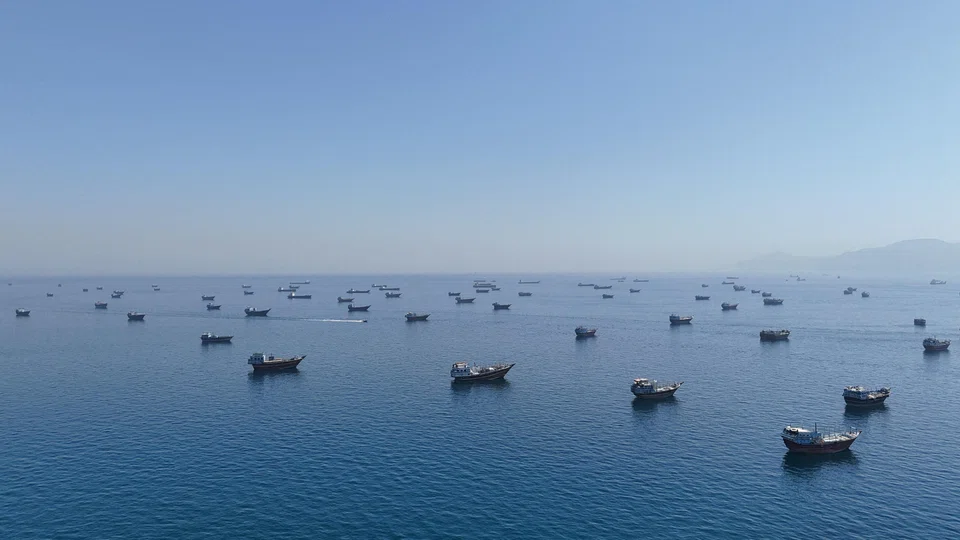
The World Bank’s stark outlook comes as the war launched by US and Israeli strikes on Iran on Feb 28 drags into a fourth month. It has sent energy prices up sharply due to the closure of the Strait of Hormuz, renewed inflationary pressures worldwide and fueled expectations of tighter monetary policy across many countries.
Fertiliser prices are also up sharply, raising concerns about a major food supply crisis. Oil prices closed nearly US$2 higher on Wednesday after US President Donald Trump said the US would attack Iran “very hard” if no peace deal was finalised, following one of the most significant exchanges of fire since an April ceasefire.
The World Bank said its baseline forecast assumed an average Brent crude oil price of US$94 for the year, up 36 per cent from 2025, and that the worst disruptions to energy supplies would abate by the end of July, with global headline inflation seen at 4 per cent.
It said growth could slow to 2.1 per cent if the energy disruptions lasted longer and oil prices averaged US$115 per barrel this year, which could drive inflation to 4.4 per cent.
The outlook would worsen further, with growth decelerating to just 1.3 per cent, if the energy shock affected financial markets, resulting in lower energy prices, greater volatility and weaker confidence, it said.

“These risk scenarios show how quickly the outlook could weaken if energy and financial pressure reinforce each other,” Ayhan Kose, the World Bank’s deputy chief economist, said. If the energy shock triggered a financial market shock, confidence could erode quickly, he said.
Growth lower than last decade
Global growth is expected to improve to 2.8 per cent in 2027 and 2028, but that remains 0.4 percentage point below the average rates seen during the 2010s due to a slew of factors, including slower population growth, slower private investment growth, falling public investment, rising public debt and slower growth in trade, World Bank chief economist Indermit Gill said.
“The world economy is a lot less resilient today than it was in 2008 and even as compared with 2018,” Gill told reporters, predicting the next years would be marked by high policy uncertainty, inflationary pressures and high interest rates.
Weak growth in developing economies has stalled progress toward advanced-economy income levels, with dozens of developing countries other than China and India looking at a “lost decade” in which they saw no progress on narrowing their per capita income gap with advanced economies, the report said.
Developing economies have been hit harder by the war, with the bank now projecting growth at a post-pandemic low of 3.6 per cent this year, down from 4.4 per cent in 2025, the bank said.
The bank maintained its forecast of 2.2 per cent growth in the US economy in 2026, but said that could taper off to 2.1 per cent in 2027 and 2% in 2028.
The euro area was expected to grow by 0.8 per cent in 2026, down from 1.4 per cent in 2025. Japan’s GDP was forecast to grow 0.7 per cent in 2026, down from 1.1 per cent in 2025.
The World Bank forecast GDP growth of 4.2 per cent in China in 2026, a downward revision of 0.2 percentage point, after 5 per cent growth in 2025.
Middle East countries hit hardest
It slashed its forecast for GDP growth in the Middle East, North Africa, Afghanistan and Pakistan by 2.7 percentage points to 1.6 per cent in 2026, down from 4 per cent in 2025, but said growth in the region could rebound to 5 per cent in 2027.
The United Arab Emirates was expected to see growth of 2.4 per cent in 2026, down sharply from the January forecast of 5 per cent and the 2025 rate of 6.2 per cent. The bank also lowered Turkey’s 2026 GDP growth forecast by 0.9 percentage point to 2.8 per cent.
The World Bank said India remained the fastest-growing large economy in the world, with its GDP seen growing by 6.6 per cent in 2026, after growth of 7 per cent in 2025. Growth rates in India were expected to remain fairly high for the next two decades, Gill said. REUTERS
Decoding Asia newsletter: your guide to navigating Asia in a new global order. Sign up here to get Decoding Asia newsletter. Delivered to your inbox. Free.
Share with us your feedback on BT's products and services
TRENDING NOW

Once staunchly pro-China, Malaysian Chinese businesses are now distancing themselves from Beijing

Looking beyond looming CEO succession, should UOB potentially pursue a transformative merger?

Could stablecoins be the future of money?

Grab CEO’s wife Chloe Tong on life with Anthony Tan and finding her purpose

