The world needs a lot more copper. But will there be enough supply?
The market has been hit by a slew of mine outages this year, from Chile to Indonesia
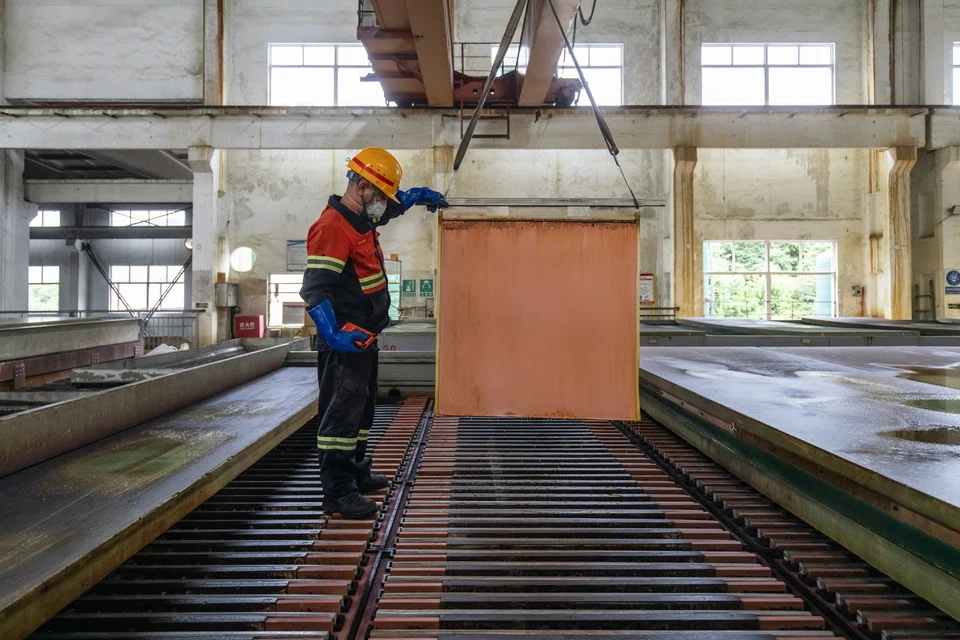
COPPER is one of the world’s most ubiquitous metals, used in just about everything that’s electrified: smartphones, refrigerators, electric vehicles (EVs), power grids and much more.
It’s a crucial material for the green technologies that can lower global carbon emissions, as well as the data centres at the heart of the artificial intelligence (AI) boom. But while demand for copper is growing, it’s far from certain that there will be enough supply amid recent production disruptions and the difficulties in building new mines and expanding existing operations.
The market has been hit by a slew of mine outages this year, from Chile to Indonesia. Lingering fears that US President Donald Trump will impose tariffs on refined products have also driven stockpiling in the US, draining inventories elsewhere. As concerns over supply mount, copper prices have been on a record-breaking run, punching through US$11,700 a tonne on the London Metal Exchange in December.
What’s driving demand for copper?
The near-term outlook for copper demand growth has been clouded by weakness in China, the world’s top consumer of the red metal. The country’s property market has been stuck in a years-long downturn that’s dented the need for copper plumbing and wiring, while consumer spending has been sluggish, weighing on the appetite for finished goods such as electronic appliances.
Nonetheless, robust momentum in global copper demand is expected over the long term. BloombergNEF estimates consumption could increase by more than a third by 2035 in its baseline scenario.
Key drivers include the ongoing transition to cleaner energy sources such as solar panels and wind turbines, rising adoption of EVs, and the expansion of power grids. EVs can require more than three times as much copper as a petrol- or diesel-powered equivalent, according to the Copper Development Association.
There’s also the proliferation of data centres for AI that’s just beginning. Copper is a vital part of the servers, cooling systems, power connections and numerous backup components designed to minimise downtime. AI data centres are more dense and energy-intensive than traditional facilities and can use four times as much copper, according to TCu29, a provider of copper-backed digital tokens.
Will there be enough copper supply?
The copper market is anticipated to enter a supply deficit over the next decade, potentially as soon as 2026, BloombergNEF estimates.
Several key copper mines faced operational setbacks in 2025, and a number of mining companies have lowered their production guidance. Within just a few months, seismic activity triggered flooding at Ivanhoe Mines’ Kamoa-Kakula complex in the Democratic Republic of the Congo and a deadly tunnel collapse at Codelco’s El Teniente mine in Chile.
In Indonesia, Freeport-McMoRan’s Grasberg copper mine, the second-largest in the world, was hit by a deadly mudslide.
Those mining setbacks have exacerbated the pressure on copper smelters. For years, smelting capacity, particularly in China, has expanded faster than miners’ output, eroding smelters’ already-thin profit margins.
The competition is so fierce that smelters looking to buy semi-processed ore on the open market have had to pay for the privilege of smelting it rather than deducting that cost. Should smelters cut their production to stem losses, this could further tighten copper supply.
While more copper is being recycled, this still won’t be enough to cover demand, so the only alternative is to dig more out of the ground.
How easy is it to boost copper supply?
There are numerous obstacles to meaningfully boosting output. Because copper is a classic bellwether of the global economy, rising and falling in tandem with industrial production, miners are cautious about ramping up capacity too quickly for fear of getting caught out by a drop in demand.
Added to this is a deeper, more structural problem: New deposits are getting harder and costlier to extract as ore grades fall, meaning more rock needs to be mined to secure the same amount of metal.
Growing scrutiny of the environmental impact of copper mining, including water consumption and contamination, is also making it more politically challenging and expensive to develop new projects.
Higher prices could incentivise miners to invest in new assets, but the rate at which new sources of copper are being uncovered is slowing. Of the 239 major deposits discovered between 1990 and 2023, just 14 were in the final ten years, according to S&P Global analysis. It’s taking more time to bring new production capacity online, too. The average lead time from discovery to first output is more than 15 years.
Amid the difficulties in starting new mines from scratch, miners are turning to mergers and acquisitions to expand their portfolios. Anglo American is poised to merge with Canada’s Teck Resources to create a US$50 billion mining giant. Once they combine, they will be the world’s fifth-largest copper producer, according to Benchmark Intelligence.
Both companies have previously been pursued by bigger industry players: Anglo rebuffed another takeover attempt by top miner BHP Group in November, while Glencore unsuccessfully tried to buy Teck two years ago.
Who are the world’s top copper suppliers?
Just three countries are responsible for almost 50 per cent of mined copper production: Chile, the DRC and Peru. They typically process much of the ore locally to create a more concentrated product before exporting this to other nations to be smelted into pure copper.
China only has the world’s eighth-largest copper reserves, according to the US Geological Survey, putting it behind leaders in Latin America and even the US. But it’s compensated for this by snapping up mines overseas and building out massive smelting capacity domestically.
The East Asian nation accounted for more than 40 per cent of global refined copper production in 2024.
China’s sway over such a strategic industry has made the US and its allies uneasy, and they are now looking to source and refine more critical minerals at home or in friendlier nations. Much as oil dictated the geopolitics of the last century, access to copper is becoming an economic imperative in this one.
How have US tariffs impacted the copper market?
Copper pricing and trade flows have been upended since Trump announced plans in February to place import tariffs on the metal in a bid to boost US domestic supply. He unexpectedly spared refined metal, only imposing a 50 per cent duty on semi-finished copper products, such as pipes and wires, and so-called derivative products, such as electrical components, from August.
However, Trump said he’d revisit the decision in the second half of 2026. Fears of impending tariffs on commodity-grade forms of copper have once again driven futures prices on New York’s Comex above copper prices on other global exchanges, reviving the profitable price gap traders exploited earlier in 2025.
As traders have rushed to capitalise on the premium, huge volumes of the red metal have headed to US shores. By early December, Comex copper inventories were almost five times higher than at the start of the year.
Producers have also announced they will charge record premiums to customers in Europe and Asia in 2026, effectively asking these buyers to compensate them for the additional profits they could make by selling into the US.
Major metals trader Mercuria Energy Group has warned that these trade dynamics could fuel a major global supply squeeze by the first quarter of next year. BLOOMBERG
Decoding Asia newsletter: your guide to navigating Asia in a new global order. Sign up here to get Decoding Asia newsletter. Delivered to your inbox. Free.
Share with us your feedback on BT's products and services