With Xi’s plan to build China into a modern socialist country, should investors be worried?

Angela Tan
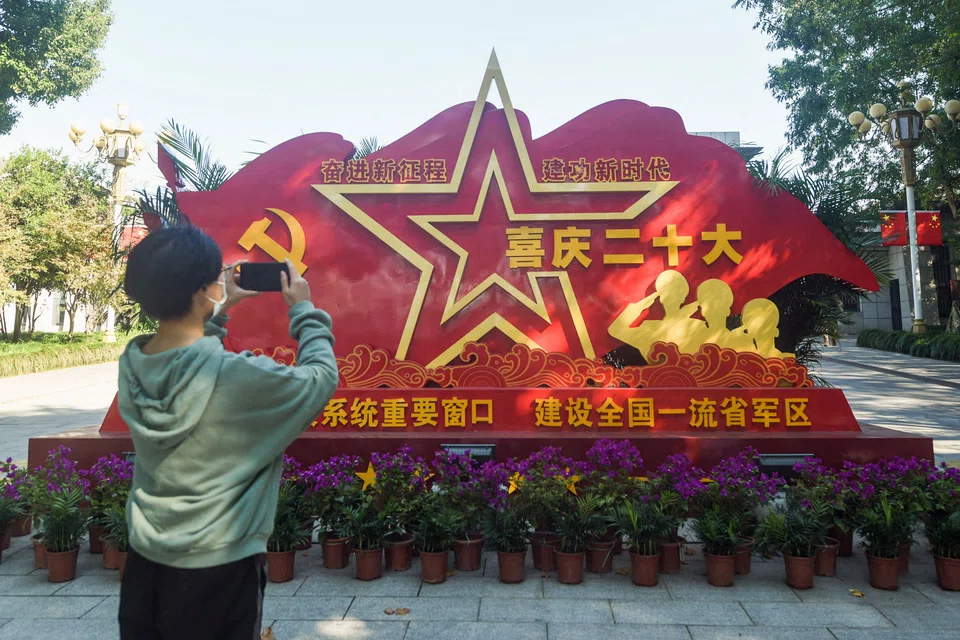
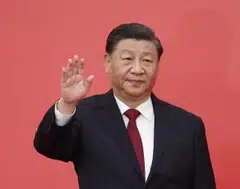
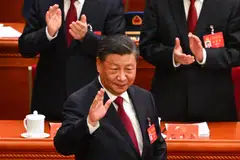
AS the political dust begins to settle after the 20th National Congress of the Chinese Communist Party, global investors are left facing one of the most critical junctures on China investments - how the new leadership team under President Xi Jinping will deliver his great rejuvenation plan to build a socialist modern China by 2050.
The uncertainties are far from over. With new leaders unveiled, more personnel changes at all levels of the government can be expected in the ensuing months. The policy stance taken by the next premier, the economic adviser, as well as the next governor of the People’s Bank of China (PBOC) and the head of the China Banking Insurance Regulatory Commission (CBIRC) will be closely watched as they reboot the economy.
The Central Economic Working Conference - that sets the national agenda for China’s economy and its financial and banking sectors - in December is the next key event on the calendar.
Xi’s opening report at the congress signalled policy continuity. China, which has shifted from an “old economy” to a “new economy” led by Alibaba, Baidu and Tencent under Xi’s predecessor Hu Jintao, is undergoing further rebalancing.
This time, the emphasis will be on long-term development and security. The focus will be on “hard tech” (manufacturing and innovative technology), rather than the “soft tech” of e-commerce in China’s bid to be a self-sufficient technology and manufacturing powerhouse.
But many investors did not like what they heard - that the super high-speed growth of the last decade will be moderating and any lifting of the strict zero-Covid policy will have to wait until after March 2023 for the new generation of leaders to handle a gradual shift towards an endemic approach.
While it was widely expected that Xi would get his unprecedented third term as party leader, the mysterious exit of Hu on the last day of the congress fuelled conspiracy theories.
There were also concerns that Xi has managed to consolidate his power to the extent that there is no alternative voice in the top echelon. This can mean fewer checks and balances in the decision-making process, and more aggressive redistribution of wealth in Xi’s “common prosperity” drive.
These led to a major sell-off of Chinese shares on Monday (Oct 24), the first trading day after the congress ended. This was unusual. In the previous four party congresses, the MSCI China Index one-month return was positive, except for the 17th congress in Oct 2017 when the market was reeling from the subprime mortgage crisis.

The sell-off was so frantic that it created a “once-in-20-years market sell off conditions at a fire-sale price”. Victoria Mio, Fidelity International’s head of equity research (Asia-Pacific), said that with a horizon of two to three years, investors will see handsome returns if they invest now.
Despite valuations of Chinese equities now hovering below the average in the past 17 years, the question of China’s investability has again resurfaced. The first time it cropped up was after Beijing’s crackdown on the tech and property sector that wiped off trillions of dollars from portfolios.
But the “Robin Hood” fear that high net worth individuals are going to be robbed of their wealth in the “common prosperity” push is “a little bit far-fetched”, said Carlos Casanova, senior economist (Asia) at Union Bancaire Privee.
He reckoned it will be challenging to do so in the current environment where Beijing is focused on economic stabilisation and wants to ensure a healthy recovery in its housing sector: Rather he believes that within the next five years, Beijing will be doing more to distribute growth between the coastal and inland regions, reduce the Gini coefficients and increase property sales tax.
Towards the end of the five years, it could increase income tax for high earning brackets and also introduce stronger tax on capital gains, he added.
Anxiety over deglobalisation and the rising geopolitical risks are likely to remain high. This is especially so with the coming mid-term elections in the US, Taiwan’s presidential election in 2024 and further down the road, Xi’s possible transition into a fourth term.
If one were to remove sentiment, then the fundamental reality is there are opportunities to be found in China’s new strategic thrust by the world’s most populous nation and second-largest economy. Yes, gone are the traditional growth drivers such as housing and the old tech platforms.
But with Xi’s emphasis on high-quality growth, key will be quality innovative companies that sharpens China’s competitive edge, security and green drive. These will be key innovative infrastructure areas like quantum information, network communications, artificial intelligence, biotechnology and modern energy systems, said Nicholas Wang, senior equity advisor at UBP.
The challenge faced in semiconductors following the US ban could also spur urgency in the development and localisation of other technologies critical to China’s national interest. Healthcare is also an emerging sector.
What is clear at this point is that China will be volatile, but it remains a country that’s hard to ignore.
Decoding Asia newsletter: your guide to navigating Asia in a new global order. Sign up here to get Decoding Asia newsletter. Delivered to your inbox. Free.
Copyright SPH Media. All rights reserved.