


Global Enterprise logo
BROUGHT TO YOU BYsc logo

Xi’s rehabilitation of Jack Ma may be the most lucrative ever

Why China’s leader is making nice with the country’s tech billionaires
Summarise
Published Wed, Feb 19, 2025 · 06:31 PM
    • On Feb 17, Alibaba CEO Jack Ma and other entrepreneurs met at a symposium in Beijing with Xi Jinping – which is widely seen as a sign that private sector tech is back in favour.
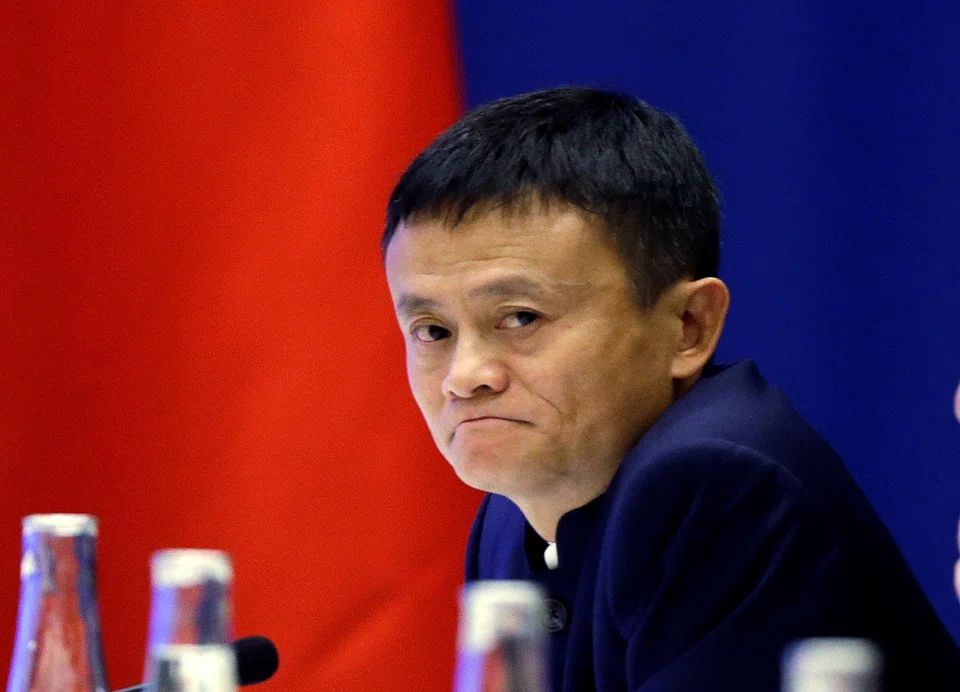
    • On Feb 17, Alibaba CEO Jack Ma and other entrepreneurs met at a symposium in Beijing with Xi Jinping – which is widely seen as a sign that private sector tech is back in favour. PHOTO: REUTERS

    CHINA’S Communist Party has a history of purging, then welcoming back senior officials. Deng Xiaoping was purged three times before he led the country out of Maoism in the late 1970s. Some cadres are welcomed back years after their death. Jack Ma, Alibaba’s founder, received the modern version of a purge in 2020. The initial public offering (IPO) of his fintech company, Ant Group, was cancelled. Alibaba was probed and handed a record fine. Ma withdrew from public life.

    Now, however, he seems welcome once again. On Feb 17, Ma and a handful of other entrepreneurs met at a symposium in Beijing with Xi Jinping, China’s supreme leader. Many see this as Ma’s rescue from the wilderness – and a sign that, after a prolonged crackdown, private-sector tech is back in favour.

    It certainly has the makings of the most lucrative rehabilitation of all time. On Feb 14, Alibaba’s share price rose by 6.2 per cent on rumours of the symposium, adding about US$18 billion to its market value. Those of Tencent and Xiaomi, two other tech firms, rose by 7 per cent. That comes on top of a rally in recent weeks. Shares in Hang Seng Tech, an index of the 30 largest technology companies listed in Hong Kong, have risen by 23 per cent in the past month; those in Alibaba have surged by over 50 per cent. Is a revival in private-sector sentiment at last underway?

    In large part, the rally has been prompted by DeepSeek, an artificial intelligence (AI) firm that has managed to keep up with Silicon Valley even without an ample supply of American chips. Analysts at Bank of America have compared it to Alibaba’s IPO in New York in 2014, which caused a boom in innovation at consumer-Internet firms. DeepSeek, they think, could have a similar effect.

    Many companies are already adopting the technology. Tencent, an Internet and gaming group, is said to be testing it in Weixin, an application universe for messaging, payments, shopping and entertainment, in the hope of creating an AI “super app”. AI could also boost demand for cloud-services providers, such as Alibaba, Huawei and Tencent. They, in turn, will have to invest more in building server farms, benefiting the suppliers of AI data-centre components. Alibaba is also said to be working with Apple to put AI capabilities into iPhones sold in China.

    Yet despite all that, wider sentiment has still been weak. The Business Confidence Index, a monthly survey of more than 300 senior executives at corporations across China, showed slight improvements in January. But several important components of the index, such as the outlook for corporate financing and inventory, are still contracting. In January, compilers of an index that tracks business sentiment at Cheung Kong Graduate School of Business in Beijing surmised that “fairly significant levels of instability continue to inhibit China’s business sphere”.

    Asean Intelligence

    Get insights into businesses across South-east Asia

    Get the free report

    That helps explain Xi’s appearance at the symposium; according to reports of the meeting, he underlined the importance of the private sector for China’s economy and acknowledged some of its problems. Xi’s reign has been an experiment in how best to guide entrepreneurs while limiting their influence over policy and society. Officials have never found a comfortable balance. Between 2013 and 2019, big companies dominated investment and many areas of economic growth, putting officials in the passenger seat of development.

    The crackdown in 2020 reversed things sharply, wiping around US$2 trillion off the value of China’s stock markets in the process. More recently, the party has sought to guide entrepreneurs without extinguishing their innovation. This works for some companies such as Huawei, a telecoms giant, Cambricon, a chip designer, and iFlyTech, an AI company. But the result is often a murky hybrid.

    Given all this, the love-in can only do so much to restore sentiment. Chinese private-sector elites want more than symposiums. Big problems afflict their companies. For example: when, asks a Hong Kong-based venture capitalist, might regulators loosen the controls of IPOs? Since the crackdown, approval processes for listing overseas have been introduced. Startups such as Shein, a fast-fashion firm, have been forced to seek informal approval from Chinese regulators on national-security grounds. The securities watchdog has taken upon itself to manage the listing expectations for some companies, reportedly halting the IPO in Hong Kong of a tea and ice-cream shop last year because valuations were too low.

    Other problems abound. Rather like many tech firms, the financial system has also become a public-private hybrid. China’s venture capital and private equity industries have been permeated by the state. For many startups, state capital, with irreconcilably different goals from the professional investors, has become the main form of funding. Businessmen once laughed off the influence of Communist Party cells in private firms, which have been around for ages. Yet over the past five years, these cells have amassed much more power. There are few signs that this trend will reverse.

    In some quarters the return of Ma has been portrayed as a big win for the private sector – or even a concession to it. But it might also be seen as a victory lap for Xi. Over the past five years, China’s entrepreneurs have become much more subservient to the Communist Party. They must play by Xi’s rules or face the consequences. The symposium is a confirmation that China’s once-mighty entrepreneurs have fallen into line.

    ©2025 The Economist Newspaper Limited. All rights reserved

    Decoding Asia newsletter: your guide to navigating Asia in a new global order. Sign up here to get Decoding Asia newsletter. Delivered to your inbox. Free.

    Share with us your feedback on BT's products and services



