



Zara founder Amancio Ortega leads ultra-rich’s push into US$1 trillion property market
Bricks and mortar has long been a popular asset for many of the world’s rich
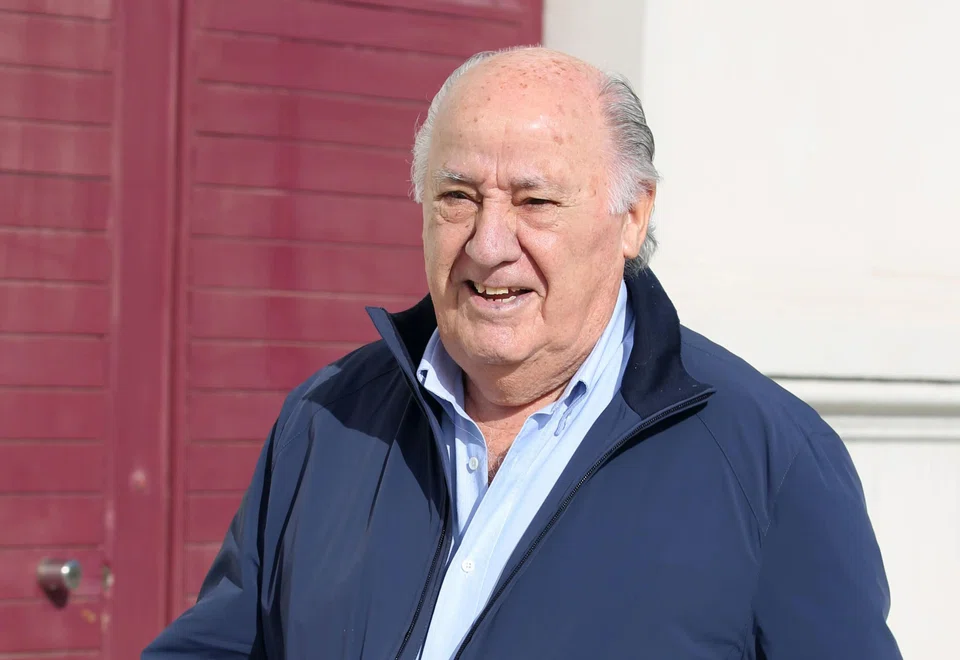
[LONDON/MADRID] Zara founder Amancio Ortega and other ultra-rich individuals and their investment firms are tightening their grip on the US$1 trillion market for commercial real estate as institutional investors lag behind.
Ortega, Spain’s richest man, expanded his global portfolio of commercial real estate last year, acquiring at least 10 properties across North America and Europe for more than US$1.5 billion, according to data compiled by Bloomberg.
His wealthy counterparts are similarly retaining their focus on the asset class, fuelling a record US$464 billion of private capital deployed last year into the market for offices, logistics sites and rental housing, broker Knight Frank said in its 2026 wealth report.
Institutional firms allocated US$347 billion in the same period, the fourth consecutive year that wealthy individuals, family offices and closely held companies have ploughed more into the sector, the real estate firm added, highlighting their growing influence worldwide across financial markets.
A representative for Ortega’s family office, Pontegadea, which bought a two-tower complex in downtown Vancouver leased to Amazon last November for about US$780 million, declined to comment.
Ortega has a net worth of about US$130 billion through the 90-year-old’s majority stake in Zara owner Inditex, according to the Bloomberg Billionaires Index.
“What has changed over the past decade is the level of sophistication among private investors,” Nick Braybrook, London-based Knight Frank’s global head of capital markets, said. “Institutional buyers are returning to real estate, but private capital continues to set the pace.”
The figures reflect how the world’s super-rich have taken advantage of many institutional firms stepping back from real estate amid higher borrowing costs since 2022, the year Knight Frank said private capital became the most active annual buyers of commercial real estate for the first time.
That’s allowed the likes of US tycoon Larry Ellison to snap up trophy assets at favourable prices, often moving more nimbly and taking longer investment outlooks than institutional firms.
SEE ALSO

Around early 2025, the Oracle founder acquired an office block in London’s upscale St James’s district for £162 million (S$219 million) at below the original asking price.
Restaurant franchise magnate Greg Flynn then participated in a deal with similarly favourable terms for a pair of San Francisco towers after the local area suffered from vacancies in the pandemic’s fallout.
Total investment into commercial real estate rose 12 per cent during 2025 compared with the previous calendar year, with markets for industrial, office and rental housing receiving the highest sums of capital, Knight Frank said in its report.
Meantime, the artificial intelligence boom led to a 36 per cent annual surge in allocations to data centres, the firm said, helping to create a new class of real estate billionaires.
Bricks and mortar has long been a popular asset for many of the world’s rich, offering stable cash flows, protections against inflation risks and opportunities to express personal passions.
It makes up about 11 per cent of a typical portfolio of investment firms for the ultra-wealthy, the biggest allocation outside public markets besides private equity, according to research published last year from UBS.
Still, the super-rich have not been fully insulated from the real estate market’s turmoil in recent years.
Egyptian billionaire Naguib Sawiris slashed the asking price of his penthouse last year in London’s exclusive Knightsbridge district by about £10 million, after failing to find a buyer in a luxury market hammered by Britain’s rising wealth taxes.
A unit of Amancio Ortega’s family office was also in contract with another private buyer in late 2025 to sell a Manhattan office building for less than half its US$115.5 million purchase price two decades ago.
Lessening the blow for Ortega’s Manhattan misstep is the roughly 3.2 billion euros (S$4.8 billion) he’s due to receive in dividends this year from Inditex, providing him with a liquidity boost to maintain his status as one of the world’s most prominent private investors in commercial real estate.
He and other members of Bloomberg’s index of the world’s 500 biggest fortunes almost doubled their collective net worth since the end of 2022 to December to oversee almost US$12 trillion in assets.
“It’s a reflection of the fact there has been massive wealth creation. We are in a part of the property cycle where private investors move first and then institutions follow,” said Knight Frank’s global head of research Liam Bailey on private investors’ recent dominance in commercial property. BLOOMBERG
Decoding Asia newsletter: your guide to navigating Asia in a new global order. Sign up here to get Decoding Asia newsletter. Delivered to your inbox. Free.
Share with us your feedback on BT's products and services
TRENDING NOW

Britain’s mansion tax shows the difficulty of targeting wealth

Once staunchly pro-China, Malaysian Chinese businesses are now distancing themselves from Beijing

The only common thing in S-E Asia is that we all eat rice: Cisco’s Asean president
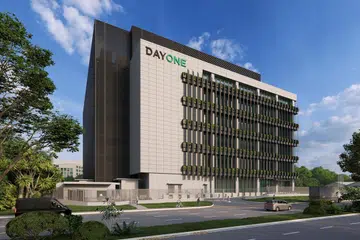
Singapore data centre operator DayOne opts for US IPO at likely US$20 billion valuation

