Government takeover of Sports Hub driven by social, not financial, concerns: Edwin Tong
 Add BT as a preferred source
Janice Heng
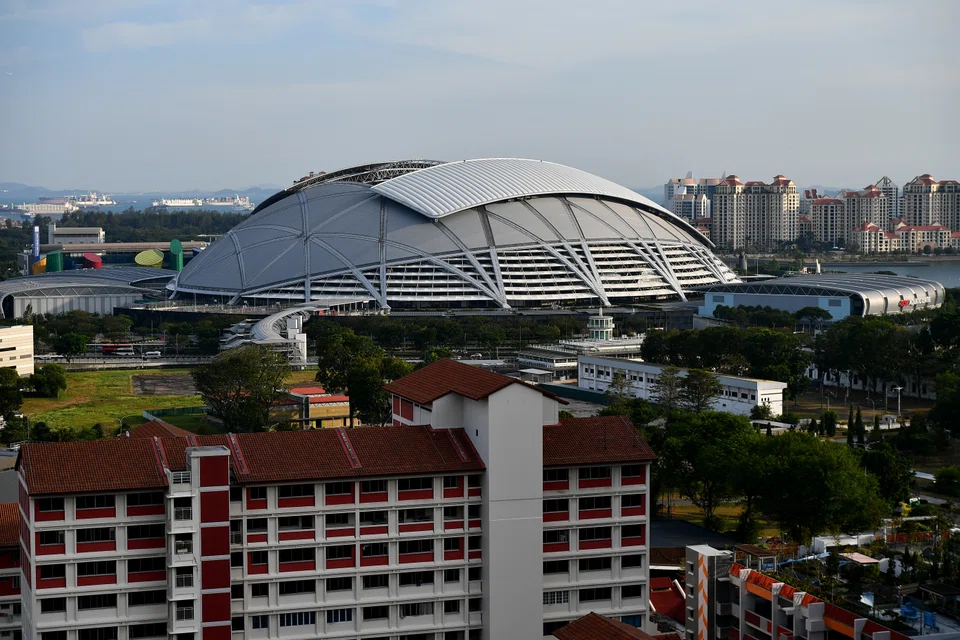
THE government's decision to take back the Singapore Sports Hub from the private sector "was not driven by financial considerations", said Minister for Culture, Community and Youth Edwin Tong in Parliament on Monday (Aug 1).
The termination of the existing public-private partnership (PPP) is estimated to cost the government about S$2.3 billion, comparable to the additional S$2.32 billion that the government would have paid if the PPP had run its course till 2035.
"The main consideration was our desire to bring stronger community participation and activities to the Sports Hub," said Tong in a ministerial statement.
While the intention was to reach a “financially rational” outcome, the decision was not taken “to save money”. Indeed, one might expect the Sports Hub's operating expenditure to rise after the government takes over, he noted.
Tong was responding to some 25 parliamentary questions filed in July, about the June 10 announcement that the government would take over the Sports Hub from Dec 9 and terminate the PPP between national agency Sport Singapore and SportsHub Pte Ltd.
Tong reiterated reasons for the original choice of the PPP model. First, this would allow Singapore to benefit from the expertise of major international private sector partners.
There would also be no upfront costs for the government, which only began to pay an annual fee after the project became operational in 2014. This "turned out to be useful", said Tong – for instance, when the global financial crisis hit in 2008, the government's fiscal resources were not tied up.
"But we also envisaged that there could come a time when Singapore would be ready to operate this project after it has been built, both in terms of expertise in the government and also the growth and maturity of the industry, of the broader ecosystem," said Tong. That is why the PPP provided the unilateral right for the government to take over at any time before the project's expiry, with no penalty for such early termination, he added.
Over the last 12 to 18 months, the government evaluated the performance of the Sports Hub project, including in the pre-Covid period, to assess if the partnership should continue, said Tong. There were several reasons, "not just any single one", which prompted the decision to terminate the PPP.
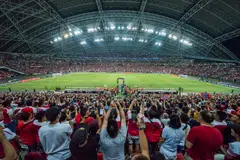
First, the current arrangement has helped achieve world-class sporting infrastructure, but "falls short of promoting sufficient community vibrancy". The profit-driven model is not sufficiently aligned with the government's vision of turning the Sports Hub into a "community icon" that is more accessible to the public, such as by hosting school events.
Second, the government's ownership would allow greater integration of the Sports Hub with broader plans for the Kallang Alive precinct. This would include an expansion of sporting facilities around the Sports Hub, to be developed, owned, and operated by SportSG.
Third, the wider sporting and entertainment ecosystem has since matured, and Singapore's internal capabilities have grown, said Tong.
As for the cost of termination, Tong said there were “2 main buckets”.
First is the termination sum, made up of several components as stipulated in the agreement. The largest component, of about S$1.2 billion, is capital expenditure – which the government would have had to bear without the PPP. The remaining components of about S$300 million are due to the fair market value of the Sports Hub. This brings the projected termination sum to S$1.5 billion, though the final amount will be based on the accounts as at the date of handover.
The second bucket of costs is the future operation of the Sports Hub after the handover. Under current operating assumptions and costs, this would be about S$68 million a year. This would mean about S$800 million up till 2035.
This makes for a full projected cost of S$2.3 billion, roughly the same as if the PPP had continued.
Decoding Asia newsletter: your guide to navigating Asia in a new global order. Sign up here to get Decoding Asia newsletter. Delivered to your inbox. Free.
Copyright SPH Media. All rights reserved.