

Greenback firm near 18-month highs, as Gulf unrest, US inflation keep investors on edge
[LONDON] The US dollar traded around its highest in a year and a half on Monday (Oct 12), as an escalating Middle East conflict kept investors wary, ahead of key US inflation data later this week that could shape the outlook for interest rates.
Oil prices were volatile after Yemen’s Iran-backed Houthis stepped up strikes on Saudi Arabia, and two tankers were attacked over the weekend.
Brent crude futures were down 0.5 per cent at US$104 a barrel, under a touch of pressure after Sunday’s announcement from US President Donald Trump about an energy ceasefire between Ukraine and Russia.
The futures price is still nearly 45 per cent above where it was before the war started, while prices on some physical markets are double those levels.
The dollar index, which tracks the US currency against six others, was up 0.2 per cent at 102.43, just below last week’s 18-month highs.
Weekly data from the US markets regulator showed investors have been adding to their bullish positions in the dollar, which rose to around US$36 billion in the week ended Oct 7 from just US$8.4 billion three weeks ago, largely at the expense of the euro.
MUFG currency strategist Lee Hardman said: “The US dollar has strengthened recently on the back of negative developments overseas that have boosted its appeal, even as market participants have pared back expectations for Fed rate hikes.”
Wednesday’s US consumer inflation report – one of the last major economic releases before the Federal Reserve’s policy meeting in October – could be critical in determining the near-term direction of the dollar. Data last week showed US consumer sentiment deteriorated further in early October, as the rising cost of living because of the Middle East conflict soured households’ views of the economy.
The Fed raised rates in October for the first time since 2023 to rein in inflation, with markets keeping a close watch on economic data to gauge whether policymakers may move again. Traders are pricing in an 81 per cent chance of the Fed standing pat in October, up from 51 per cent a month earlier, the CME FedWatch tool showed.

Chris Weston, head of research at Pepperstone, said: “It’s a very high bar for the Fed to raise rates in October. But if we do see a hot number, the question becomes whether they could go again in January – hiking in December and then potentially again in January, as opposed to the market’s view that they go again in March.”
Severe sell-offs in bond markets in the past few weeks had left investors worried, as borrowing costs across the globe rose to multi-decade highs on worries over inflation, energy prices and ballooning government debt.
The euro fell 0.22 per cent to US$1.1176 after clocking a fifth straight week of losses last week, on the back of investor angst around France’s fiscal health before the 2027 presidential election.
The spread between French 10-year yields and relatively safe German yields traded at 140 basis points (bps). Last week, it neared 160 bps, the most since 2012.
“It is still too early to tell whether higher borrowing costs will be sufficient to impose greater fiscal discipline on the French government,” said OCBC FX strategists.
Against the yen, the US dollar was a touch higher on the day at 158.61 yen in holiday-thinned trading in Japan, while the pound held steady at US$1.323.
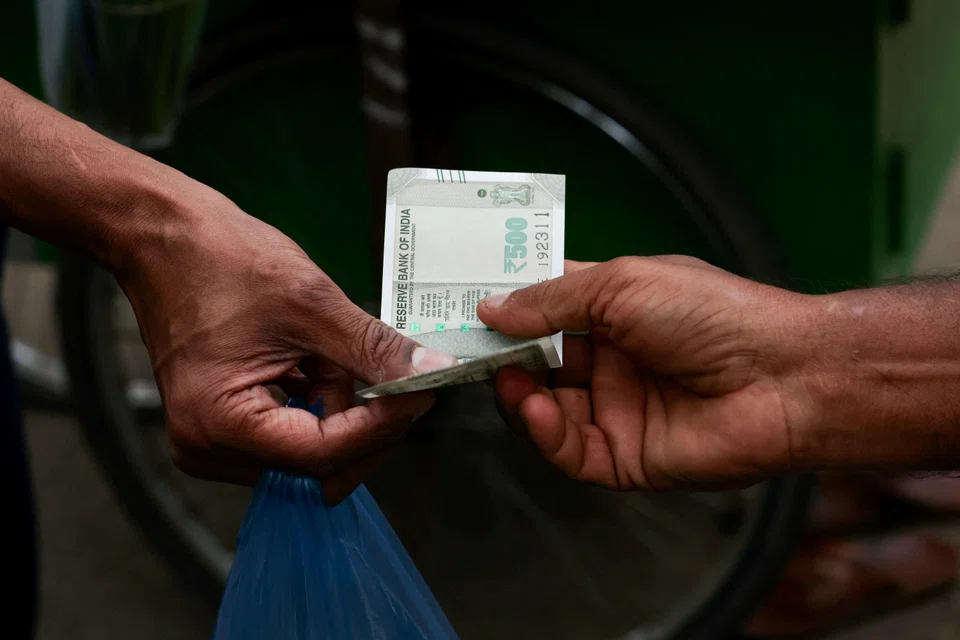
The Indian rupee climbed 1.1 per cent to 95.7 against the dollar, after the central bank moved to alleviate pressure on the currency by diverting oil companies’ dollar purchases away from the spot market. REUTERS
Decoding Asia newsletter: your guide to navigating Asia in a new global order. Sign up here to get Decoding Asia newsletter. Delivered to your inbox. Free.
Share with us your feedback on BT's products and services
TRENDING NOW

Unhealthy air quality in Singapore enough to trigger haze pollution law; NEA is monitoring situation

Once staunchly pro-China, Malaysian Chinese businesses are now distancing themselves from Beijing

Could stablecoins be the future of money?

Johor’s investment boom is real, but actual contribution from JS-SEZ unclear

