

Gulf sovereign wealth funds were built for a rainy day. This may be it
Gulf economies still largely rely on hydrocarbons to support public finances, which are in mixed shape
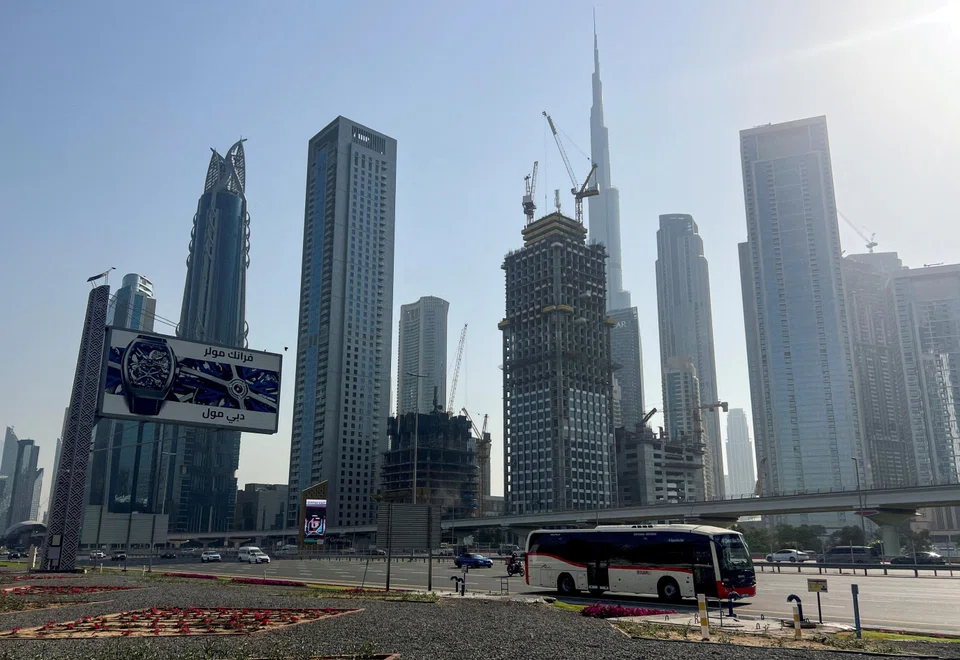
FOR decades, the Gulf’s sovereign wealth funds have preserved and amplified the riches from oil and gas, investing in overseas assets and international markets to create a US$5 trillion pot for a rainy day.
That moment may be nearing.
Iran’s attacks across the Gulf in response to Israeli and US strikes could unleash a fiscal shock. Oil prices have surged 20 per cent since last Friday (Feb 27), but the attacks have slashed vital hydrocarbon exports via the Strait of Hormuz and halted output at facilities including Saudi Aramco’s biggest domestic oil refinery and Qatar’s liquified natural gas (LNG) sites.
A sustained conflict could force the hand of finance ministries in Riyadh, Abu Dhabi, Doha and Kuwait, analysts say, as governments face additional pressure from mounting defence costs, disruption to supplies – from food to medicines – and a broader economic slowdown that may follow.
“Sovereign wealth funds give countries like the UAE (United Arab Emirates) strong financial buffers, and regional governments will rely on their deep pools of sovereign wealth if and as needed,” said Paris-based Robert Mogielnicki, who runs an investment and geopolitical advisory firm and is a non-resident scholar at the Arab Gulf States Institute.
Sustained disruption to the Strait of Hormuz – which handles about a fifth of the world’s oil consumption – will affect giants Saudi Aramco and Abu Dhabi National Oil Company (Adnoc), which have historically shipped the vast majority of their crude exports through the passage. They both have alternative routes but both do not have enough capacity to make up for the volume usually shipped from the Gulf.
“The impact of the current Iran-related crisis depends on how energy flows and prices evolve,” Global SWF, a research group, said in a report on Wednesday.
Officials at six finance ministries couldn’t immediately be reached outside regular business hours.
Fundraising challenge
Gulf economies have sought to pivot away from relying on their natural resources, but still largely rely on hydrocarbons to support public finances, which are in mixed shape. While the UAE is projected to record a fiscal surplus of close to 5 per cent of gross domestic product in 2025 and 2026, Saudi’s big spending resulted in a 276 billion riyal (S$94 billion) budget deficit last year, with deficits forecast for the next few years as well.

Analysts at JPMorgan have already cut their growth forecast for sectors away from oil and gas. They see a 1.2-percentage-point dip across Gulf Cooperation Council countries – Saudi, the UAE, Oman, Bahrain, Kuwait and Qatar – from their earlier growth estimate, they said in a note on Thursday, with the UAE seeing the steepest revision of 2.3 percentage points. The hydrocarbon sector could recover later in the year, depending on the duration of the conflict, JPMorgan said.
For the non-hydrocarbon sector, JPMorgan warned some damage would also linger, and risks to the broader diversification agenda, including domestic investment, foreign direct investment and talent attraction, were now higher than before.
Raising funds by selling international debt could also become more expensive.
Saudi Arabia in January approved a 217 billion riyal borrowing plan for this year. Its sovereign wealth fund, the Public Investment Fund (PIF), as well as Aramco, banks and other companies, have raised approximately US$27 billion since the start of this year, in one of their most active starts to a year ever, JPMorgan said on Feb 2.
“PIF may face more (financial and operational) constraints (than purely portfolio-oriented peers) since it is not only a global investor but is also the main funding force for Vision 2030,” said Ana Nacvalovaite, an Oxford academic specialising in sovereign wealth funds.
PIF was already shifting inward, and the kingdom aims to attract capital amid mounting fiscal pressures and the need to fund the government’s Vision 2030. The plan calls for hundreds of billions of dollars in government investment in sectors such as tourism to cut economic dependence on hydrocarbons.
Strategic pivot
In the aftermath of the global financial crisis, the region’s funds became the go-to rescue for investors, helping to prop up financial firms from Barclays to Credit Suisse. Not all the bets paid off, and in recent years the funds have become more strategic.
They have made massive investments into tech and artificial investment (AI), making the sectors pillars of their efforts to drive their economies away from oil.
PIF has committed tens of billions of dollars to home-grown and international technology investments, including a stake in SoftBank’s Vision Fund. Mubadala has poured capital into robotics and AI infrastructure. Abu Dhabi’s MGX, launched last year with Mubadala as a founding partner, has partnered with BlackRock on a US$30 billion AI infrastructure fund.
They have also made high-profile forays into media, entertainment and sports, part of efforts to project soft power and capture growth in consumer-facing industries. PIF took a majority stake in Electronic Arts and has invested billions in professional golf through LIV Golf, boxing and e-sports.
Last December, the Saudi fund, Abu Dhabi’s L’imad and Qatar Investment Authority (QIA) joined forces to back Paramount Skydance’s US$108 billion bid for Warner Bros Discovery. A rare occurrence, the three-way one-time alliance revealed Gulf states’ appetite for assets from production to content and their growing clout in global dealmaking.
But if military escalations continue and domestic demands grow, there is a risk that investments would be paused, according to Nacvalovaite.
“Priority is security of the citizens and the supply chains, (such as) food security and drinking water,” she said.
Regional precedent in Kuwait
The US$1 trillion Kuwait Investment Authority (KIA), created in 1953 and the world’s first sovereign wealth fund, demonstrated the role sovereign wealth funds were set up to play. When Iraqi forces invaded in 1990, KIA’s London-based arm effectively became the country’s ministry of finance, organising transfers to the government in exile.
Since then, every major Gulf fund has maintained a similar logic: to accumulate in surplus and to deploy in a crisis, even as they operate under vastly different mandates and strategies. While PIF, for example, is a domestic investment engine to implement Saudi’s Vision 2030, KIA and Abu Dhabi Investment Authority (Adia) can only invest internationally.
Sovereign funds have options
To be sure, not all sovereign capital could be easily mobilised in the event of a deeper crisis. For some funds such as Mubadala, their greater focus on private equity, infrastructure assets, and illiquid alternatives could make divestments more challenging.
US Treasuries and listed equities may be the first, and easier, option. Abu Dhabi’s Adia was among investors that offloaded a large block of shares in a US company, Medline, this week.
“Public markets are the easiest source of liquidity, but they’re also the most visible and can be costly to exit during volatility,” said Sam Bourgi, finance analyst at InvestorsObserver.
“The base case is that Gulf SWFs are not forced sellers.”
Some investments continue for now.
Mubadala is among a group of investors committing about US$4 billion to life insurance group Athora Holding, according to a statement on Friday, while Adia and a QIA unit appeared this week among cornerstone investors for Japanese payment company PayPay’s US initial public offering.
Slower outbound investing and quiet portfolio rebalancing rather than emergency-selling is a more likely scenario, he added.
Qatar’s QIA chose to deploy sovereign capital domestically in response to the 2008 financial crisis to stabilise its banking system, buying assets from local bank balance sheets to restore confidence.
Peter Jadersten, CEO of fundraising advisory firm Jade Advisors, said that the focus would be on restoring confidence quickly, though he cautioned it may take time.
“I think the sovereign wealth funds’ portfolios will have a short-term reset, but so will other long-term investors across the globe, like endowments and pension funds. I don’t think it will make a dent in the long-term portfolios of the region’s sovereign wealth funds,” he noted. REUTERS
Decoding Asia newsletter: your guide to navigating Asia in a new global order. Sign up here to get Decoding Asia newsletter. Delivered to your inbox. Free.
Share with us your feedback on BT's products and services
TRENDING NOW

Once staunchly pro-China, Malaysian Chinese businesses are now distancing themselves from Beijing

Looking beyond looming CEO succession, should UOB potentially pursue a transformative merger?

Could stablecoins be the future of money?

Grab CEO’s wife Chloe Tong on life with Anthony Tan and finding her purpose

