HDB launches pilot project to harvest rainwater in existing Yishun, Jurong estates
 Add BT as a preferred source
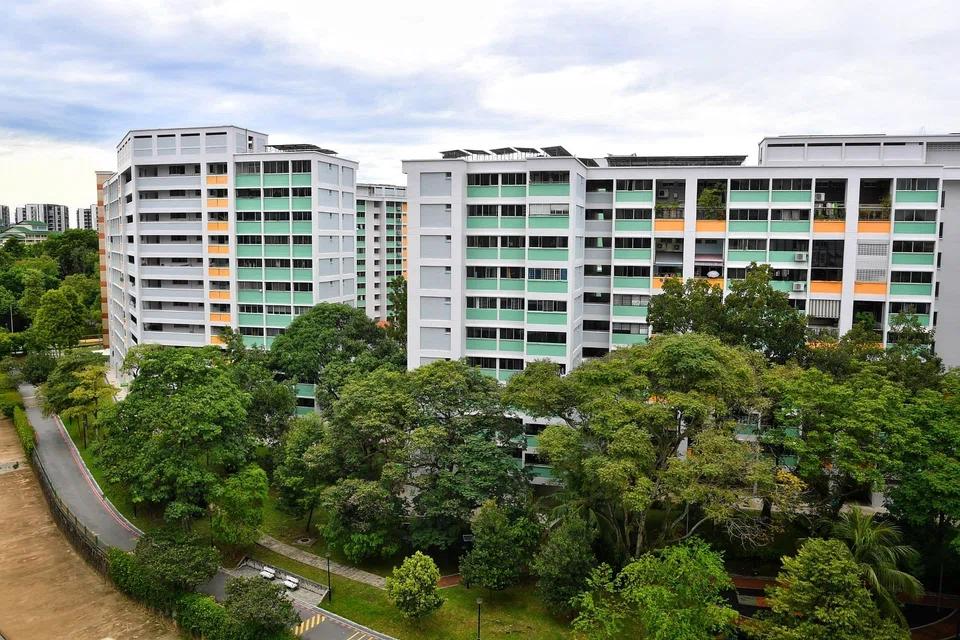
THE Housing and Development Board (HDB) has called for a tender on Monday (Mar 28) for the installation of its UrbanWater Harvesting System (UWHS) to harvest rainwater in existing estates in Yishun and Jurong.
The pilot project will see about 15 UWHS installed, and is expected to reap water savings of about 17,500 cubic metres per year - equivalent to the average yearly consumption of potable water of over 85 units of 4-room HDB flats.
First introduced in build-to-order (BTO) projects in 2018, the pilot project is being extended to existing estates for the first time.
Under the pilot project, the UWHS will harvest rainwater for non-potable uses at the common areas of 89 blocks in the 2 estates. The system is designed to maximise the volume of rainwater collected by harvesting storm-water surface run-off from the ground area surrounding multiple residential blocks.
Its rainwater harvesting capability and water detention capacity allows for a single UWHS to harvest from and dispense water to as many as 12 residential blocks, for non-potable uses such as the washing of common areas and watering of plants.
HDB said the channelling of storm water into the UWHS's harvesting and detention tank can also mitigate potential flood risks during heavy downpours, by slowing down the rate of discharge of storm water into the drainage system downstream.
HDB noted that retrofitting the UWHS into existing estates is more challenging than planning them into new BTO projects, as installation would need to be planned around essential services infrastructure that are already in place.
Tan Meng Dui, chief executive of HDB, said: "While such brownfield developments will be more challenging to implement, compared to building the system as part of a new HDB development, the extension of the UWHS to existing estates will help to level up the sustainability provisions of our existing estates, and bring the benefits of green and sustainable living to more residents and towns."
HDB said it will study the cost-effectiveness of the system in reducing potable water consumption and mitigating flood risks in existing HDB estates, before deciding on the extent of future scale-up to other suitable estates.
The tender for the implementation will close on May 20, while construction of the systems is expected to commence in 2023 and complete in 2027.
READ MORE:
- HDB launches 7th solar tender for 1,290 blocks and 99 government sites
- Alpina Holdings, Terrenus Energy win 6th solar tender from HDB
- HDB raises S$1b from bond issuance to finance green building projects
- All HDB car parks to have 3 EV charging points by 2025; Cat A COE to include more EV models
Decoding Asia newsletter: your guide to navigating Asia in a new global order. Sign up here to get Decoding Asia newsletter. Delivered to your inbox. Free.
Copyright SPH Media. All rights reserved.