

Heng to Singapore firms: Be innovative, tech-savvy but leave no one behind
Anti-globalisation backlash is happening where people feel excluded, he says
Singapore
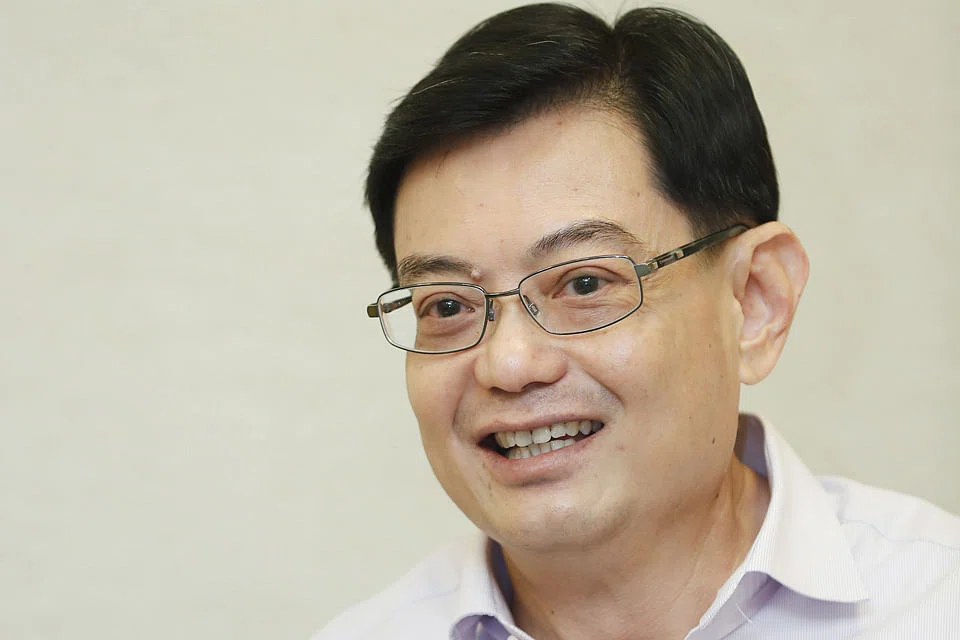
SINGAPORE companies must take innovation and technology seriously, be able to change quickly - and yet not leave workers behind, Finance Minister Heng Swee Keat told an audience at a conference in San Francisco.
Speaking at the two-day Bridge Forum CEO Summit, he said he was impressed by the innovative, entrepreneurial mindset of Silicon Valley-based businesses after having sat through presentations at the event.
"It's quite critical... that our companies really go out to make all these changes quickly, and two, we should not leave our workers behind," he told the audience of about 200.
He was speaking with Sequoia Capital Managing Partner Doug Leone, who singled out the risk-taking mindset of Silicon Valley entrepreneurs as being key to its success, and advised Singapore to focus on attracting talent and raising its output of Stem (science, technology, engineering and mathematics) graduates.
The session was moderated by Economic Development Board (EDB) managing director Chng Kai Fong.
The minister said: "If you look at the backlash against globalisation, it is in all the places where the workers feel that their interests have been compromised, that they have not been taken care of. People must believe the change is good for them."
He said he was optimistic about Singapore as a country with respect for intellectual property, rule of law, a pro-business government and competitive tax rates, as well as its being a multi-racial, multi-cultural nation.
The Bridge Forum CEO Summit, organised by Singapore sovereign wealth fund GIC and EDB, is held to create exclusive access to knowledge for business leaders - from Singapore and also from GIC partners from other parts of Asia - who hear first-hand from companies that are developing and implementing cutting-edge technologies.
It was first held last year with real estate tech as a focus; this year the focus was financial tech.
The idea is to connect nodes of innovation across the world, and particularly between Asia and the world, Mr Heng said.
"I hope Singapore can serve as Asia 101 for global companies seeking to get into Asia, and Global 101 for Asian companies looking to go out to the world."
Citing Asia's vigorous growth and noting that the fastest-growing region in the Internet economy is Asean, he said: "Asian economies are a lot more open and a lot more integrated, and powering ahead in terms of competitiveness."
Asked about China, the minister said every country wanted to develop and move up the value chain, but although the global value chain is very well integrated, its pecking order may not be permanent.
"It is important for all of us to focus on one common objective - which is how we can all move up together.
"The leaders in front of the pack will have to move a lot faster. There, I think America has great opportunity.The question is how we can do this well. Global rules that define the rules of the game are important, and that's why the WTO (World Trade Organisation) is a very important forum," he added.
"We should be talking about how we can reform the WTO so that we have a multi-lateral, rules-based international order to resolve issues. The growth of China, of South-east Asia, India, Japan, South Korea, the growth of the US - all these are pluses, because we hope that life can be improved not just in our own country but across the world."
He said it requires a global effort to deal with global issues like "climate change, the possibility of a global pandemic, the problem of pollution, the problem of deforestation and problems in the ocean".
"It's very hard to get countries which are extremely poor to say 'I'm going to contribute my part'. But a more prosperous world allows us to tackle common issues, and at the end of the day, we are in a better position to safeguard the global commons."
Asked by EDB's Mr Chng what he would do if he were a fresh 21-year-old graduate today, Mr Heng replied: "If I were 21, I would still join public service. I have been in public service all my life and I do think it is meaningful work and at the end of the day, what we do has significant impacts across all parts of society."
His response drew applause.
TRENDING NOW
Simba admits exceeding spectrum limits amid failed M1 deal; full-year profits surge 277%
Temasek’s Wan Chee Foong to helm PIL, Lars Kastrup to be board adviser

He built the Vingroup empire. Now South-east Asia’s richest man is handing some key roles to his sons
One-third of Singapore-listed firms at risk in severe AI downturn: MAS

