

Hermes and Cartier’s last reliable shoppers are retreating in China
Some major luxury brand executives fear the slump can become more widespread and persist until 2027
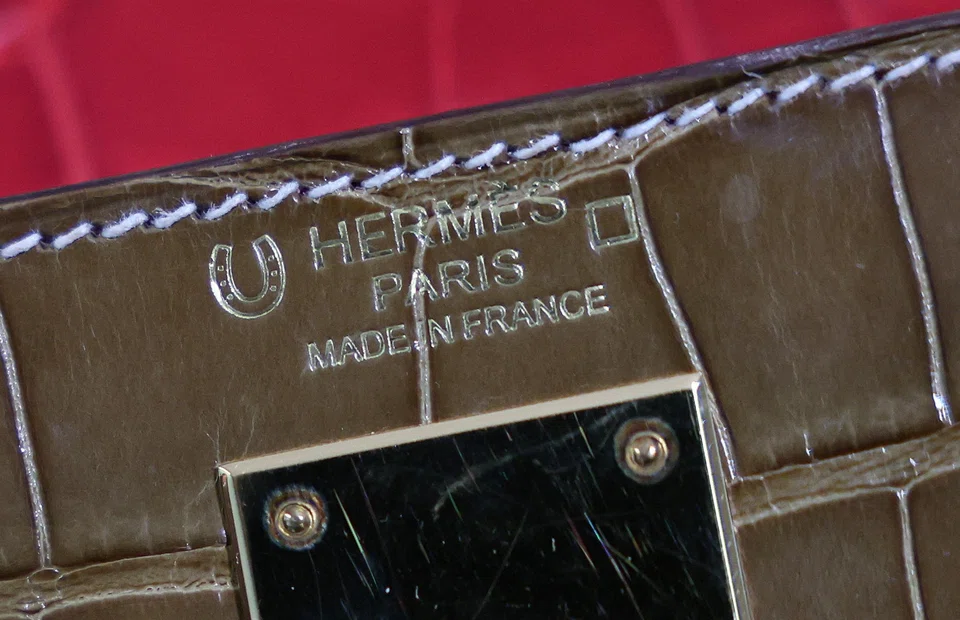
LUXURY powerhouses including Hermes and Cartier are suffering steeper slumps in China, in a sign that a spending pullback by the country’s wealthy consumers is hitting even the most resilient brands.
Sales at both brands in mainland China fell as much as double-digits in August and September compared with the year-ago period, said two research firms that track industry data, surveyed by Bloomberg.
The drop is significant, as Hermes International and Cie Financiere Richemont’s Cartier had been relatively unaffected in the country while a broader slowdown in luxury consumption took hold in June, the firms’ data showed.
Mainland sales for the 25 largest luxury labels including Louis Vuitton and Gucci have also contracted further, plunging by double-digits in August and September, added the firms.
Business remained weak during China’s National Day holiday, a seven-day break in early October dubbed the golden week, even as consumers spent more on travel, said people familiar with the matter who asked not to be identified because they are not authorised to speak publicly.
Some executives at major luxury houses now fear the slump could become more widespread and persist until 2027, the people said.
No timeline of recovery
Concerns are mounting, as Beijing’s widening scrutiny of offshore wealth and a cooling artificial intelligence stock rally rattle private fortunes, testing the long-held belief that the luxury industry’s wealthiest clients are largely recession-proof.
Global brands had long banked on these top-tier spenders, as China’s middle-class retreated during a prolonged property-market slump and wider economic slowdown.
Now, they are facing the possibility of both their key customers and aspirational shoppers spending less at the same time.

“The recurring message from our annual Asia consumer and luxury trip over the past three years was that conditions were difficult, but that ‘next year would be better,’” HSBC analyst Anne-Laure Bismuth wrote in a note in October.
“This time, however, meetings in Hong Kong, Xiamen and Shanghai provided no timeline or evidence of a recovery in Chinese luxury consumption.”
Hermes and Cartier did not respond to queries.
To be sure, resilient demand from markets such as Hong Kong and Macau has helped offset some of the declines in mainland China for high-end jewellery brands such as Cartier, said research firm JL Warren.
Still, the weakness in one of the luxury group’s largest markets has weighed on their earnings.
Hermes on Thursday reported flat sales in the Asia-Pacific for the third quarter. Revenue in the region excluding Japan fell short of analyst expectations for 1.55 per cent growth.
The performance in the region – which includes China and accounts for about 42 per cent of Hermes’ total revenue – is a sign that the Birkin bag maker is not immune to the spending curbs affecting Chinese shoppers.
China’s macroeconomic environment remains challenging, compounded by sluggish financial markets and ongoing tax-related campaigns, Hermes chief financial officer Eric Du Halgouet said in a post-earnings briefing.
LVMH Moet Hennessy Louis Vuitton’s third-quarter results showed a double-digit drop in domestic China sales, amid a trademark controversy involving its largest brand Louis Vuitton.
Purchases by Chinese shoppers overseas also fell by a mid-single-digit percentage. The weakness contributed to a 5 per cent revenue slump in Asia excluding Japan, the group’s only region to post a negative performance.
Gucci sales fell 6 per cent in the third quarter, worse than analysts’ expectations, hurt by weak consumption in China. That has contributed to parent Kering’s quarterly decline.
Amid the broader economic downturn, Chinese consumers have become more selective about discretionary spending, prioritising travel, dining and other experiences over highly visible luxury purchases.
Even among those still willing to spend, tastes have shifted. Many younger shoppers are gravitating away from prominent logos and status-driven purchases in favour of understated products that emphasise craftsmanship and quality, fuelling the rise of so-called “quiet luxury”.
Retail sales growth in August slowed further to 0.4 per cent before improving in September. Big-ticket items including jewellery and cars performed the worst, plunging as much as 21 per cent in business receipts in the two months.
Comparisons are likely to become less challenging next year after a steep downturn in 2026, potentially helping major luxury groups return to reported growth, said Jacques Roizen, co-founder of Shanghai-based consultancy Foresight Performance Partners.
But any improvement in headline numbers is unlikely to signal a meaningful recovery in demand, he said.
“Beneath those comparisons is a structural problem,” he added. “Much of the aspirational middle-class have moved away from luxury, while wealthier consumers have become more cautious. The underlying pressures are unlikely to change quickly.” BLOOMBERG
Decoding Asia newsletter: your guide to navigating Asia in a new global order. Sign up here to get Decoding Asia newsletter. Delivered to your inbox. Free.
Share with us your feedback on BT's products and services
TRENDING NOW

OCBC mobile, online banking services restored after Friday afternoon disruption

SGX CEO Loh Boon Chye to step down; succession planning under way

Waymo founder predicts ‘landslide’ robotaxi adoption in Singapore, driven by high car costs

Vietnam’s northern provinces, not Hanoi or Ho Chi Minh City, are powering near 10% GDP growth

