

High-stakes Thai vote tests appetite for political reform
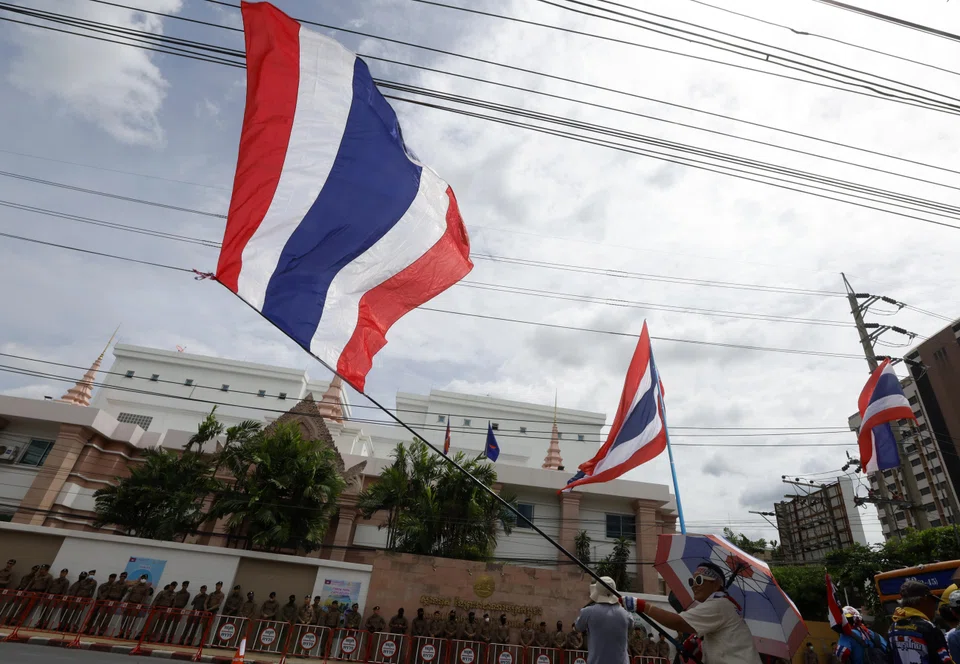
[BANGKOK] Thailand’s major political parties staged final rallies ahead of an election that pits the status quo against sweeping political and economic reform.
The Sunday (Feb 8) election is effectively a three-way contest between the ruling conservative Bhumjaithai party, the progressive People’s Party and populist Pheu Thai. Overall, roughly 60 parties are vying for the support of 53 million eligible voters, who will also decide whether to replace a military-drafted constitution that’s been in force since 2017 when the army ruled.
Thailand has faced repeated bouts of political instability over the years, including military coups and major street protests. Pro-democracy parties are often blocked from power by military-backed coalitions or have their terms cut short by the courts who oust their leaders from power.
In central Bangkok, Prime Minister Anutin Charnvirakul rallied supporters with a nationalist message, vowing to defend Thailand’s sovereignty as border tensions with Cambodia continued to simmer after two rounds of deadly clashes last year.
Just a few miles away, Natthaphong Ruengpanyawut of the progressive People’s Party urged supporters waving the party’s orange flags to help deliver a decisive win in order to form what he called a government of change.
In a stadium in the Thai capital, Yodchanan Wongsawat addressed a sea of red-clad Pheu Thai supporters, promising to return the party to power and lift Thailand into the ranks of high-income economies through technology and innovation-led growth.
The poll follows the latest political crisis in Thailand that saw former Prime Minister Paetongtarn Shinawatra ousted in August over her handling of border tensions with Cambodia. Anutin received the support of the opposition People’s Party to become prime minister the following month, on the conditions that a snap election and a referendum on the constitution were to be held within months.
Anutin’s Bhumjaithai party is hoping to capitalise on its rising popularity thanks to growing nationalist sentiment over the Cambodia conflict and the rollout of a crowd-pleasing cash-handout programme. The 59-year-old politician, widely seen as receiving the backing of the country’s powerful military and royalist establishment, has relatively higher chances to stay in power after the election.
Anutin’s main challenger is Natthaphong, the 38-year-old leader of the People’s Party, whose forerunner Move Forward won the 2023 election but was blocked from power.

Natthaphong has emerged as the favourite among young voters seeking change, and the party wants to put Thailand back on track of becoming Asia’s “Fifth Tiger”, joining South Korea, Taiwan, Hong Kong and Singapore as a high-income, industrialised economy. But his party risks facing a similar fate of being kept from power unless it secures a landslide victory.
Another frontrunner is Yodchanan of Pheu Thai, backed by the Shinawatra clan whose patriarch, former prime minister Thaksin Shinawatra, is serving a one-year sentence for corruption. Yodchanan, who is Thaksin’s nephew, told Bloomberg News he believes he can more than double Thailand’s growth rate by expanding the medical and wellness sector.
Former prime minister Abhisit Vejjajiva, who has returned to lead the Democrat Party, has also pledged to lift annual growth to 5 per cent over the next four years. He eyes a kingmaker role after the election, pledging to keep the next government his party joins in check.
Whoever forms the next government will inherit an economy with little fiscal headroom. Two decades of political instability have turned Thailand from an aspiring economy to a regional laggard beset with stagnant growth, soaring debt, widening inequality and a shrinking workforce. It’s annual growth rate of about 2 per cent a year is less than half the pace of Malaysia and Singapore and barely a quarter of the growth in Vietnam.
Preliminary estimates suggest the average annual cost of campaign pledges by the main parties could reach 400 billion baht (S$16.2 billion), almost half the budget deficit for the current fiscal year. Investor concerns over fiscal largess have already added pressure on longer-dated bonds, with the gap between two-year and 10-year yield widening on expectations of heavy government borrowing to fund stimulus.
Thailand’s inability to revive its economy has made its stocks and bonds cheap, unloved and increasingly irrelevant. Thai stocks were the worst performers globally last year, while its bonds have ranked as the worst in emerging markets this year. But the nation’s largest private asset manager said the election may mark a turning point for the stock market, potentially ending a three-year slump, if it delivers political clarity. BLOOMBERG
Decoding Asia newsletter: your guide to navigating Asia in a new global order. Sign up here to get Decoding Asia newsletter. Delivered to your inbox. Free.
Share with us your feedback on BT's products and services






