

Higher grants for first-time HDB buyers
Income ceiling for public housing also raised; policy changes aim to make public homes more affordable and accessible for Singaporeans

Singapore
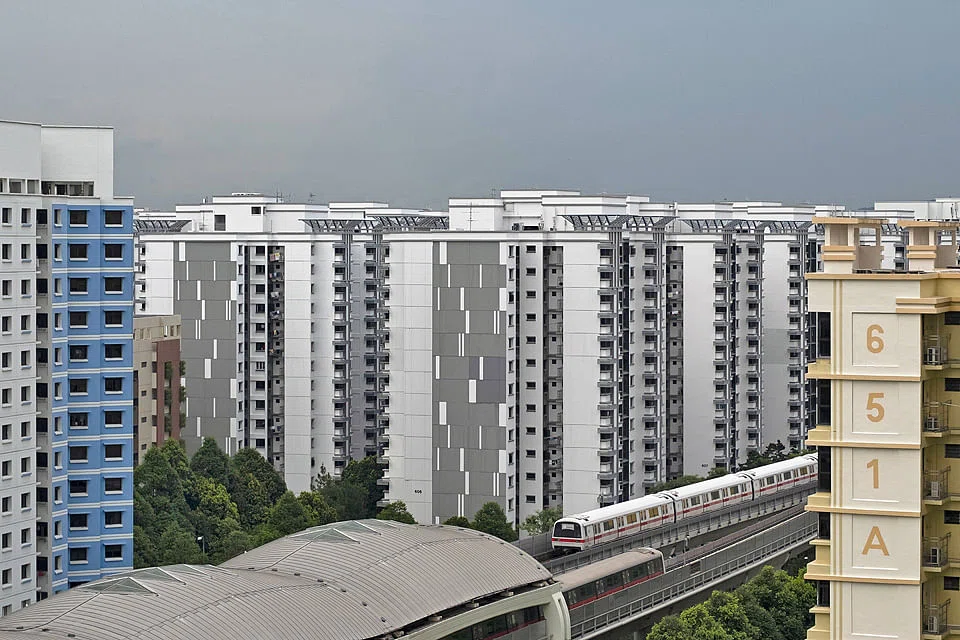
THE Ministry of National Development (MND) and the Housing & Development Board (HDB) are enhancing housing grants for first-time buyers as well as raising the income ceiling for public housing with the aim of making public homes more affordable and accessible for Singaporeans.
Announcing the policy changes at the HDB Awards 2019 on Tuesday, Minister for National Development Lawrence Wong highlighted that the new grant would make HDB flats more affordable for first-time buyers.
As of Sept 11, a new grant, the Enhanced CPF Housing Grant (EHG) will replace the Additional CPF Housing Grant and the Special CPF Housing Grant (SHG). The maximum grant under EHG will be S$80,000, while the income ceiling for the grant will be set at S$9,000. It will apply to both new and resale flat purchases, with no restrictions on flat type and location.
Eligible first-timer families can receive up to S$80,000 under the EHG, provided they purchase a flat with a remaining lease that covers them and their spouse until at least the age of 95. Otherwise, the grant amount will be pro-rated based on the extent that the flat can cover them to age 95.
Eligible first-timer singles aged 35 and above, who are earning a maximum of S$4,500 a month, can get up to S$40,000 under the EHG.
Families and singles who purchase resale flats to live near their parents can still receive the Proximity Housing Grant, on top of the EHG.
Mr Wong also highlighted that incomes have risen since the income ceiling was last raised four years ago and more Singaporeans should be allowed to qualify. As such, the monthly household income ceiling will be raised from S$12,000 to S$14,000. This applies to eligible families buying a flat from the HDB, buying a resale flat on the open market with a CPF Housing Grant, or getting a HDB housing loan to buy a new or resale flat. The current income ceiling of S$12,000 covers about eight in 10 Singaporean households, according to HDB.
The monthly household income ceiling for eligible first-time single buyers will go up from S$6,000 to S$7,000, while the monthly household income ceiling for households to purchase an executive condominium (EC) from a property developer will increase from S$14,000 to S$16,000.
To meet the anticipated additional demand for public housing arising from these changes, HDB will likely have to increase the build-to-order (BTO) supply in 2020, MND and HDB highlighted. This year, HDB is on track for a total of 15,000 units.
Nicholas Mak, head of research & consultancy for ERA Realty, sees limited impact on the private residential market in the short-term as a result of the newly announced measures. However, there could be positive impact in the medium-term for the private home market should some existing HDB owners choose to sell their flats and upgrade to condominiums, he added.
Head of research and consultancy at OrangeTee & Tie, Christine Sun, said that the measures should stimulate the HDB resale market further and could lead to further price stabilisation, or even price improvement for some flats. "The higher demand can also absorb the increasing supply of flats entering the market since more flats have reached their five year minimum occupation period (MOP) and are ready for resale," she said.
She also noted that the boost in income ceiling to S$16,000 for ECs will help the EC market. "A few EC projects will be launched for sale next year. The wider pool of EC buyers should ensure there is enough demand to soak up the supply," she said.
"EC developers with unlaunched EC projects now have a bigger pool of buyers," Mr Mak pointed out. "Already, there is a supply-demand mismatch in the EC market. The government should increase the supply of ECs to at least three plots a year or seriously review the relevance of this programme."
In his speech, Mr Wong also announced plans to introduce a new HDB portal that will make the sales process more convenient. The new portal is expected to be ready by the end of next year.
TRENDING NOW

Singapore expects all parties to honour commitments, says PM Wong after Indonesia cuts gas exports

China’s US$3.5 trillion stock rout deepens as profits sink, major stimulus stays elusive
Gas supply cut from Indonesia accounts for less than 2% of Singapore’s daily gas demand: EMA

Singapore’s central gas buyer affirms Indonesia’s role as ‘important partner’ amid export review warning

