

HK budget reinforces long-term economic development
Hong Kong
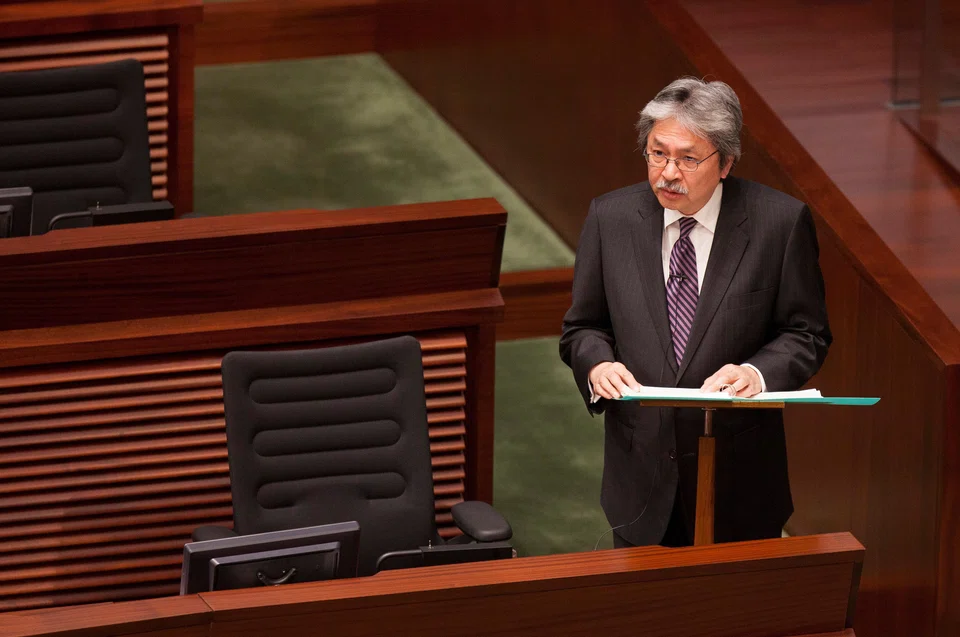
HONG KONG'S Financial Secretary John C Tsang has pledged to explore new ideas and strive for diversity to help Hong Kong people realise their aspirations in his 2015-16 Budget delivered on Wednesday.
The government of Hong Kong Special Administrative Region will introduce six one-off relief measures amounting to HK$34 billion (S$5.9 billion) in 2015 to help alleviate the financial burden on the public and stabilise the economy, said the official.
The six measures include reducing salaries tax and tax under personal assessment for 2014-15 by 75 per cent, benefiting 1.82 million taxpayers; reducing profits tax for 2014-15 by 75 per cent, benefiting 130,000 taxpayers; and waiving rates for the first two quarters of 2015-16, benefiting some 3.15 million properties.
Mr Tsang estimated that Hong Kong's economic growth will expand by 1 to 3 per cent this year, and the headline inflation rate for 2015 as a whole will be 3.5 per cent with an underlying inflation rate at 3 per cent.
In 2014, Hong Kong's economic growth was 2.3 per cent and the inflation rate was 3.5 per cent, according to Mr Tsang.
"In particular, I shall make the best use of resources generated by the community's efforts, and continue to care for the disadvantaged and promote sustainable development, so that people from different sectors, as well as our next generations, can share the benefits of economic growth," the secretary said.
Mr Tsang promised targeted support for the cultural and creative sector, with a view to inspiring creativity in the community, diversifying the economy and expanding market opportunities.
According to Mr Tsang, the cultural and creative measures include:
Mr Tsang said he was encouraged by the number of start-ups in Hong Kong. He said start-ups developed by the Hong Kong Science and Technology Parks Corporation (HKSTPC) and Cyberport had attracted hundreds of millions of dollars in investment.
To further promote the financing of new enterprises, Mr Tsang said the HKSTPC would earmark HK$50 million to set up a corporate venture fund on a matching basis with private funds. The money would be invested in start-ups that were either located in the Science Park or had participated in one of its incubation programs.
Mr Tsang also earmarked HK$150 million for a new phase of the Enhancing Self-Reliance Through District Partnership Program, covering 2016-17 to 2019-20. He said the money would be used to encourage commercial sector participation in social enterprises and promote a greater variety of social enterprises.
Mr Tsang said that human resources development was a central aspect of the Budget. "The government has devoted substantial resources to improving the quality of manpower to further diversify the economy and steer our development towards high value-added activities," he said.
He unveiled a number of human resources' initiatives in his Budget, which include HK$960 million for a pilot programme allowing 1,000 students per cohort to pursue designated self-financing undergraduate programmes that reflect Hong Kong's manpower needs.
A total of HK$130 million will be allocated to strengthen childcare services. The funds will also help more women join the workforce. And the Integrated Employment Assistance Programme for Self-reliance will be extended for two years with HK$220 million. The programme encourages employable, able-bodied recipients of the Comprehensive Social Security Assistance Scheme to gain employment.
Beyond creating employment opportunities for women and older people, Mr Tsang's Budget also targeted healthcare and retirement protection. He reiterated the Chief Executive's January Policy Address announcement that HK$50 billion would be set aside to provide better retirement protection for the elderly in need.
Besides the above long-term measures, the secretary said he will launch a series of short-term measures to support sectors affected by the "Occupy Central" movement of last year.
Mr Tsang said a total of 18,000 travel agents, 2,000 hotels and guesthouses, 26,000 restaurants and operators, and the transportation sector will benefit. "More importantly, we need to rebuild international investors' and tourists' confidence in Hong Kong and uplift our international image. I shall allocate an additional HK$80 million for the Hong Kong Tourism Board (HKTB) to step up its promotion efforts in the coming year," he said.
This series of support measures and promotion efforts will cost HK$290 million.
Meanwhile, he offered a range of initiatives to develop Hong Kong's pillar industries: trading and logistics, tourism, business and professional services, and financial services.
For the financial sector, Mr Tsang announced that he would launch an inflation-linked retail bond, or iBond, issue of up to HK$10 billion, with a maturity of three years. The issuance would target Hong Kong residents.
The secretary also said that Hong Kong was also exploring a closer economic partnership arrangement with Macao, and that the government will hold discussions with the Walt Disney Company on Phase 2 development of the Hong Kong Disneyland Resort. XINHUA
TRENDING NOW
Malaysia’s BN and ally PN declare victory in Melaka state polls in a blow to PM Anwar

Higher rates, weaker spending: Is the Philippines entering stagflation?

Demand, tech capabilities position Apac and AI as Skyscanner’s next growth frontiers: CEO Bryan Batista
Singapore’s S$2.32 billion ‘haze bill’: Can prevention cost less?

