

Hong Kong budget deficit set to triple from earlier estimates
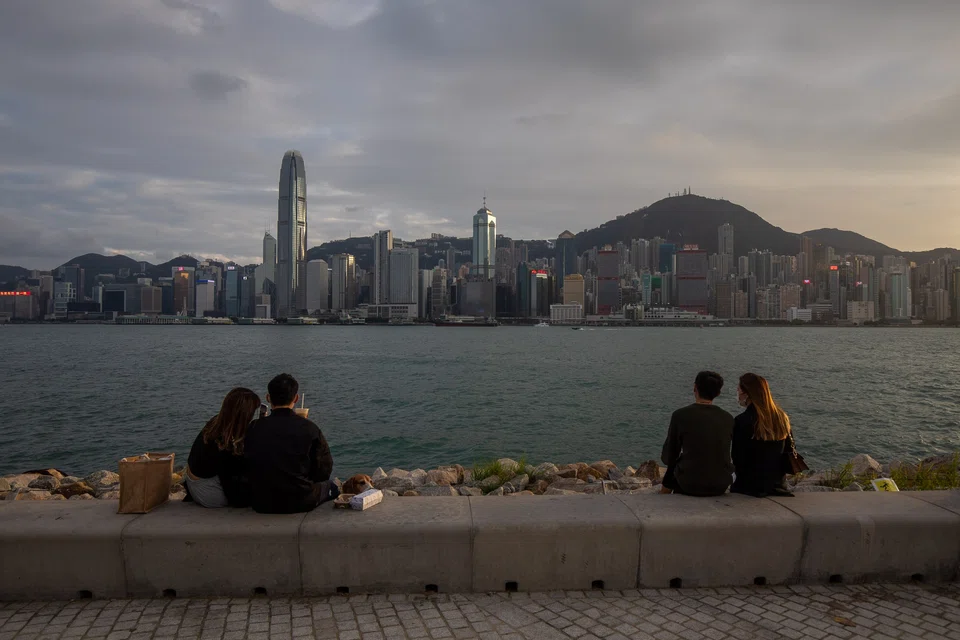
HONG KONG may report a fiscal deficit this year that’s triple the government’s original estimate, according to economists, as the city’s budget takes a beating from economic turmoil.
The shortfall for the 2022-23 financial year may reach HK$159 billion (S$29 billion) or 5 per cent of gross domestic product (GDP), according to a new Bloomberg survey of 12 economists. That’s nearly three times the HK$56.3 billion deficit the government originally projected for the year, and higher than Financial Secretary Paul Chan’s revised forecast of a more than HK$100 billion gap issued last month.
While Hong Kong has enough money to cover the shortfall, its reserves are falling fast, putting future government spending at risk and increasing the chance of more borrowing or tax hikes to plug the financing gap.
“It means the government will have fewer resources to deploy for structural problems in the long run,” said Gary Ng, an economist at Natixis, citing the ageing population and the accompanying need to allocate more resources for welfare, hospitals and healthcare.
The government’s reserves of HK$774.17 billion at the end of August were roughly equivalent to 14 months of spending, based on the average from the past five years. Lloyd Chan, an economist at Oxford Economics, said the city will likely finish the year with reserves of around HK$800 billion, which as a share of government spending would be the lowest level in more than two decades.
Ng said the current policies could threaten the city’s debt-free status, as pressure grows to issue short-term bonds to fund spending or adjust taxes in the long term.
“The pressure is actually quite high,” Ng said, pointing out that the government has recorded deficits recently. Its 2020-21 fiscal year shortfall was the largest in 20 years. “I do think that the situation will begin to be a little bit more alarming for the Hong Kong government,” he said.
Growth challenges
The city’s reserves are “adequate”, the financial secretary’s office said in a September statement, adding that the government would keep increasing the “breadth and depth” of the local bond market while also maintaining a highly competitive tax policy.
Hong Kong is in a crunch this year as the government has spent big on Covid measures and as it has attempted to relieve the pain from the spring’s massive virus outbreak and the resulting social restrictions with support, like spending vouchers. The economy also faces challenges from rising global interest rates, the war in Ukraine and the slowdown in China.

A move in September to remove hotel quarantine for incoming travellers, along with the relaxation of other Covid measures, will remove a “major hurdle” to the recovery and reduce Covid-related expenditures, according to Chan of Oxford Economics.
Concerns remain, though, as the city expects GDP to possibly contract in 2022 for the third time in four years. Economists now expect GDP to shrink 0.7 per cent this year, according to the median estimate in the Bloomberg survey - worse than an earlier estimate of zero growth.
Some of the economists polled by Bloomberg also expected additional support from the government. Four expect authorities to announce another round of consumption vouchers worth HK$5,000 per person, which could spur more spending. Three expect personal tax cuts, while three forecast corporate ones.
Chief Executive John Lee will have an opportunity to announce some measures next week during his policy address. The city is considering easing property taxes and visa restrictions to stem a pandemic brain drain, according to people familiar with the matter.
Woei Chen Ho, an economist at United Overseas Bank, cited several factors to boost the economy, including making it easier for firms to employ skilled foreigners and further relaxing Covid measures to remove a three-day self-monitoring period with restrictions after arriving in the city.
Still, headwinds may exist far into the future. The median forecast for GDP growth in 2023 was downgraded to 3.2 per cent from 3.5 per cent, according to the Bloomberg survey.
“The Hong Kong economy is likely poised for a small bounceback as it readies for dropping the Zero Covid policy, but there are increasing signs of economic moderation lasting well into 2023,” said Heron Lim, an analyst at Moody’s Analytics, citing US tech export curbs that “will have lasting effects on Hong Kong’s status as a key export hub of electronics”. BLOOMBERG
Decoding Asia newsletter: your guide to navigating Asia in a new global order. Sign up here to get Decoding Asia newsletter. Delivered to your inbox. Free.
Share with us your feedback on BT's products and services
TRENDING NOW
Easy to rent out, hard to sell: Are buyers losing interest in Singapore’s one-bedroom condos?

GovTech retrenches another 38 staff in second round of layoffs
Stocks to watch: Seatrium, CapitaLand Investment, Keppel DC Reit, Suntec Reit, CLCT, TSH Resources
World’s largest offshore wind platform by Seatrium consortium on track to be completed by 2028

