
Hong Kong Covid shift won't move China, Xi's virus czar says
 Add BT as a preferred source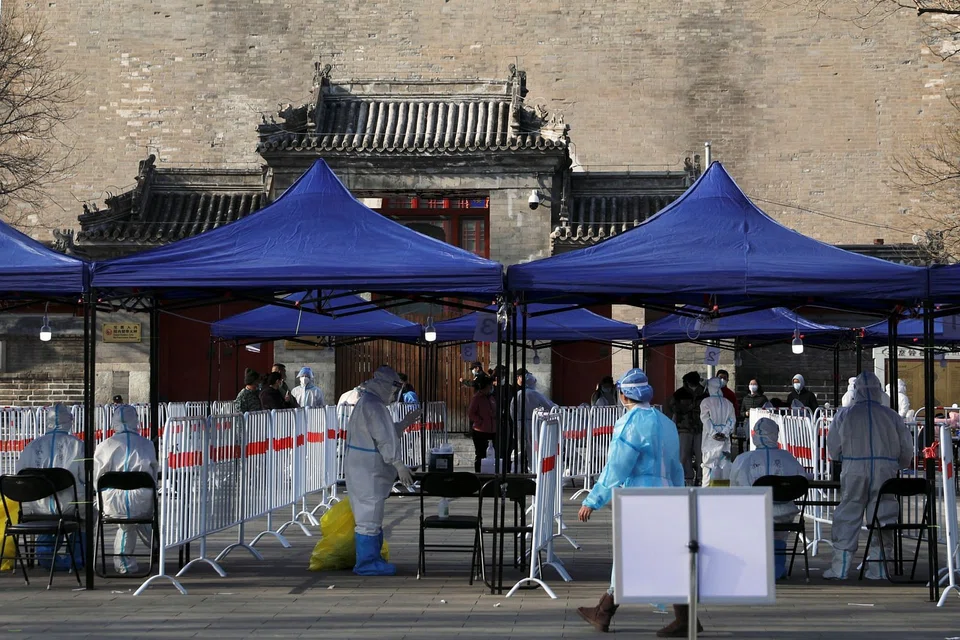
[BEIJING] China should stick to its strict Covid Zero strategy, according to the country's top virus expert, whose comments come alongside signals that the approach is being tweaked to ease economic pain even as infections climb.
"There should not be an iota of relaxation as we need to cherish the hard-earned achievement," said Liang Wannian, a seasoned epidemiologist who has overseen China's Covid response since the beginning of the pandemic and was recently sent to Hong Kong to guide efforts to contain its worst ever outbreak.
Measures could be fine-tuned to be more targeted and deployed quicker in order to keep up with the easily transmissible Omicron variant, he said.
His remarks, made in an interview with state news agency Xinhua, come amid signals the mainland's zero-tolerance approach will be tweaked and follows Hong Kong's move toward easing its most stringent curbs to salvage its status as a global financial hub.
China and Hong Kong are among the last places on Earth pursuing Covid Zero, with the strategy facing unprecedented challenges after Omicron breached the defences that had kept the virus at bay for much of the pandemic. Hong Kong has already moved away from key pillars that had underpinned its zero-tolerance approach, easing isolation and case reporting criteria. At the suggestion of Liang, the city put plans for mass testing on hold in order to prioritise vaccinations and preventing deaths.
In the mainland, officials are seeking to navigate a path that limits disruptions to the world's second-biggest economy - a target outlined by President Xi Jinping last week - while getting its biggest outbreak in two years under control. While the country has returned to typical measures like lockdowns in some areas, including sealing off the province of Jilin, the spread of the virus to some of its most economically significant hubs like Shanghai and Shenzhen has added an extra degree of difficulty in achieving Xi's dual goals.
Navigate Asia in
a new global order
Get the insights delivered to your inbox.
"Strengthening defence comes first in epidemic control," Liang said. "We need to dash the fantasy of the virus slowing down even without intervention," he said.
"If the virus was found too late or not met with timely intervention, it will spread exponentially."
At a briefing with reporters in Beijing on Tuesday, officials from China's National Health Commission said the country will narrow the scope of mass testing and aim to complete testing within 24 hours to limit disruptions and more swiftly stem the spread of omicron. "We don't want to cause the misunderstanding of flooding the whole city with Covid testing so we amended the testing protocol to make it more science-based and targeted," said Jiao Yahui, an official at the NHC. The new protocol also requires local authorities to set up nine task forces to more efficiently handle every step of the testing process, including mobilising personnel and ensuring labs that process samples are operating at full capacity.
In a sign of a potential blueprint, the tech hub of Shenzhen on Monday lifted a week-long lockdown, though kept some restrictions in place, after the municipal government said the spread of the virus is coming under control.
Shanghai has resisted a full-blown lockdown so far. The National Health Commission will require all Chinese provinces to set up at least two or three makeshift hospitals which can be activated with two days during an outbreak. About 35,000 beds are either available or being built in over 30 such facilities, according to Jiao. The spaces will mean designated hospitals can be reserved for severely ill patients and other high-risk people.
The country must continue to weed out every infection, as allowing it to roam through the community would lead to massive case numbers and hurt vulnerable groups like the elderly and people with weak immune systems, Liang said.
"It's still too early to call Omicron the 'bigger flu'," Liang said. "For individuals, it's becoming less likely to cause severe disease, but Omicron's fast spread means substantial infections and high incidence of severe disease and death in the whole population, which is still a huge hazard." BLOOMBERG
Decoding Asia newsletter: your guide to navigating Asia in a new global order. Sign up here to get Decoding Asia newsletter. Delivered to your inbox. Free.
Copyright SPH Media. All rights reserved.

