

Hong Kong defies doomsayers with splash in offshore yuan debt
 Add BT as a preferred source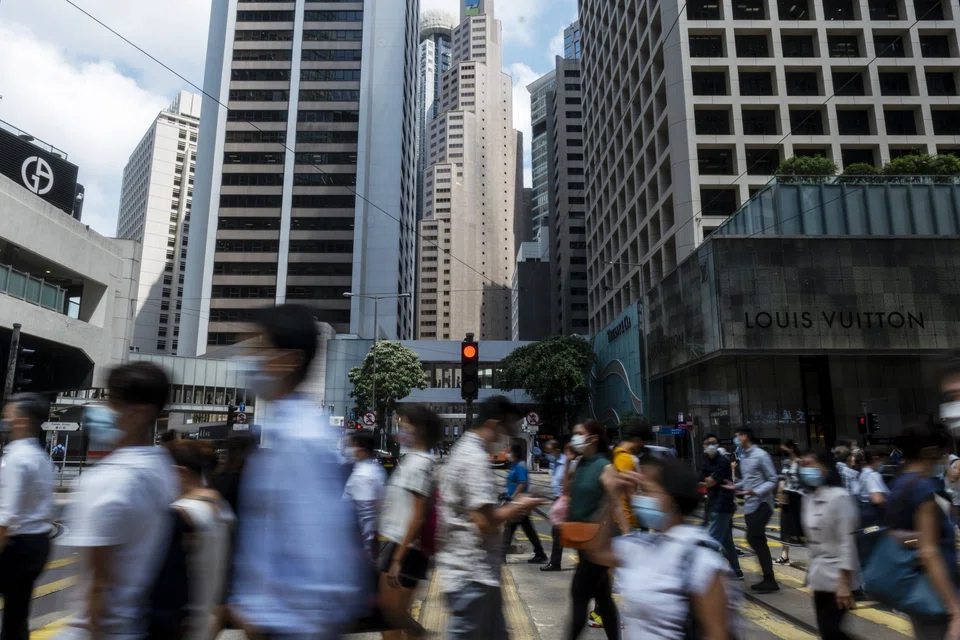
DeeperDive is a beta AI feature. Refer to full articles for the facts.
PREDICTIONS of a decline in Hong Kong as a financial hub look premature, at least as far as offshore yuan debt deals are concerned.
Issuance in Hong Kong of corporate debt denominated in the offshore Chinese yuan has surged 45 per cent to US$21.7 billion so far this year, the most for the period since 2014, Bloomberg-compiled data show. Sales of so-called Dim Sum bonds have jumped as yuan borrowing costs are more attractive for issuers than US dollar rates, while for investors the notes often offer better yields than Mainland yuan debt.
That’s one piece of good news for the Hong Kong debt market, where dollar bond sales have plunged as Federal Reserve rate hikes push up US currency funding costs and China’s property woes cause investors to shun the debt of the nation’s high-yield issuers. Most of the Dim Sum bond issuers are from outside of China, and the increase in their sales is in line with Chinese policymakers’ drive to boost international use of the yuan.
Rising Dim Sum bond issuance “shows Hong Kong still plays a role as a link to the rest of the world and Mainland China in the financial market”, said Iris Pang, chief economist for Greater China at ING Groep.
Non-Chinese financial firms have dominated issuance of Dim Sum notes this year, led by Citigroup with US$1.7 billion in deals, according to Bloomberg-compiled data.
The launch last year of the Southbound Bond Connect, a programme that enables Mainland investors to access the offshore China market in Hong Kong, is also seen by analysts as supporting Dim Sum bond sales.
Navigate Asia in
a new global order
Get the insights delivered to your inbox.
For issuers, selling the yuan bonds is a more cost-effective way to raise funds than dollar notes after the Fed’s aggressive rate increases caused US Treasury yields to overtake their Chinese equivalents. The yield on China’s onshore 5-year sovereign bond was at 2.38 per cent on Tuesday (Aug 16), compared with 2.66 per cent in Hong Kong. Both were lower than the similar-maturity Treasury yield at 2.99 per cent.
Yield gap
“We expect continued strong supply of Dim Sum bonds in the foreseeable future, given a further widening in rate differential for short-dated instruments for the rest of 2022, as the Fed is poised to hike further,” said Becky Liu, head of China macro strategy at Standard Chartered Bank.

Dim Sum bond sales are also growing because more issuers are raising funds with the notes and then swapping them for dollars, a cheaper method than directly selling dollar debt, and because of an increase in international trade that’s settled with yuan, Liu said.
The rebound in Dim Sum sales come as even Hong Kong’s top market regulator warned that the city’s development as an international financial centre is at risk, due to years of political upheaval and a deepening isolation caused by its zero-Covid strategy. BLOOMBERG
Decoding Asia newsletter: your guide to navigating Asia in a new global order. Sign up here to get Decoding Asia newsletter. Delivered to your inbox. Free.
Share with us your feedback on BT's products and services
TRENDING NOW
‘Boring’ is the new black: The stars are aligning for a Singapore stock market revival

Near sell-out launches in March boost developer sales to 1,300 units after four slow months

China pips the US if Asean is forced to choose, but analysts warn against reading it like a sports result

Genting Singapore’s Lim Kok Thay receives S$7.5 million pay package for FY2025

