

Hong Kong is near end of budget deficit era but caution prevails
A key focus of the city’s investment push is the Northern Metropolis
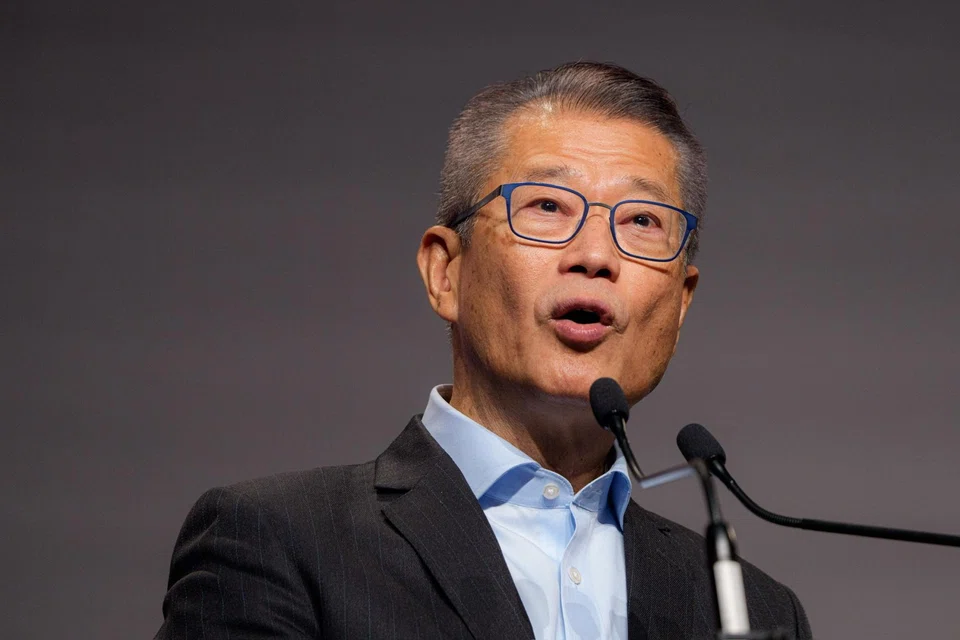
[HONG KONG] For a city on the cusp of ending its longest run of budget deficits in two decades, Hong Kong is not brimming with confidence just yet.
As a trade war with the US raged around it, Asia’s financial hub surprised with its fastest economic growth since 2021 and stamp duty revenue swollen by a resurgent stock market.
The windfall probably narrowed last year’s budget deficit to a fraction of the HK$67 billion (S$11 billion) previously projected by the government, according to estimates compiled by Bloomberg, with Deloitte anticipating a small surplus.
But when Financial Secretary Paul Chan delivers the annual budget on Wednesday (Feb 25), the prospect of the city’s first fiscal surplus in four years will still leave room for worry, given uncertainty over US tariffs and a likely economic slowdown in mainland China.
Chan has been wary of calling a turnaround, voicing only cautious optimism for the year ahead.
“In the face of a volatile external environment and the uncertainties inherent in our economic transformation, we must exercise prudent financial management,” he said on Sunday.
“We must account for the community’s short, medium, and long-term needs and maintain an adequate level of reserves to prepare for any unforeseen circumstances.”
All indications so far point towards another bumper year for Hong Kong’s coffers.
Coming off a four-year high in 2025, first-time share sales had their busiest-ever January on record, fuelling heavy trading volumes that lifted the government’s stamp-duty revenue.



Average daily turnover has already exceeded last year’s levels by reaching HK$272 billion in January, according to the Hong Kong Stock Exchange (HKEX).
It already saw 24 new listings this year and nearly 500 more companies have lined up for initial public offerings – about quadruple the total completed in 2025, the chairman of the HKEX said last week.
The Hang Seng Index, the city’s benchmark, rose nearly 28 per cent in 2025 in its best yearly performance since 2017. Chinese investors ploughed a record HK$1.4 trillion into Hong Kong equities and exchange-traded funds last year, driven by optimism over artificial intelligence.
“We expect stamp duty income to remain sustainable in Hong Kong through 2026 to 2027,” said Evan Ng, portfolio manager at Chartwell Capital. “Given the current fiscal dynamics, stamp duty revenue from equities remains an important revenue source for the government.”
Already, the operating account – which covers day-to-day government revenue and expenditure – has returned to surplus a year earlier than planned, according to Chan.
The capital account, however, is forecast to run a deficit as the government scales up infrastructure investment, forcing it to issue new bonds to fund projects.
A key focus of Hong Kong’s investment push is the Northern Metropolis, a mega infrastructure project intended to develop a cross-border tech hub with mainland China that spans 300 square kilometres.
Hong Kong officials have pledged to accelerate the city’s integration with – and contribution to – China’s overall development. Beijing is set to release its 15th five-year plan in March to outline national priorities and goals from 2026 to 2030.
For the first time ever, Hong Kong will draft its own five-year blueprint to align with the mainland version.
Meanwhile, other fiscal pressures have also eased, especially after a downturn in the property sector that began in 2021 drove the budget into the red during the following three years.
Hong Kong’s public finances have long depended on the property sector, with land-related revenue paid by developers helping offset the city’s low income-tax rates and the absence of broad-based consumption levies.
The housing market rebounded last year, bringing in HK$8.4 billion of land premium – paid by developers when they convert land use – up 61 per cent from 2024 and ending a three-year drop. In the current financial year, land-sale proceeds have already reached HK$8.4 billion, official data show, an increase of 26 per cent from the previous full-year total.
Risks still abound. Looking ahead, the Hong Kong government has few tools to boost the city’s property market further after scrapping extra property taxes and loosening mortgage requirements in the past few years.
A more upbeat fiscal outlook is also prompting calls from lawmakers and business groups for broader tax relief and targeted subsidies, arguing that the government can afford to ease its earlier belt-tightening measures aimed at narrowing the deficit.
During a January briefing with legislators on the draft budget, Chan faced calls to roll out more measures to support the middle class.
He said the government would conduct a “holistic review” of tax and child allowances, looking back at changes over the last eight to 10 years to assess whether there is room for adjustment.
“While the budget may return to surplus earlier than expected, the surplus is still relatively small, and the outlook for 2026 is still uncertain,” said Bloomberg Intelligence strategist Marvin Chen. BLOOMBERG
Decoding Asia newsletter: your guide to navigating Asia in a new global order. Sign up here to get Decoding Asia newsletter. Delivered to your inbox. Free.
Share with us your feedback on BT's products and services
TRENDING NOW

First Resources blames El Nino, outside fires for Kalimantan hotspots amid haze scrutiny

High Court rules against Julius Baer’s Singapore trust arm in US$50 million family trust dispute
Singapore key exports jump by higher-than-expected 68.4% in September, led by non-electronics

MSCI proposes standalone status for Indonesia; Jakarta stocks plunge 8%

