

Hong Kong recovery falters as PMI falls to worst in six months
 Add BT as a preferred source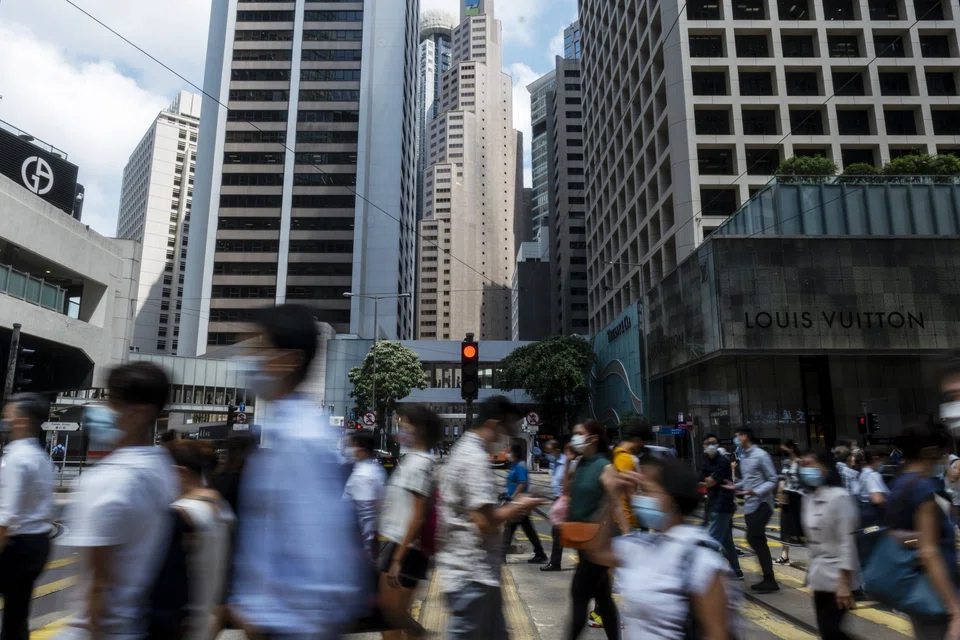
DeeperDive is a beta AI feature. Refer to full articles for the facts.
HONG KONG’S private sector activity contracted in September for the first time in six months as the financial hub struggles to recover from its Covid-fuelled isolation and global headwinds.
The S&P Global Purchasing Managers’ Index (PMI) fell to 48 in September from 51.2 in August. It was the lowest reading since March when the city was at the peak of its fifth virus wave. A reading above 50 signals expansion, while anything below indicates contraction.
“Covid-19 disruptions were reportedly the primary factor weighing on overall sector performance,” said Laura Denman, an economist at S&P Global Market Intelligence, adding that limitations on meeting up and customer hesitancy “impacted demand and activity.”
It’s the latest indicator that Hong Kong may be headed for a recession, with growth this year weighed down by the slow easing of Covid restrictions compared to rivals like Singapore, as well as tightening monetary policies. The city’s monetary authority has been forced to follow the hawkish Federal Reserve in successive interest rate hikes to maintain the Hong Kong dollar’s peg to the greenback.
While Hong Kong finally lifted mandatory hotel quarantines for incoming travellers in late September, consumer and investor sentiment has yet to recover from three years of pandemic isolation. Retail sales value in August surprisingly fell, compared to economist estimates for a 2.7 per cent increase, as the government acknowledged the challenges from “increasingly tight financial conditions”.
Financial Secretary Paul Chan has said the city is likely to see a contraction this year after the government revised down its gross domestic product forecast for the full year to a range of -0.5 per cent to 0.5 per cent. Hong Kong is also expected to report a financial deficit for the second time in three years.
Navigate Asia in
a new global order
Get the insights delivered to your inbox.
While the relaxation of Hong Kong’s travel curbs brings the city more in line with other business hubs, it will have limited short-term benefits to the economy, Bloomberg Economics’ Eric Zhu said in a note published last week before the PMI data.
“The benefit to retailers and other businesses will be slight as long as Hong Kong remains off-limits to tourists from mainland China, who accounted for about 80 per cent of visitors before Covid-19,” he wrote. “Meanwhile, the relaxation of curbs may encourage city residents to travel abroad - a negative for spending at home.” BLOOMBERG
Decoding Asia newsletter: your guide to navigating Asia in a new global order. Sign up here to get Decoding Asia newsletter. Delivered to your inbox. Free.
Share with us your feedback on BT's products and services
TRENDING NOW
Air India asks Tata, Singapore Airlines for funds after US$2.4 billion loss
‘Boring’ is the new black: The stars are aligning for a Singapore stock market revival

From 1MDB to ‘corporate mafia’: Is Malaysia facing a new governance test?
South-east Asian markets account for 8.8% of global capital inflows from 2021 to 2024: report

