

Hong Kong-Shanghai trading link to start on Nov 17
Hong Kong
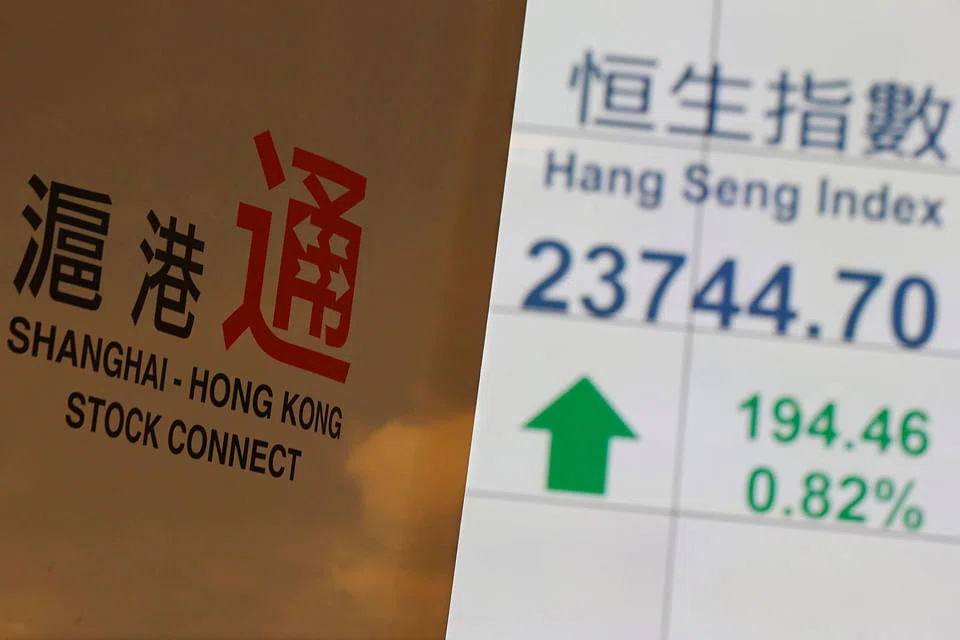
A TRADING link between Hong Kong and Shanghai's stock exchanges will start on Nov 17 after weeks of delays, the Hong Kong exchange announced on Monday, in a move that is expected to lead to billions of dollars in daily transactions.
The Hong Kong Monetary Authority described the "Shanghai-Hong Kong Stock Connect", which is seen as a key step towards greater financial liberalisation in China's economy, as a "milestone".
"The SFC and the CSRC jointly announced today that the launch of Shanghai-Hong Kong Stock Connect on 17 Nov 2014 . . . has been approved," a statement issued by the Hong Kong Stock Exchange (HKEX) said on Monday. The exchange said it "welcomes today's announcement".
The SFC is Hong Kong's Securities and Futures Commission (SFC), and the CSRC is the China Securities Regulatory Commission. The news lifted both markets, with Hong Kong shares ending on Monday 0.83 per cent higher while Shanghai added 2.3 per cent.
Hong Kong officials offered gratitude to Beijing for giving the green light. The city's Chief Executive Leung Chun-ying thanked "state leaders and Central Government", adding that he thought Hong Kong could "make greater contribution to the reform and opening up of the country".
Financial Secretary John Tsang said that he was "very happy" the scheme would launch next Monday. "I wish to thank various sections of the central government for their great support all along," he said in a statement.
The platform - which was expected to be launched last month before being delayed - will allow international investors to trade selected stocks on Shanghai's tightly restricted exchange and let mainland investors buy shares in Hong Kong. It is thought up to US$3.8 billion in cross-border trades will be carried out each day.
"This marks an important milestone in the liberalisation of the mainland's capital account," said Norman Chan, chief executive of the Hong Kong Monetary Authority.
The venture is expected to see volumes on both exchanges rise significantly, particularly Shanghai, but is subject to strict limits in order to preserve capital controls in China, where authorities keep a tight grip on the yuan currency.
Sam Lau, chairman of investment firm HeungKong Financial, said that he expected the move to lead to his company's profits doubling. "For our company, we do both Hong Kong onshore and offshore equities investment," he said, speaking on the sidelines of an Asia-Pacific Economic Cooperation (Apec) business meeting in Beijing.
"There are many stocks that you can buy in Hong Kong - they're really great companies, but they're not listed in China, they're listed in Hong Kong. For example, like Tencent, like Galaxy, those kind of gambling, entertainment stocks. So I think the money will go into those kind of stocks. In China, those big stocks will be securities firms, those will be benefiting as well."
Analysts said that the link-up would boost market confidence and was a "big step" in the opening up of China's yuan-denominated domestic market - known as the A-share market.
"Despite the limited degree of opening up, it still means a great deal to the domestic capital markets and the whole financial system," said Shen Jun, a Shanghai-based analyst with BOC International. "It also involves direct cross-border renminbi flows, and it's a trial for the opening up of the domestic capital markets and the capital account," he added.
Mr Leung had met China's President Xi Jinping in Beijing on Sunday as the city hosts the Apec summit. The city's leader had asked Mr Xi for the stock connect to be implemented "as soon as possible".
The connection had been pencilled in to kick off last month, but was unexpectedly cancelled. However, claims it had been delayed because of pro-democracy protests in Hong Kong were denied by exchange president Chow Chung-kong, who told AFP last month that the city's authorities have "no control over the proceedings".
Media reports last month said that the Asia Securities Industry and Financial Markets Association, representing some of the world's biggest banks and asset managers, had written to Hong Kong regulators asking for a delay because of uncertainty over the scheme's rules.
Chinese authorities would likely issue detailed policies before the launch to clarify technical issues including capital gains tax, Mr Shen said. AFP






