

Hong Kong wants to prove it can still be ‘Asia’s World City’
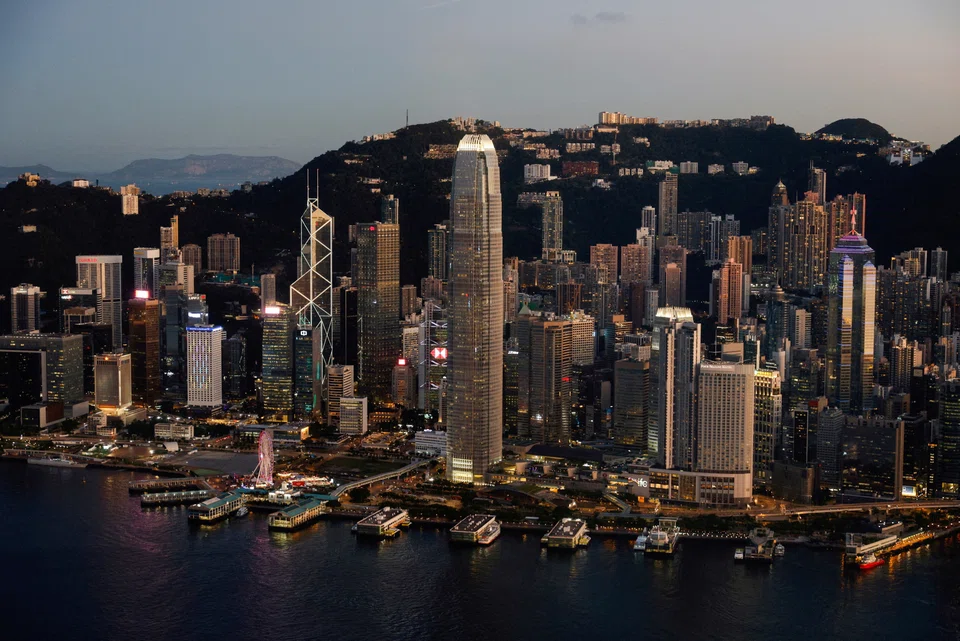
THE beer is flowing again at Hong Kong’s Happy Valley Racecourse. Music pumps from clubs in the neon-streaked Lan Kwai Fong district. Even the Sevens – an annual rugby extravaganza that has captured this city’s hyperkinetic lifestyle for decades – is back, finally.
After more than two years under Beijing’s stringent pandemic rules, Hong Kong wants to prove that it can still be “Asia’s World City”.
The Hang Seng Index has found its footing again, after losing half its value. Dealmakers say business is looking up, at last.
But behind the hopeful signs are some hard realities. As the pandemic recedes, a new Hong Kong is emerging: one that is less free, less cosmopolitan and, for some businesses, less vital than the old one.
During the pandemic, tens of thousands of people left the city. Its population fell by about 216,000, or 2.8 per cent, to 7.3 million by June this year. Among those who left were scores of bankers, lawyers and other professionals, who helped make the city a freewheeling, international entrepot.
Meanwhile, more than 60 international companies moved their regional headquarters out of Hong Kong. Over a third of 36 fund-management companies surveyed in July had moved their regional or global posts from the city. Government data showed that new visas for foreign financial-services workers fell by half to 1,894 in the first nine months of 2022, compared with three years ago.
But the pandemic, and Beijing’s strict policies to deal with it, form only part of the story.
A quarter-century after Hong Kong’s return to China, the city’s rulers have chipped away at civil liberties and jailed dozens of pro-democracy figures. Last weekend, media mogul Jimmy Lai was sentenced to more than five years in prison for fraud, a punishment that human-rights activists decried as a blow to freedom of expression.
Even in the financial community, an impolitic word could draw a sharp rebuke from Beijing. Anxiety is growing. One British national who worked in finance recalled deleting WhatsApp and Signal messages that could be deemed seditious before a routine meeting with local police. His concern was that the authorities might check his phone.
In August, he moved to Singapore.
Thomas Kellogg, executive director of the Georgetown Center for Asian Law, said: “It’s hard not to imagine that international business won’t take note of the downward trend in Hong Kong’s autonomy, and continue to assess their presence in Hong Kong accordingly.”
Despite the buoyant stock market, life in Hong Kong is hardly back to pre-pandemic normalcy. Visitors still need to do multiple mandatory Covid tests. Masks must be worn in public places. The border with mainland China remains closed.
And the local economy, like in the rest of China, is hurting. The government projected that gross domestic product would shrink 3.2 per cent this year, its third contraction in four years. Home prices tumbled 18 per cent from last year’s peak; Goldman Sachs predicted the slump will only worsen.
The hotel industry, which was hit particularly hard by Covid, is struggling to lure workers back.
Harilela Hotels chairman Aron Harilela said in October: “We have seen a mass outflow of talent.” He added that attracting employees was a “mammoth task”.
“I think the fear and stigma that we have been facing about Covid, which the rest of the world has not been facing, has been stifling us,” he said.
Hong Kong’s Beijing-picked leader, John Lee, has been trying to burnish the city’s sullied reputation as an international business hub. A big step was rolling back Covid restrictions, including mandatory hotel quarantines.
Lee also plans to relax visa rules and reduce the stamp duty on property purchases by non-residents. On Tuesday, he scrapped most of the remaining curbs. The reopening of the border with mainland China is expected to happen early next year.
Travellers are returning. The Immigration Department said that average daily arrivals at the Hong Kong International Airport have jumped to about 20,000, from a low of just under 70 in March. It did not provide data for the pre-pandemic period.
Executive recruiters, who have an interest in luring people back to Hong Kong, are predictably optimistic. They said the city’s long-time selling points – low taxes, good opportunities and access to lucrative mainland markets – are still big draws. It helps that its notoriously-high housing costs have fallen.
Loretta Chan, a Hong Kong-based partner at executive search firm Wellesley Partners, said: “I’ve seen a lot of interest from people, particularly expats who left for Europe or London. I’ve seen them come back.”
Alan Schmoll, a former banker who lived in Hong Kong from 2009 to 2014, said he was considering moving back. Now based in Melbourne, he visited in November for business and for the Hong Kong Sevens.
The trip was a success all around, he said. He got a lot of business done, and partied a bit too much at Boomerang, a club in Lan Kwai Fong, after a Covid test at the door.
“The club was packed,” said Schmoll, who runs Pave, an online real estate company.
“It was BAU – business as usual.” BLOOMBERG
Decoding Asia newsletter: your guide to navigating Asia in a new global order. Sign up here to get Decoding Asia newsletter. Delivered to your inbox. Free.
Share with us your feedback on BT's products and services
TRENDING NOW
Incidence of civil servants buying property near unannounced MRT stations ‘a concern’, but may not establish misconduct: PSD

Grab CEO’s wife Chloe Tong on life with Anthony Tan and finding her purpose

Income Insurance appoints former Manulife Singapore top man as new CEO

HDB reviewing ‘jumbo’ flat scheme after Telok Blangah unit listed for sale at S$2.18m

