

Hormuz oil flows rise as Gulf producers boost volumes, keeping prices in check
Every major regional supplier bar Iran is now selling barrels for collection outside the strait
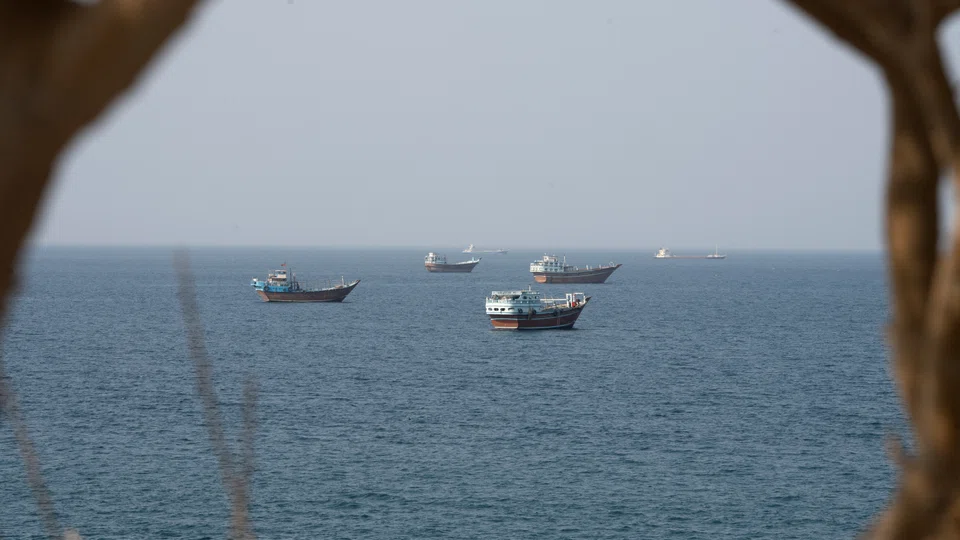
[LONDON] The flow of crude through the Strait of Hormuz is creeping higher as producers across the Middle East boost exports in the face of Iran’s lingering threat to shipping. The increase is keeping global crude oil prices in check.
About six to eight million barrels a day of crude are now being shipped through the world’s key oil chokepoint, according to estimates from oil traders involved in and monitoring cargo activity.
Flows slipped in July, when an onslaught of attacks on supertankers by Iran led to the breakdown of an interim ceasefire and heightened risks to navigation. They remain at roughly half pre-war levels.
Estimates can be wide-ranging and volatile. Some trackers and US officials have suggested even higher volumes, though the security situation remains precarious.
For instance, Goldman Sachs analysts say that oil exports from the Persian Gulf have recovered to around two-thirds of pre-war levels.
Helped by higher crossings through the Strait of Hormuz, total exports of crude and oil products from the region have risen to 15 million to 16 million barrels a day, analysts from the bank noted.
Increased flows keep lid on prices
US President Trump said on Thursday (Aug 27) that 24 boats crossed Hormuz the previous night, without specifying what type of vessels they were, while a UK Naval group has continued to report attacks on ships in recent days.
One factor helping sustain the increase is the highest earnings in the history of the supertanker market, adding for the incentive for shipowners to cross.
Either way, there are signs that producers across the region have been moving more oil in recent days.

To enable that, a batch of tankers are doing shuttle runs, hauling barrels to just outside the Persian Gulf. Once the shuttle ships get there, their cargoes are then collected by waiting tankers that remain unwilling to go through the strait themselves.
Every major regional supplier bar Iran is now selling its barrels for collection outside Hormuz.
“In the last few days, more oil seems to be coming out of Hormuz,” Georgios Sakellariou, a freight analyst at Signal, a shipping and analytics company.
“If it’s sustainable, crude oil prices will stay down, although recently that has still meant something close to US$85 a barrel.”
Brent oil futures were trading at about US$88 a barrel on Thursday, on course for the biggest weekly drop since late June when the interim ceasefire was still helping to keep shipments moving.
“The rise in dark crossings by specialised shippers, and in ship-to-ship transfers shows that producers and shippers are adapting to the Mideast conflict,” the Goldman Sachs analysts said.
Higher dark flows could “moderate the upside to crude oil prices even if Mideast disruptions last longer”, they added.
The latest round of diplomatic efforts to strike a deal over Hormuz has also stymied prices this week. The boss of Europe’s largest oil refiner said this week he is bearish on the outlook for crude prices, in part as barrels quietly escape Hormuz.
A sudden inflow of ships late last week has enabled higher loadings, and it is not clear if more ships had entered in recent days to keep that pace going over the coming weeks.
Saudi Arabia had the highest number of tankers in several weeks at its export installations in the region on Tuesday, satellite images gathered by Bloomberg show.
A day earlier, loading activity from Iraq’s ports in the region even briefly exceeded above pre-war rates. Smaller producers like Qatar and Kuwait are starting moving more too, adding to the momentum.
To be clear, it does not mean Saudi Arabia’s total exports are up. The increase from the Persian Gulf has coincided with a drop from its facilities in the Red Sea.
Simultaneously, though, the kingdom is loading more oil onto tankers from Sidi Kerir, a port on Egypt’s Mediterranean coast where it owns storage, complicating the tracking of the kingdom’s oil shipments.
It is also unclear whether all the regional exports from the Persian Gulf are on their way to customers yet. They still need to be transferred onto waiting vessels usually near the Omani port of Sohar or Fujairah in the United Arab Emirates, a process that can take days.
Tankertrackers.com counts shipments to the global market when they pass through the US blockade line, monitoring the Automatic Identification System signals of ships because of restrictions on timely satellite imagery.
On that basis, flows over the past seven days stand at just 3.7 million barrels a day, Samir Madani, the firm’s co-founder says.
Higher loadings across Gulf producers
Increases in loadings observed by satellite have taken place across a range of Gulf producers in recent days. They add to heightened flows from the UAE, which was the first major producer in the region to really ramp up its exports.
Loadings from Iraq’s export installations in the Persian Gulf jumped this week, with seven tankers collecting the nation’s cargoes on Monday.
The ships in question had a transportation capacity of about 13 million barrels, according to their dimensions. The pre-war norm was six tankers loading at eight berths at any given time.
Iraq is also offering buyers of its crude the option to collect supplies from outside of the Persian Gulf for the first time since the Iran war began.
The country’s state oil marketer, Somo, is offering Basrah Medium and Heavy that can be collected by ship-to-ship transfer near the Omani coast in September via a tender, according to a document seen by Bloomberg.
Somo also offered fuel oil in a separate tender last week that can be picked up either inside or outside the Persian Gulf.
This marks a change of tack for Iraq, which had been offering large discounts to entice traders and refiners to load its oil deep within the gulf after the conflict started.
Iraq has “an agreement with companies to transport Iraqi crude oil through secure routes for sale outside the strait, with the aim of achieving the highest possible economic benefit for the government,” Oil Ministry Spokesman Salim Al-Rikabi said in a text message.
A number of groups have helped to get Iraqi barrels to global customers during the war, including Vitol Group and TotalEnergies. Patrick Pouyanne, the chief executive officer of the French supermajor, said this week that the company was one of the largest traders of the Middle East producer’s oil.
Compounding the pickup is an increase from two of the region’s smaller producers – Qatar and Kuwait.
The two countries, which exported a combined two million barrels a day of oil before the outbreak of the war, have managed to get shipments back to 70 per cent of pre-conflict levels, according to traders, who asked not to be named as they are not allowed to speak to media.
Bloomberg has asked all the major Gulf producers about their loading activity over the past week. None responded.
For its part, Iran’s exports remain halted by a blockade that the US reimposed when the ceasefire broke down.
A key challenge now is to boost exports of fuels like diesel and jet fuel. About 1.6 million barrels a day of the region’s refining capacity remains offline, a significant increase from a year earlier, according to data from IIR Energy.
While the crude oil shipping industry has one dominant shipping company helping to organize flows, the South Korean firm Sinokor, that is not the case for fuels markets, which also requires smaller vessels to collect cargoes. BLOOMBERG
Decoding Asia newsletter: your guide to navigating Asia in a new global order. Sign up here to get Decoding Asia newsletter. Delivered to your inbox. Free.
Share with us your feedback on BT's products and services
TRENDING NOW

DBS, OCBC, UOB rout lops billions off STI as inflation, rate concerns spook investors

Grab CEO’s wife Chloe Tong on life with Anthony Tan and finding her purpose

OCBC sheds S$8 billion in value as shares close nearly 6% down; analysts cautious on banks

Deal between tycoon friends sparks scrutiny of Philippine power sector

