

Hotels get lean and mean with machines and job redesign
With pared-down workforces and jobs that aren't likely to return soon, they have been forced to prepare their employees for a new way of working

Singapore
TOURISM remains at a standstill, but Singapore's hotel sector is weathering the downturn better than might have been expected.
Hoteliers have taken the opportunity to redesign jobs, reskill workers and adopt more technology, as the exodus of foreign workers shapes up to be a permanent one.
In fact, Far East Hospitality Management chief executive Arthur Kiong now aims to ''significantly reduce'' room-to-staff ratio to more than 30 per cent below the industry average.
Having pared its share of foreign staff from 35 per cent to under 28 per cent last year, Far East Hospitality wants ''to create a sustainable Singapore core workforce via job redesign'', he told The Business Times.
Singapore's accommodation workforce shrank by 9,300 to 27,000 as at end-2020, compared with the contractions in other services industries that were also hurt by the pandemic: 9,000 job losses in aviation services, 10,000 in retail, and 15,400 in food and beverage (F&B) services.
The accommodation-services industry, which includes hotels and dormitories, last year reported just 710 retrenchments among establishments with at least 25 employees - out of 26,110 in the overall economy.
The number of pink slips in the sector paled against the 990 retrenchments in F&B, 1,180 in retail, 2,000 in air transport, and 2,210 layoffs in arts and recreation (which included the axing of non-hotel staff at Resorts World Sentosa last year).
Retrain, not retrench
Broad-based support and targeted initiatives, such as the Job Redesign Reskilling (JRR) programme, ''have collectively helped to cushion the impact of Covid-19 on the accommodation sector and moderated job losses significantly'', said Terence Ho, associate professor in practice at the Lee Kuan Yew School of Public Policy.
''While the sector will continue to depend heavily on foreigners, there has been a concerted push to lower this reliance through technology adoption and JRR efforts - to multi-skill local workers and adopt digital tools to aid older workers.''
If the pandemic was the proverbial stick, then job-redesign schemes have proved to be the tasty carrot, with the industry having sped up structural shifts that are changing the workforce for good.
To go by the interest that Solutions Plus has seen in recent months, ''from an industry point of view, definitely it's been a wake-up call'', said principal consultant Leonard Ling.
More than 1,400 workers have taken part in the JRR programme for the hotel industry since its launch in late 2019, said government agency Workforce Singapore (WSG).
The JRR, which covers part of employees' course fees and wages, was enhanced in March to focus job redesign efforts on 16 white-listed roles that can be supported by technology.
These roles have been deemed ''most relevant to the hotels as they transform their business in response to the post-Covid operating environment'', a WSG spokesperson said.
Pan Pacific Hotels Group (PPHG), which retained all 5,500 of its full-time staff in 2020, tapped the JRR at its Parkroyal on Kitchener Road.
It is also eyeing Singapore Tourism Board funding to use tech in F&B, plus two hotel-specific programmes from the National Trades Union Congress, including a scheme to train non-security staff for security roles.
Better work
Job scope revamps are expected to benefit the workers being retained.
Brian Ling, design director at business transformation consultancy Design Sojourn, told BT that job redesign is about giving workers ''a better career''. This is especially true with traditional hotel roles such as bellhops or security guards, which do not typically offer a path towards development.
PPHG senior vice-president of human capital and development at Andreas Sungaimin echoed this observation, saying: ''In the past, hotel staff were mono-skilled, limiting their capabilities and restricting their potential to excel. With job redesign, staff are now multi-skilled, giving them a wider scope of work and making them more employable in the job market.''
And, by training hotel staff to fill three roles instead of just one, Far East plans to cut man-hours by 10 per cent - and raise wages by 10 per cent.
Said Mr Kiong: ''The pandemic has had some positive effects on our Singaporean core of workers. Due to the reduced reliance on foreign workers, coupled with the launch of new and upcoming hotels... we have been able to continue with our annual pay increments and promotions.''
There have even been new hotel job opportunities as a result of the pandemic, said a spokesperson for Marina Bay Sands (MBS).
The New Paper last year reported that MBS was not renewing the contracts for certain foreign staff, mainly in F&B operations. But the spokesperson told BT that there were no retrenchments at the integrated resort, where two-thirds of its roughly 10,000 workers are local.
She said that the challenges from Covid-19 also gave MBS the chance to ''rethink its processes, reinvent and innovate''; for example, it trained employees for new areas of businesses'' like the hybrid broadcast studio at MBS' convention centre facilities.
Shirley Tee, course manager in the Nanyang Polytechnic hospitality and tourism management programme, said that the wider industry is looking for emerging skills such as bespoke customer-experience design, data analytics and digital marketing.
To be sure, consultants who have been involved in hotel job redesign noted that industry challenges cannot be solved with grants alone.
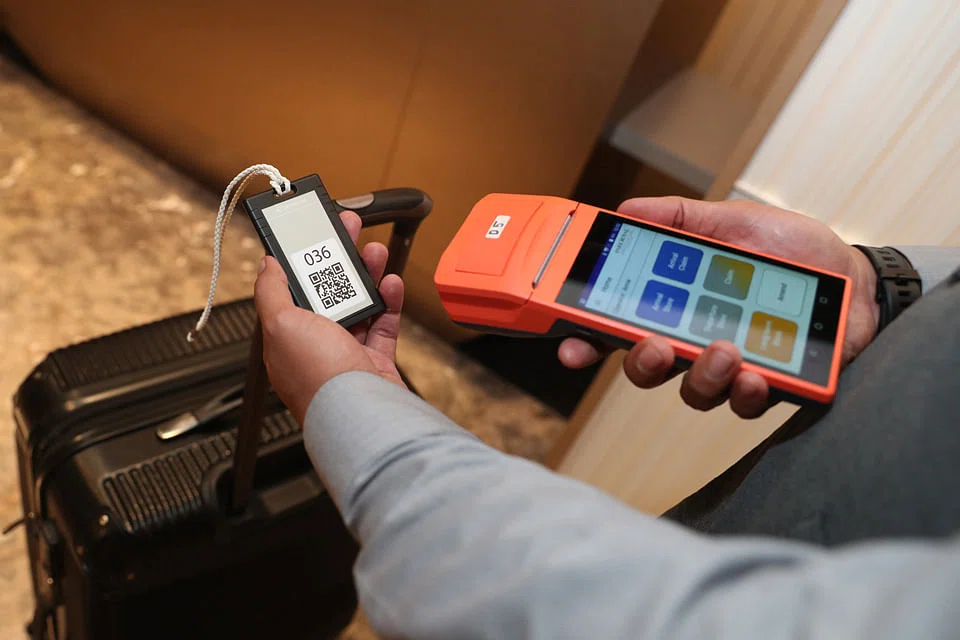
For instance, organisations may try to plug gaps with pre-approved solutions such as customer service chat bots or self-check-in counters. But Sharon Kam, head of creative strategies at Consulus, called these options ''usually generic and prescriptive'' and warned: ''The industry will need to be bold in trying out new approaches, rather than to simply adopt an existing or even a past solution.''
Scaling of solutions
And, while grants can help hoteliers study and test out solutions, ''the actual scaling of it then requires the company to fork out its own money'', said Solutions Plus' Mr Ling. ''It's whether or not I even have the appetite or the budget - and many of them don't. Especially coming out of Covid, they are already on their knees.''
Boutique and independent operators may lag major hoteliers, noted Design Sojourn's Mr Ling. ''A lot of our engagements are with the larger chains; I can't comment on any of the smaller chains. In more recent times, particularly post-pandemic, I think we haven't quite heard so much from them.''
And, despite hoteliers' best efforts, Ms Tee told BT ''layoffs are inevitable in view of the challenging times that the hospitality industry faces''.
Recent data points to a sequential recovery, but Mr Ho, a former Manpower Ministry divisional director of planning and policy, said: ''Overall employment in the sector will depend on the speed of recovery in air travel and tourism, as domestic tourism cannot make up for the loss of foreign arrivals. Some of the jobs lost in the pandemic may not come back quickly.''
TRENDING NOW

LTA proposes combining car COE categories, adding rebate-surcharge system

StarHub to acquire MyRepublic’s mobile business amid ongoing telco consolidation

DBS, OCBC, UOB rout lops billions off STI as inflation, rate concerns spook investors

Grab CEO’s wife Chloe Tong on life with Anthony Tan and finding her purpose

