

How strained China-Australia ties hit trade in coal, barley, beef and wine
 Add BT as a preferred source
DeeperDive is a beta AI feature. Refer to full articles for the facts.
CHINA is resuming coal trade with Australia, after a three-year halt in the wake of battered ties, but tariffs and restrictions on a slew of other products remain.
Relations between Beijing and Canberra are thawing after a change in Australia’s government, highlighted by a meeting between the countries’ foreign ministers in Beijing last month and messages between their two leaders.
But Goldman Sachs said on Friday (Jan 6) that the overall economic impact of the coal restriction’s easing will likely be small, even if it is positive for affected sectors.
Australia is hoping China will also ease other import restrictions.
Relations first became strained in 2018, when Canberra banned Huawei from its 5G broadband network. Ties weakened further in 2020, after Canberra’s call for an international inquiry into the origins of Covid-19. This triggered a raft of trade reprisals by Beijing on Australian exports, from beef to grapes and even lobsters. All were hit with restrictions of varying degrees over the year.
The Chinese government issued verbal instructions to buyers to avoid Australian goods such as coal and cotton.
Navigate Asia in
a new global order
Get the insights delivered to your inbox.
An October 2020 order to avoid coal from Australia sent prices plunging, and left dozens of ships stranded outside Chinese ports. Beijing later said it found that the coal imports failed to meet environmental standards.
Beijing also imposed anti-dumping tariffs on barley and wine. The tariffs on barley totalled 80.5 per cent, while duties on wine were as much as 218 per cent for some brands.
Australia’s barley trade with the world’s biggest beer maker had previously amounted to between A$1.5 billion (S$1.36 billion) and A$2 billion a year. China was also previously Australia’s largest market for wine. Anti-dumping and anti-subsidy tariffs on the grain and beverage all but wiped out imports of the products. Wine exports to China declined by US$844 million in the year to March 2022, the first year after final tariffs were imposed.
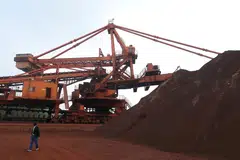

China also ordered cotton mills to stop buying Australian supplies or face a 40 per cent tariff. China had been the biggest buyer of Australian cotton, taking about 60 per cent of its supplies, worth about A$900 million in the 2018-2019 crop year.
Five of Australia’s largest beef processors were also suspended from exporting to China in 2020, for reasons such as poor labelling and contamination with a banned substance. Though other plants were still allowed to ship to China, importers complained of long delays clearing Australian beef at customs. The trade was worth A$3 billion in 2019.
Lobster exports, meanwhile, fell after China customs said the shellfish would be subject to enhanced inspection.
However, the world’s most populous country continued to buy large volumes of iron ore, wheat and liquefied natural gas.
Winemakers in South Africa saw demand boom, while barley exports to China from France, Canada, Argentina and Ukraine also surged. Cattle farmers from the US also benefited, as China sought an alternative supplier of high-quality grain-fed beef.
Despite the measures, Australia has continued to record a trade surplus with China, thanks to rising commodity prices, especially of iron ore. Canberra successfully diverted exports of coal, barley and other products elsewhere. Barley farmers reduced acreage sown with the grain, and planted more canola instead.
Australia’s biggest wine company, Treasury Wine Estates, shifted its strategy to produce wine in China to rebuild a business decimated by tariffs. REUTERS
Decoding Asia newsletter: your guide to navigating Asia in a new global order. Sign up here to get Decoding Asia newsletter. Delivered to your inbox. Free.
Share with us your feedback on BT's products and services
TRENDING NOW

StarHub hands Ensign InfoSecurity control back to Temasek in S$115 million deal, books S$200 million gain
Singaporeans can now buy record amount of yen per Singdollar

Air India asks Tata, Singapore Airlines for funds after US$2.4 billion loss

Keppel DC Reit posts 13.2% higher Q1 DPU of S$0.02833 on strong portfolio performance

