

HSBC agrees to pay 300 million euros to end French tax dividend probes
The settlement recognises the bank’s cooperation and the corrective measures it took to address the historic issues
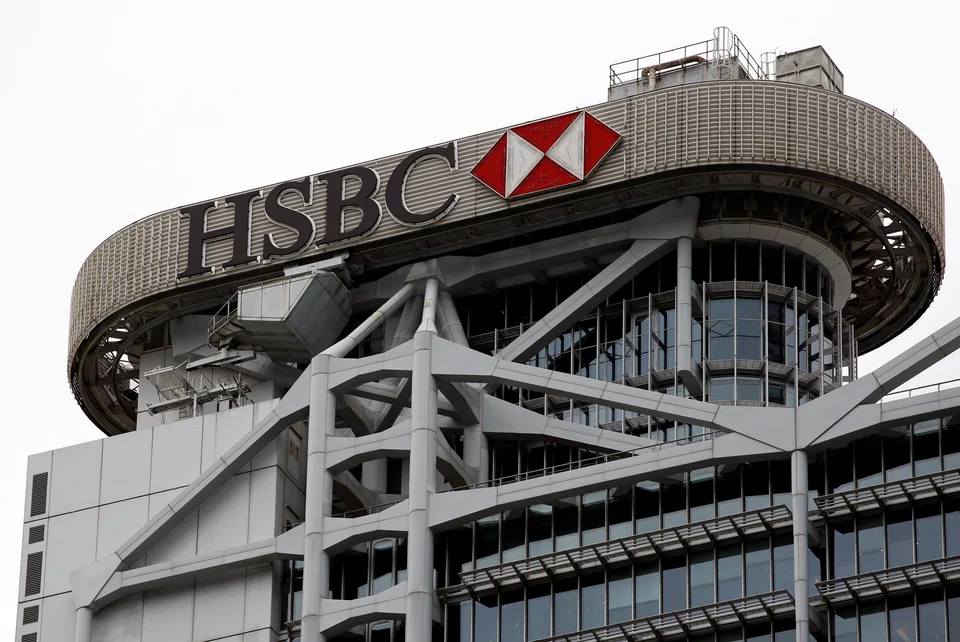
[PARIS] HSBC has agreed to pay about 300 million euros (S$450 million) to settle a twin criminal and civil case in France, involving its alleged role in a dividend-tax scandal that has embroiled some of the biggest banks in the country.
The Thursday (Jan 8) settlement deal was outlined and later approved in a Parisian court headed by Judge Peimane Ghaleh-Marzban. The accord ends an investigation by the Parquet National Financier (PNF) against HSBC, without the bank making any admission of guilt.
It includes a fine of 268 million euros, and a tax bill of approximately 30 million euros that HSBC paid.
Benjamin Rossan, a representative for HSBC, said in court on Thursday that the bank acknowledges the underlying facts, which involved transactions carried out by traders in Paris between 2014 and 2019.
He added that “not the correct amount of French tax was paid”.
HSBC said that the settlement “recognises the bank’s cooperation with the investigation, as well as the corrective measures it took to address the historic issues”.
The move puts pressure on a group of other banks – BNP Paribas and its Exane subsidiary, Societe Generale and Natixis – whose premises were also targeted by PNF raids in 2023, which were of unprecedented scale and scope.
None of them has been accused of wrongdoing. In September, Credit Agricole’s investment banking arm agreed to pay about 134 million euros in fines and back taxes, to end the probe into it.
Pascal Prache, the lead prosecutor, said the HSBC settlement “aims to show the way forward for other actors involved in dividend arbitrage operations”.
He said that the PNF is “fully determined” to bring to a conclusion the investigations into the other banks, even if that requires a full-blown trial.
The trades examined in the HSBC case involved Paris traders intervening in transactions that were orchestrated from London to avoid French taxes, said judge Ghaleh-Marzban.
Prosecutor Celine Guillet described the intervention of Paris traders as “artificial”.
She added that the relevant HSBC transactions were “different” in nature from those under review in the other dividend arbitrage cases, widely referred to as “cum-cum” trades.
The alleged logic behind such trades was to enable foreign owners of French stocks to avoid withholding tax, by lending the securities during dividend season to an exempt entity – such as a local bank.
In France, the authorities have taken a two-track approach to clamp down on such trades.
Besides the criminal prosecution, the finance ministry said that its tax officials are trying to claw back some 4.5 billion euros in lost revenue, stemming from the transactions involving the banks in the country.
It was reported in July that the tax authorities were also conducting audits of Wall Street banks with trading floors in Paris, including Goldman Sachs and Bank of America.
Despite the investigations, France’s banking lobby has long denied any foul play, saying that the contentious transactions were driven by economic reasons – not tax purposes – such as covering shorts or hedging a trade.
Maya Atig, chief of the French Banking Federation, said last year during a parliamentary hearing that “there is no systemic fraud”.
The French prosecutors have taken a different view, describing cum-cum trades as widespread.
The PNF said last year that it had found evidence that banks, other than Credit Agricole, actively proposed to clients certain financial products in catalogues as “dividend enhancement”.
The cum-cum scandal has also taken a political twist, with the French government trying to strike a balance between hunting down tax fraud, and keeping Paris attractive to the financial sector.
The finance ministry last year opposed a strict interpretation of new tax rules to avoid an exodus of equity derivatives transactions to other hubs, such as London. BLOOMBERG
Decoding Asia newsletter: your guide to navigating Asia in a new global order. Sign up here to get Decoding Asia newsletter. Delivered to your inbox. Free.
Share with us your feedback on BT's products and services
TRENDING NOW

Once staunchly pro-China, Malaysian Chinese businesses are now distancing themselves from Beijing

Looking beyond looming CEO succession, should UOB potentially pursue a transformative merger?

Could stablecoins be the future of money?

Grab CEO’s wife Chloe Tong on life with Anthony Tan and finding her purpose

