

IMF based in Beijing? Maybe in 2027, its director says
Lagarde points out that emerging and low-income countries now contribute around 60% of total GDP
Washington
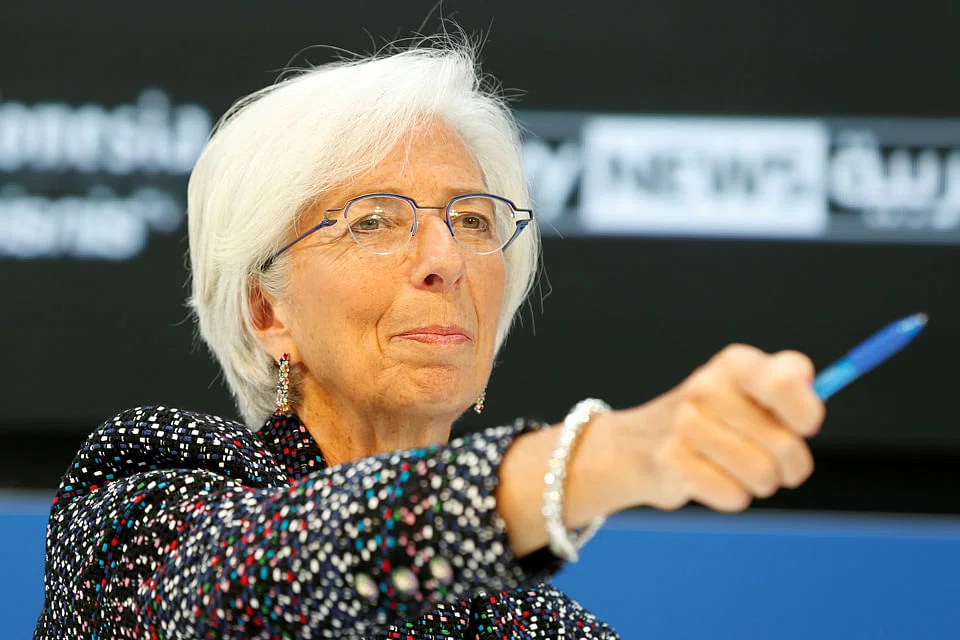
CHRISTINE Lagarde, the managing director of the International Monetary Fund (IMF), joked on Monday about donning "dream binoculars" and seeing the possibility of relocating the group's headquarters to China.
"We might not be sitting in Washington DC," Ms Lagarde said at a Center for Global Development event here in which she envisioned what the IMF might look like in 2027.
Ms Lagarde may joke, but her comments reflect a concern that world leaders have about the changing role of the United States in global organisations. The articles of the organisation say that the headquarters should be in the country of the member with the largest economy.
When the US, Britain and other global powers met in Bretton Woods in 1944 near the end of World War II to stabilise the world's economies, the United States' overwhelming economic power was reflected in the decision to base both the IMF and the World Bank in its capital. It is a decision that is sometimes questioned, given the growth of economies such as India and China.
Beijing has signalled its eagerness to play a greater role in the global economy with the rise of Chinese-backed regional institutions such as the Asian Infrastructure Investment Bank, a rival to the World Bank.
And since US President Donald Trump gained the White House on an anti-globalisation platform, pledging to withdraw from the Paris climate change agreement and rewrite long-standing trade agreements, world leaders - including Ms Lagarde - have closely observed the changing global role of the United States.
Speaking to a packed audience in the capital, Ms Lagarde did play down the effect of the US pursuing an agenda that diverged from that of the IMF.
"The world is changing, that is No 1," Ms Lagarde said, pointing out that emerging and low-income countries now contribute around 60 per cent of total gross domestic product (GDP) and 80 per cent of global growth.
"No 2, one needs to look at the deeds more than the creeds and what is actually being done. Where is money actually being invested?"
Despite Ms Lagarde's comments, analysts pointed out that the United States' veto power at the IMF gives Washington a crucial role in the institution. The fund's leadership is careful to keep the White House on its side following every change in administration.
"There is no doubt she must be deeply concerned by the turn we have taken in Washington but there is no advantage to her in using inflammatory language," said Benn Steil, a senior fellow at the Council on Foreign Relations.
"At the end, she is a servant of the shareholders and of course, one in particular has overwhelming power with the organisation, so the best she can do is prod."
In her remarks on Monday, Ms Lagarde also discussed the IMF's latest World Economic Outlook, in which it forecast 3.5 per cent growth in the global economy this year, picking up to 3.6 per cent in 2018.
It revised its forecasts downward for Britain, given the risks around "Brexit", and for the US, given what Ms Lagarde labelled as "less obvious fiscal development and less rapid infrastructure investment than we had initially thought".
She identified the major medium-term risks to the world economy as inequality, the "backlash" against globalisation, international trade and technological breakthroughs.
She warned of those who feel left behind by globalisation - those who feel that "there is nothing there for them, as a result of which, populist voices can actually carry the day and prevail over other forces" - a group that political analysts have identified as driving Mr Trump's win last November.
Having joked about the possibility of the IMF headquarters relocating to Beijing in 10 years, she also flagged concerns around China's commitments to the Paris accord.
"It will be critically important in order to secure staff eagerness to travel that the climate change commitments made by China be actually respected and acted upon," Ms Lagarde said. NYTIMES
TRENDING NOW
‘We don’t want to stay as we are’: CEO Patrick Ng builds a more resilient Huationg
URA to review guidelines on floor space to give developers more design flexibility: Chee Hong Tat

He built the Vingroup empire. Now South-east Asia’s richest man is handing some key roles to his sons
32 companies, 6 individuals bag accolades at Singapore Corporate Awards 2026

