

In major shift, Canada's snap polls heralds more government spending
Ottawa
CANADA has spent hundreds of billions of dollars to help workers and keep businesses afloat during the pandemic, causing its national debt to soar. But the usually frugal Canadians don't seem to mind.
The snap election on Monday is expected to herald an era of more big spending, with both Liberals and the usually thrifty Tories, running neck and neck, promising more government aid, a monumental shift for Canada after decades of belt-tightening.
"It's not that I don't care about the debt, I just don't think about it as much as my parents and previous generations who thought it was a huge issue," said voter Meg Sweeney, a 23-year-old university graduate.
Canadians aged 65 or older, who will soon make up one quarter of the population, are not concerned about having to repay the borrowed funds, while millennials on whom it will likely fall, support higher social spending.
"In this election, I'm looking at issues such as climate change, relief from student loans, racial justice and tackling social issues - like others of my generation," Ms Sweeney added.
Canada entered the pandemic in a strong fiscal position after a long era of frugality, allowing it to dole out hundreds of billions of dollars in Covid-19 emergency aid.
That, however, cost it its AAA debt rating after Fitch downgraded the country a notch to AA+.
It also sent Ottawa's debt soaring to a forecast C$1.2 trillion (S$1.3 trillion) in the fiscal year 2021-2022, with a peak debt-to-GDP ratio of 51.2 per cent that would fall only marginally by 2025-2026, from an average 31 per cent prior to the pandemic.
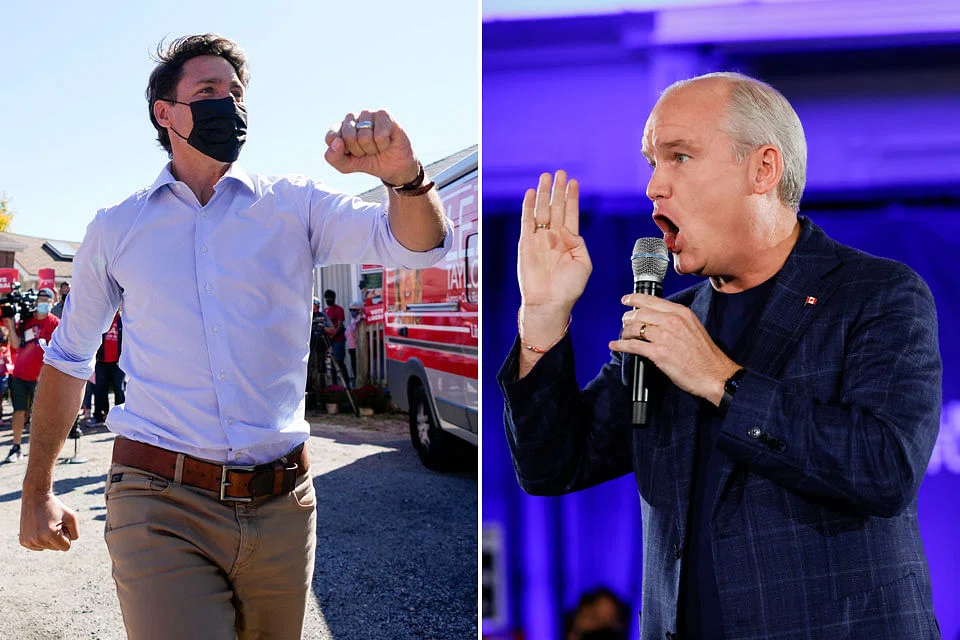
Prime Minister Justin Trudeau's Liberals are proposing C$78 billion in new spending.
His main challenger, Conservative leader Erin O'Toole, also believes the government should spend more to steer the country out of recession.
He is proposing C$51 billion in new spending to "kick the economy into turbo drive" and use the ensuing uptick in revenues to balance the budget in 10 years.
"This election is about who you think can get us out of the recession and rebuild the economy," Mr O'Toole said at the start of the election campaign.
When asked about the debt, Mr Trudeau replied: "It matters to be fiscally responsible. It matters to live within our means. I think it also matters to be making the right investments so that future generations can prosper."
He noted that record low interest rates have made the cost of borrowing cheap.
But Kevin Page, the head of the University of Ottawa's Institute of Fiscal Studies and Democracy, warned that there is always a risk that rates would go up.
Although economists agree that the debt is sustainable, Mr Page said: "There's a rightful concern that it's an open bar, people assuming with low interest rates that we can run up the debt and there will be no significant costs."
Jerry Dias, the head of Canada's largest private sector union, argued that the pandemic has exposed social inequities that require heaps of new spending to mend.
"It makes total sense to fix our social programmes to reflect reality," he said. He called for a universal prescription drug plan and affordable child care so women, who lost significant income while bearing the brunt of unpaid care work over the past 18 months, can return to the workforce.
Ian Lee, a professor at Carleton University's Sprott School of Business in Ottawa, said he is amazed by the change in people's mindset.
"I'm surprised that Canadians' attitudes towards debt has shifted so dramatically during the pandemic, how cavalier people have become about piling on debt."
He cautioned that soaring costs, including on healthcare may prompt the government to adopt "very profound changes in taxation".
Canada needs more immigration and better productivity but in this election, Prof Lee lamented, candidates have debated "how we're going to redistribute income, with little said about how we are going to generate wealth". AFP
Decoding Asia newsletter: your guide to navigating Asia in a new global order. Sign up here to get Decoding Asia newsletter. Delivered to your inbox. Free.
Share with us your feedback on BT's products and services
TRENDING NOW

Good Class Bungalow market activity picks up pace on ‘realistic’ pricing

Indonesia imposes US$116 million in fines over manipulation of Sinar Mas, Prajogo-linked stocks

Singapore identifies 7 firms responsible for haze fires, notices issued urging action: Grace Fu

Once staunchly pro-China, Malaysian Chinese businesses are now distancing themselves from Beijing

