India and Australia clinch energy, security deals to deepen ties
India and Australia have steadily expanded cooperation through the Quad grouping with the US and Japan
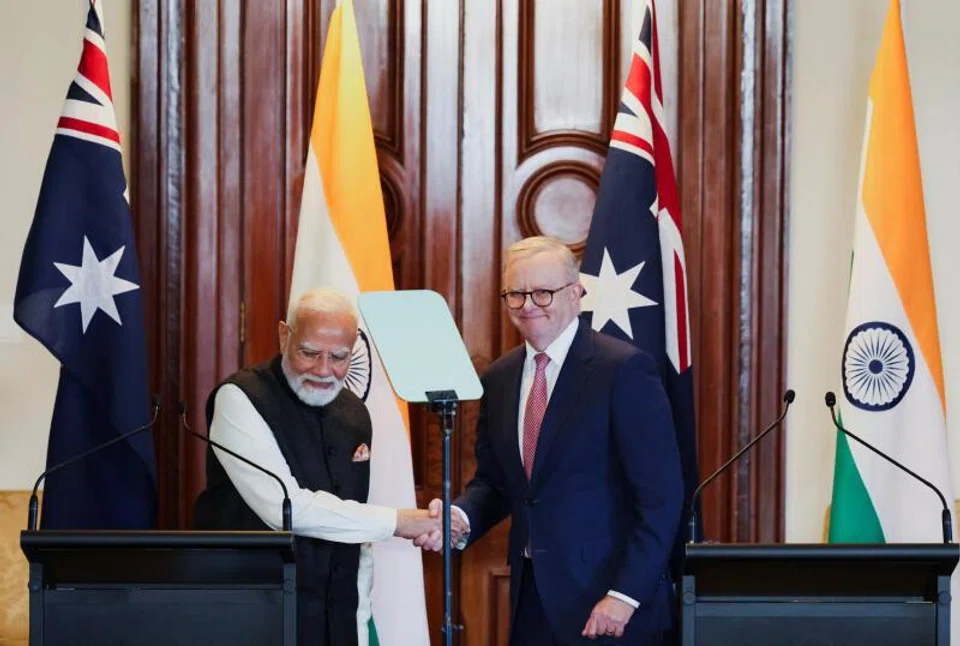
[SYDNEY] India and Australia clinched deals ranging from energy to defence on Thursday (Jul 9), taking their bilateral relationship to a new level in response to growing concern over security in the Indo-Pacific.
Australia will now sell uranium to fuel India’s growing civilian nuclear power industry after more than a decade of negotiations, reassured such shipments will be used strictly for peaceful purposes. India is a nuclear-armed nation.
Prime Minister Narendra Modi and his counterpart Anthony Albanese also signed a joint declaration on security, committing to strengthening “strategic defence cooperation” and doing more together on defence industries, counter-terrorism, and in other fields. The accords come in the middle of a week of significant diplomatic activity for both prime ministers.
Earlier, Australia signed a new defence alliance with Fiji and India agreed to supply Indonesia with cruise missiles and other weapons. India and Australia are responding to an evolving and increasingly challenging security environment in the Indo-Pacific.
China’s military power was highlighted this week when it launched a nuclear-capable ballistic missile in the Pacific. At the same time, the traditional stabilising role of the US is increasingly clouded by the Iran war and the unpredictable nature of the Trump administration.
“Our defence and security cooperation is a force for peace, stability and prosperity in the Indo-Pacific,” Albanese said in a statement. “The Joint Declaration on Defence and Security Cooperation demonstrates our growing strategic alignment and articulates our shared vision for the region.”
The leaders also unveiled a defence innovation corridor to promote collaboration between military startups and manufacturers, alongside a joint declaration aimed at boosting defence industrial cooperation and improving interoperability between their armed forces.
The package also includes a maritime security partnership, as well as closer cooperation on counter-terrorism, and expanding trade in energy.
“Australia’s huge uranium reserves align directly with India’s nuclear journey,” Modi told a business forum on Thursday. “For us to increase partnership in this space, this is an historic opportunity.”
Australia is likely to boost exports of liquefied natural gas and coal to India as New Delhi seeks to diversify supplies to meet rapidly rising energy demand.
“Australia’s natural resources are vital for other countries’ energy security and stability, and we look forward to becoming a reliable, trusted supplier of uranium to India,” Albanese said, adding that “India is an important and reliable energy partner for Australia.”
The two countries are launching a critical minerals corridor to strengthen supply chains for materials essential to clean energy and advanced manufacturing.
India and Australia have steadily expanded cooperation in recent years through the Quad grouping with the US and Japan. Defence, maritime security and resilient supply chains have become central pillars of a relationship increasingly shaped by strategic competition in the Indo-Pacific.
In his remarks, Albanese paid tribute to the Australian-Indian community, adding that multiculturalism is “not something up for debate”. Right-wing Senator Pauline Hanson has recently called for Australia to become a monocultural society, a demand that Albanese has rejected.
“A lot of people don’t understand the strength of the Indian diaspora in Australia now,” CT Group co-founder and executive chairman Lynton Crosby told Bloomberg TV on Thursday. He also said India represents a major demographic and economic opportunity for Australia as a trading nation, particularly after recent “hiccups” in Australia’s relationship with China.
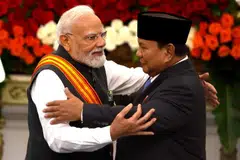
Modi is on a diplomatic tour of the Indo-Pacific, arriving in Australia from Indonesia where he signed defence and industrial deals with President Prabowo Subianto. He heads to New Zealand on Friday.
“Modi is something of a master of strategic pragmatism because he’s building relations with countries in a way that India hasn’t always in the past,” Crosby said. BLOOMBERG
Decoding Asia newsletter: your guide to navigating Asia in a new global order. Sign up here to get Decoding Asia newsletter. Delivered to your inbox. Free.
Share with us your feedback on BT's products and services