India close to EU trade pact as US trade talks drag on
It is seen as a chance for both sides to deepen economic ties and cut their reliance on China and Russia
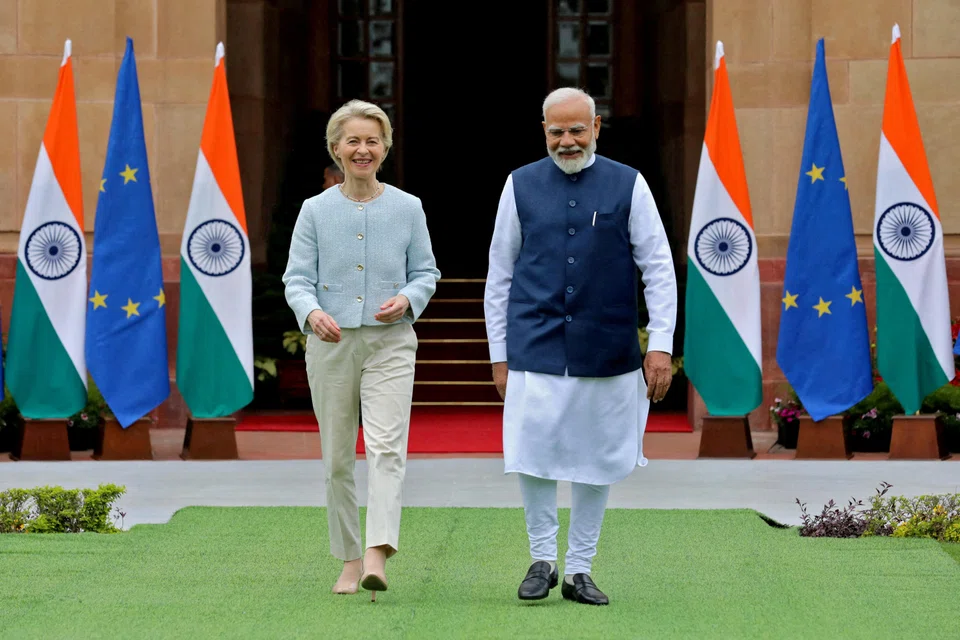
[NEW DELHI] India expects talks on a long-sought trade deal with the EU to conclude in January, Trade Secretary Rajesh Agrawal said on Thursday (Jan 15), in what would be New Delhi’s largest agreement as it seeks new markets amid US tariff pressures.
The deal, under discussion for years, is seen as a chance for both sides to deepen economic ties and cut their reliance on China and Russia.
Bilateral trade between India and the EU totalled 120 billion euros (S$179.6 billion) in 2024, making the bloc India’s biggest trading partner.
Agrawal said the two sides were “very close” to finalising the pact, and were exploring whether it could be wrapped up before their leaders meet in New Delhi in January.
He said talks on a US trade pact were continuing, and a deal would be reached when both sides were ready. Negotiations collapsed in 2025, after a breakdown in communication between the two governments.
The President of the European Council, Antonio Costa, and European Commission President Ursula von der Leyen will visit India from Jan 25 to 27, and co-chair an India-EU summit on Jan 27, India’s foreign ministry said.
If concluded, the deal would open India’s vast and heavily protected consumer market of more than 1.4 billion people to European goods, and could reshape global trade flows as protectionism rises and a US-India pact remains stalled.
Both sides have been pushing to close a broad agreement after Von der Leyen and Indian Prime Minister (PM) Narendra Modi agreed to fast-track negotiations in an effort to close a deal in 2025.
Talks, relaunched in 2022, gained momentum after US President Donald Trump imposed tariff hikes on trading partners including India.

Brussels has recently signed deals with Mexico and Indonesia, and stepped up talks with India, while New Delhi has reached agreements with Britain, Oman and New Zealand.
Agriculture off the table
Some sensitive agricultural items have been excluded from negotiations, an Indian trade ministry official said.
India will not open its agriculture or dairy sectors in any trade pact, officials have added, citing the need to protect millions of subsistence farmers.
The EU is pushing for steep tariff cuts on cars, medical devices, wine, spirits and meat, along with stronger intellectual property rules.
India is seeking duty-free access for labour-intensive goods, and quicker recognition of its cars and electronics sectors.
Beyond goods, the agreement is expected to expand services trade, investment and cooperation in digital trade, intellectual property and green technologies, as well as spur European investment in Indian manufacturing, renewable energy and infrastructure.
Challenges remain over regulatory alignment and the protection of sensitive sectors.
The EU’s carbon border levy, which requires importers to account for emissions in steel, cement and other carbon-intensive products, has started to hit some Indian exports and is a key concern for New Delhi, exporters said. REUTERS
Decoding Asia newsletter: your guide to navigating Asia in a new global order. Sign up here to get Decoding Asia newsletter. Delivered to your inbox. Free.
Share with us your feedback on BT's products and services