India growth seen at risk as Iran war shows no sign of easing
LPG shortages are raising fears of a sharp economic slowdown
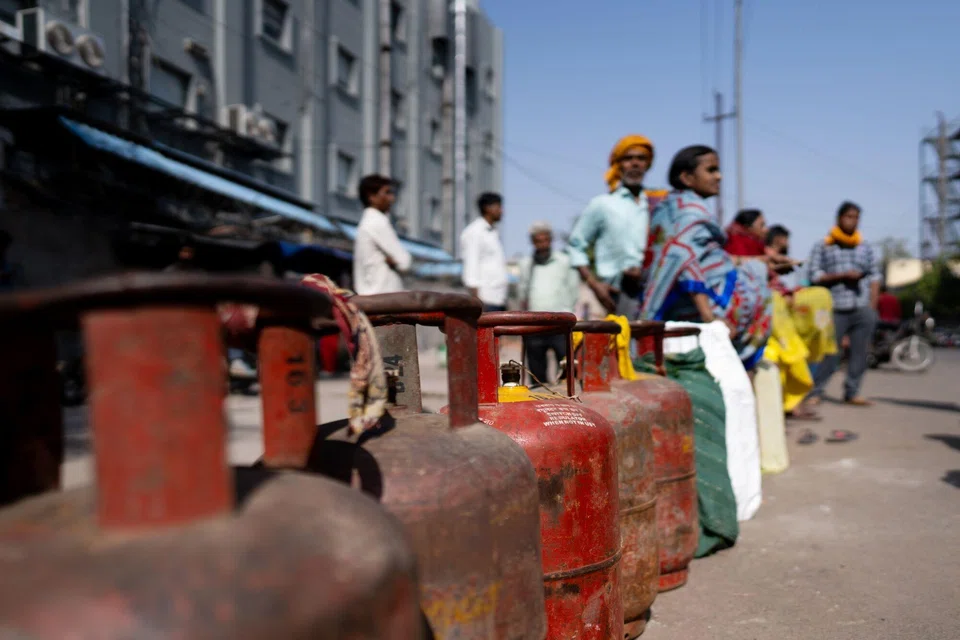
[MUMBAI] Surging oil prices and acute petrol shortages are rippling through India’s economy as the Iran war drags on, disrupting industries and prompting analysts to cut growth forecasts while warning of rising inflation.
India is among the economies most exposed to the West Asia crisis, as it imports about 90 per cent of its crude oil and nearly half of its liquefied petroleum gas (LPG).
About half of its crude and more than three-quarters of its LPG imports pass through the Strait of Hormuz, now effectively shut by Iran, pushing oil prices above US$100 a barrel.
The disruption has triggered an LPG crisis in households, hotels and restaurants, while industries that rely on it are shutting down operations.
The shortages are raising concerns about a sharp slowdown in Asia’s third-largest economy, just as it was recovering from the Covid-19 pandemic.
Economists at banks, including Goldman Sachs, ANZ and IndusInd Bank, expect slower growth due to the reliance on imported oil.
Goldman on Mar 11 cut its 2026 growth forecast by half a percentage point to 6.5 per cent, while ANZ sees expansion slowing from about 7 per cent to 6.5 to 6.8 per cent in the fiscal year starting April.
IndusInd Bank’s Gaurav Kapur predicts a 30-basis-point hit with growth at around 6.5 per cent; he warned that weaker consumption could weigh on the recovery.
“The overall impact on growth will be more dampening than inflation. The government has enough fiscal space to absorb the oil-price hit through excise duty cuts, but the hit on the industrial sector will impact growth.”


The conflict, although thousands of miles away, is already affecting daily life in India.
Satyabhan Singh, 35, a food-delivery driver, said his daily income has fallen by more than half to about 800 rupees (S$11) as fuel costs rise.
He now spends 300 to 400 rupees a day on petrol, meaning any increase in pump prices could wipe out what little he earns.
“The government should make some arrangements for us,” he said. “When there is no gas, they should ensure we can still earn enough to survive.”
Gig work, such as food delivery, has become one of India’s fastest-growing sources of employment. The workforce rose to about 12 million in March 2025 from 7.7 million in March 2021, a 55 per cent increase, the government’s Economic Survey showed.
Petrol rationing is disrupting key industries, from fertiliser and aluminium production to helium used in semiconductor manufacturing, raising the risk of a prolonged drag on growth.
Pankaj Chadha, chairman of the Engineering Exports Promotion Council, said: “All heating furnaces use LPG and, given the shortage and curbs on industrial use, factories have shut down.
“In Gujarat, about 98 per cent of engineering companies are shut down, while in Maharashtra, around half the units have closed.”
External sector risk
Before the crisis, India’s economy appeared to be in a sweet spot.
The government projected growth of as much as 7.2 per cent for the next financial year, while inflation was expected to stay close to the 4 per cent target set by the Reserve Bank of India (RBI), at least until September.
RBI governor Sanjay Malhotra had described the outlook as a “Goldilocks” scenario, with interest rates likely to remain unchanged for an extended period.
The external sector has held up relatively well recently, though rising oil prices and a wider trade and current account deficit are emerging risks.
Anubhuti Sahay, an economist with Standard Chartered, said: “The external sector has emerged as the most at risk in this crisis.
“While import cover is still about 10 months, the rupee has to act as the shock absorber.”
Exports may suffer as disruptions hit nearly US$200 billion of shipments to Gulf countries, potentially widening the current account deficit and putting pressure on the rupee, which is already near record lows of around 92.5 rupees for each US dollar.
The region is also critical for remittances, with about 10 million Indian workers sending nearly US$50 billion home annually.
Economists warn that the inflation surge could undo years of efforts by the RBI, which brought price growth under control in 2025.
The central bank had expected retail inflation to remain near its 4 per cent target until at least September.
Shumita Deveshwar, chief economist at consultancy company GlobalData TS Lombard, said: “Ripple effects would be felt across industries, including restaurants and manufacturing units reliant on LPG.”
Inflation could accelerate to about 6 per cent by September or October, she added. BLOOMBERG
Decoding Asia newsletter: your guide to navigating Asia in a new global order. Sign up here to get Decoding Asia newsletter. Delivered to your inbox. Free.
Share with us your feedback on BT's products and services