

India plans US$6.2 billion fund, export relief amid Iran war
The Modi administration is moving to shield the import-dependent economy from the impact of rising oil prices
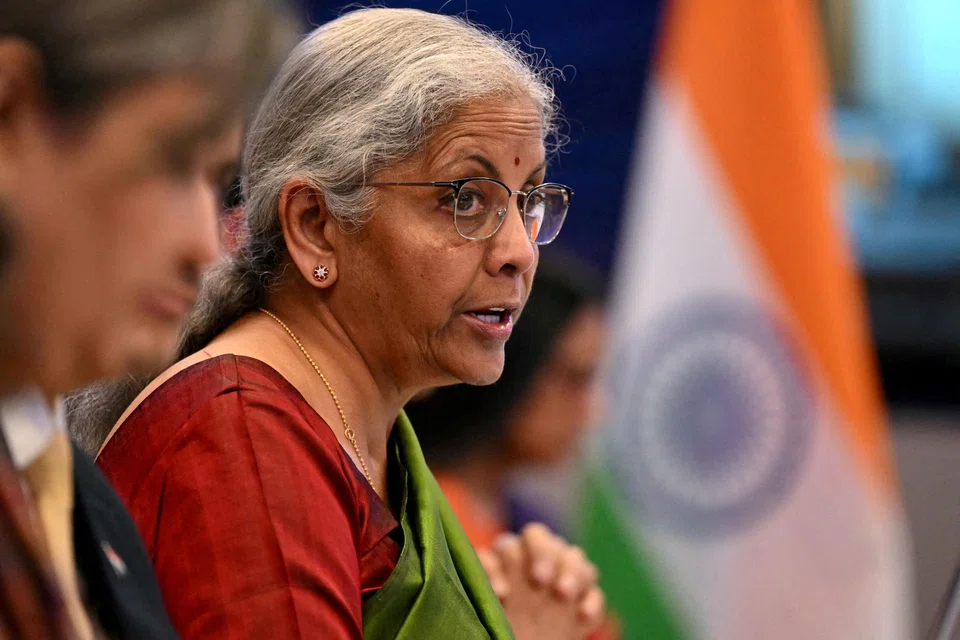
INDIA is setting aside US$6.2 billion to help the economy weather any adverse impacts from global crises, Finance Minister Nirmala Sitharaman said on Friday (Mar 13), while separately weighing measures to safeguard exporters amid high energy prices due to the war in the Middle East.
The “economic stabilisation fund” will give India fiscal headroom to respond to global challenges, she added, as oil prices crossed US$100 a barrel, raising the risk of massive supply-chain disruption. The country imports nearly 90 per cent of its annual crude requirements.
It “enables us to absorb the economic shocks of various nature without deviating from the fiscal consolidation road map”, Sitharaman told lawmakers in parliament. The minister sought approval for additional spending in the year through March as part of the supplementary demand for grants.
Prime Minister Narendra Modi’s administration is taking steps to protect India’s import-dependent economy from the impact of rising oil prices. Prices of diesel and petrol have not been changed, helping to contain inflation, and the government has secured additional supplies after the US allowed some imports of Russian oil, easing pressure on the country’s energy needs and trade balance.
Apart from the fund, the government is also discussing support measures for exporters similar to those implemented during the Covid-19 pandemic to help soften the blow of trade disruptions triggered by the Iran war, people familiar with the matter said.
Support measures
Some of the steps being discussed include extending the time that exporters must repatriate proceeds of overseas sales, relaxing rules for bank overdraft facilities and implementing a moratorium on loan repayments, the people said, asking not to be identified as the discussions are not public.
India’s Ministry of Commerce and Industry will discuss the proposals with the Ministry of Finance before a final decision is made, they said.
Trade through the Strait of Hormuz, a vital shipping route for oil and goods from the Middle East to the Indian Ocean, has effectively been halted after the US and Israel launched airstrikes against Iran almost two weeks ago. Almost all of India’s exports to the Gulf countries pass through the strait, totalling about 14 per cent of India’s total exports.
Some global shipping lines have nearly doubled rates to ferry cargo from India to the US, Europe and South America starting on Apr 1, the people said. The lines have also added surcharges with immediate effect to make up for longer routes, higher energy prices and insurance premiums, they added.
The most affected would be small exporters, who were slammed last year by steep US tariffs.
Goldman Sachs lowered its growth forecast for India, citing disruption to key trade and energy routes. The economy is expected to grow at 6.5 per cent in 2026 from 7 per cent forecast earlier, while inflation is seen higher at 4.2 per cent, according to analysts Santanu Sengupta, Arjun Varma and Andrew Tilton.
The economic fallout from the current crisis is not comparable to the pandemic six years ago, the people said, and the proposals are still under discussion. The support measures are likely to be restricted to exporters reliant on Middle East trade and be rolled out if the Iran conflict, which began on Feb 28, becomes a drawn-out war, they said.
India’s Ministry of Commerce and Industry did not immediately respond to a request for information.
Other support measures under discussion include a plan to partly offset costs, such as emergency conflict surcharges, demurrage charges – penalties if cargoes remain at ports longer than agreed upon – and higher freight charges that exporters have to pay to ship goods to the Middle East, the people said.
The government has already set up an interministerial group to ease trade procedures for exporters and coordinate with ports and customs officials to mitigate the impact of any disruptions.
Meanwhile, India’s Ministry of Ports, Shipping and Waterways is in talks with major ports, including Kandla in the western state of Gujarat and Jawaharlal Nehru port in Maharashtra, to reduce costs for exporters, the people said.
The government is also reaching out to shipping companies to consider waiving charges for cargo that is already en route or has reached its destination in the Gulf region, they said.
India has also relaxed rules and waived charges for cargo that was processed but could not leave ports due to cancellations or disruptions at the destination port, a person familiar with the matter said. The Jawaharlal Nehru Port Authority waived ground rental charges for Middle East-bound shipments until Saturday.
The Ministry of Ports, Shipping and Waterways did not immediately respond to a request for information. BLOOMBERG
Decoding Asia newsletter: your guide to navigating Asia in a new global order. Sign up here to get Decoding Asia newsletter. Delivered to your inbox. Free.
Share with us your feedback on BT's products and services
TRENDING NOW

Once staunchly pro-China, Malaysian Chinese businesses are now distancing themselves from Beijing

Looking beyond looming CEO succession, should UOB potentially pursue a transformative merger?

Could stablecoins be the future of money?

Grab CEO’s wife Chloe Tong on life with Anthony Tan and finding her purpose

