

Indian billionaire's wealth grows along with Modi's political stature
New Delhi
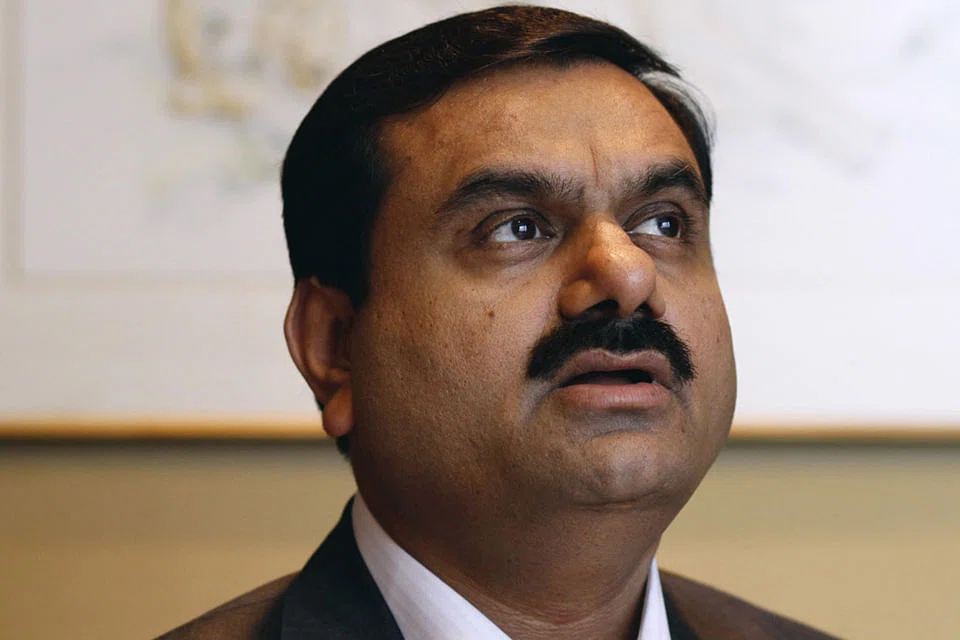
AFTER flying across India on a corporate jet owned by billionaire Gautam Adani prior to last year's election, Prime Minister Narendra Modi is returning the favour.
In New York, Mr Adani sat in the audience as Mr Modi addressed the United Nations. In Canberra, he shared breakfast with Mr Modi and signed business deals. Mr Adani was also in Bhutan, Brazil, Japan, France and - earlier this month - China.
Mr Adani, 52, has travelled with Mr Modi in the past year more than any other billionaire, helping him emerge as the most prominent face of India Inc to the wider world. His wealth has more than quadrupled since Mr Modi announced his candidacy in September 2013, the biggest gain among the country's elite.
The Adani Group, founded in 1988, has grown along with Mr Modi's political stature. The relationship between the two men was forged more than a decade ago in Gujarat, one of India's wealthiest states.
On the day that Mr Modi became chief minister of Gujarat in 2001, Adani Enterprises Ltd - then Mr Adnai's only listed unit - was a trading company with a market value 500 times smaller than Reliance Industries Ltd, which is headed by Mukesh Ambani, India's richest man.
Shares of Adani Enterprises and his two other listed units - Adani Power Ltd and Adani Ports and Special Economic Zones Ltd - have more than tripled on average since Mr Modi became a candidate, outpacing the S&P BSE-100 Index's 46 per cent gain. Their combined market value is now approaching Reliance Industries.
"They may get a few more projects than if Mr Modi wasn't there, but these days, you have a transparent process," said Vibhor Singhal, an analyst with Phillip Securities Ltd in Mumbai. "Sentimentally, the relationship is positive, but at the end of the day, if that support doesn't show up on balance sheets, then investors won't forgive Adani just because of his proximity to Modi."
In the run-up to the election, Mr Adani said that he does not receive nor expect any special treatment from Mr Modi, and the company said that it received compensation for the campaign flights.
Adani's listed units are now leading their sectors. Adani Enterprises is India's largest coal importer, Adani Ports is the country's largest private port operator, and Adani Power is the biggest private power company. A corporate restructuring in January provided a further boost to the share price.
Adani's website says that the group aspires to be a "globally admired leader in integrated infrastructural business with a deep commitment to nation building". It also sells and distributes food, and is reportedly considering a move into defence manufacturing, an area that Mr Modi has prioritised.
Mr Adani has also had success where other companies have failed. Adani Ports is expanding a shipyard on India's eastern coastline that proved a burden for previous operators, including Tata Steel Ltd and Larsen & Toubro Ltd.
All of this has boosted Mr Adani's wealth. His fortune has climbed 26 per cent to US$8.7 billion since the day before Mr Modi's election win on May 16, 2014, according to the Bloomberg Billionaires Index - equivalent to about US$4 million per day in a nation where some 700 million people live on less than US$2. Mr Ambani's wealth fell 17 per cent to US$20.8 billion in that time.
Perception matters when it comes to getting loans. A company like Adani with ties to Mr Modi is more likely to get financing than a similar business with no political connections, according to two India-based executives who help arrange corporate debt, including in the past for Adani companies. They asked not to be named because they are not authorised to speak with the media.
While loan growth starts recovering from near a 20-year low, Mr Adani's listed companies are some of the most leveraged in India. Adani Power has the highest debt-equity ratio of any private company on the BSE 100 index.
Mr Adani's relationship with Mr Modi can hurt as much as it helps. Opposition politicians frequently use Mr Adani's success to attack Mr Modi, who has sought to attract private investment through reducing hoops of red tape. BLOOMBERG
TRENDING NOW
Simba admits exceeding spectrum limits amid failed M1 deal; parent company Tuas’ full-year profit surges 277%

‘Our bread and butter’: Family-run Loo’s Hainanese Curry Rice hands reins to third generation

StarHub, Keppel confirm talks over potential M1 deal
Grab executives buy back shares after stock hits 3-year low on Atome deal

